

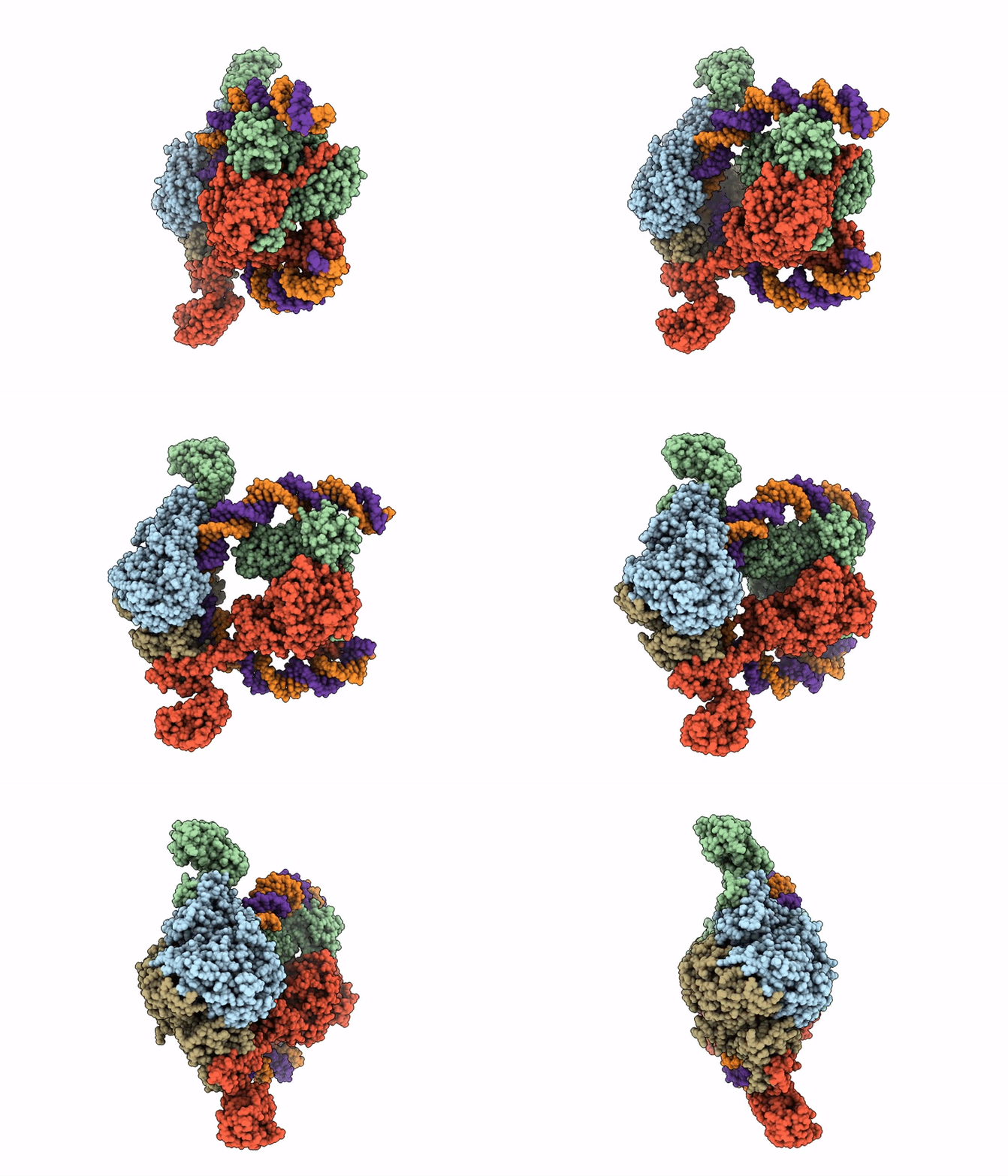
9O8P image
Deposition Date 2025-04-16
Release Date 2026-02-25
Last Version Date 2026-04-15
Entry Detail
PDB ID:
9O8P
Keywords:
Title:
CryoEM structure of M. mazei topoisomerase VI-minicircle DNA complex
Biological Source:
Source Organism(s):
Method Details:
Experimental Method:
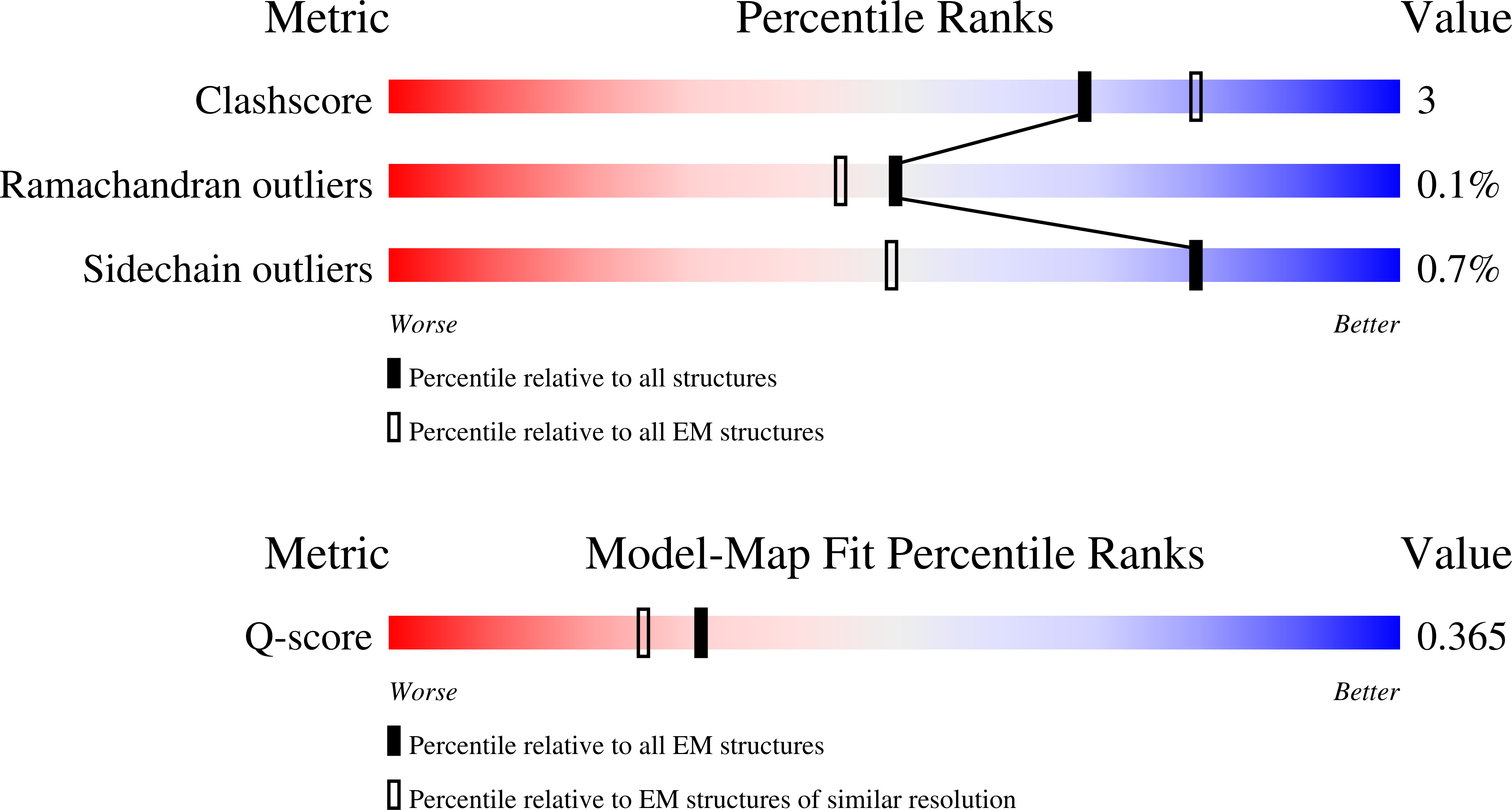
Resolution:
3.60 Å
Aggregation State:
PARTICLE
Reconstruction Method:
SINGLE PARTICLE
Macromolecular Entities
Structures with similar UniProt ID
Protein Blast
Polymer Type:polypeptide(L)
Molecule:Type 2 DNA topoisomerase 6 su
Gene (Uniprot):top6A
Chain IDs:A, C
Chain Length:369
Number of Molecules:2
Biological Source:Methanosarcina mazei Go1
Structures with similar UniProt ID
Protein Blast
Polymer Type:polypeptide(L)
Molecule:Type 2 DNA topoisomerase 6 su
Gene (Uniprot):top6B
Chain IDs:B, D
Chain Length:621
Number of Molecules:2
Biological Source:Methanosarcina mazei Go1
Polymer Type:polydeoxyribonucleotide
Molecule:Minicircle DNA (arbitrary mod
Chain IDs:E (auth: F), F (auth: H)
Chain Length:74
Number of Molecules:2
Biological Source:unidentified
Primary Citation
Supercoiled DNA recognition and cleavage control in topoisomerase VI.
Nat Commun 17 ? ? (2026)
PMID: 41698922 DOI: 10.1038/s41467-026-69491-0

Abstact

Type II topoisomerases modulate DNA supercoiling and resolve chromosome entanglements. Type IIB topoisomerases, exemplified by DNA topoisomerase VI (Top6), are used by plants and archaea to support endoreduplication and cell proliferation, respectively; homologs of Top6 further serve to initiate meiotic recombination in eukaryotes and constitute the nuclease portion of MksBEFG/Wadjet/Gabija bacterial defense systems. To understand how such factors act upon DNA, we determine structures of Top6 bound to supercoiled minicircles in cleaved and uncleaved states using single-particle electron cryo-microscopy. The structures show that Top6 binds a curved 74 bp region of the supercoiled minicircle DNA and that it cuts at a distinct deformability motif, explaining its preference for supercoiled substrates and highlighting the role of DNA plasticity in cleavage site selection. Dynamic protein-DNA interactions and an unanticipated tension sensor help recognize bent DNA and couple ATPase disposition to cleavage state activation. Our observations explain how DNA recognition and cleavage by type II topoisomerases are regulated by interdependent structural changes in DNA and the enzyme.

Legend

Protein

Chemical

Disease

Primary Citation of related structures
Feedback Form
Name
Email
Institute
Feedback