

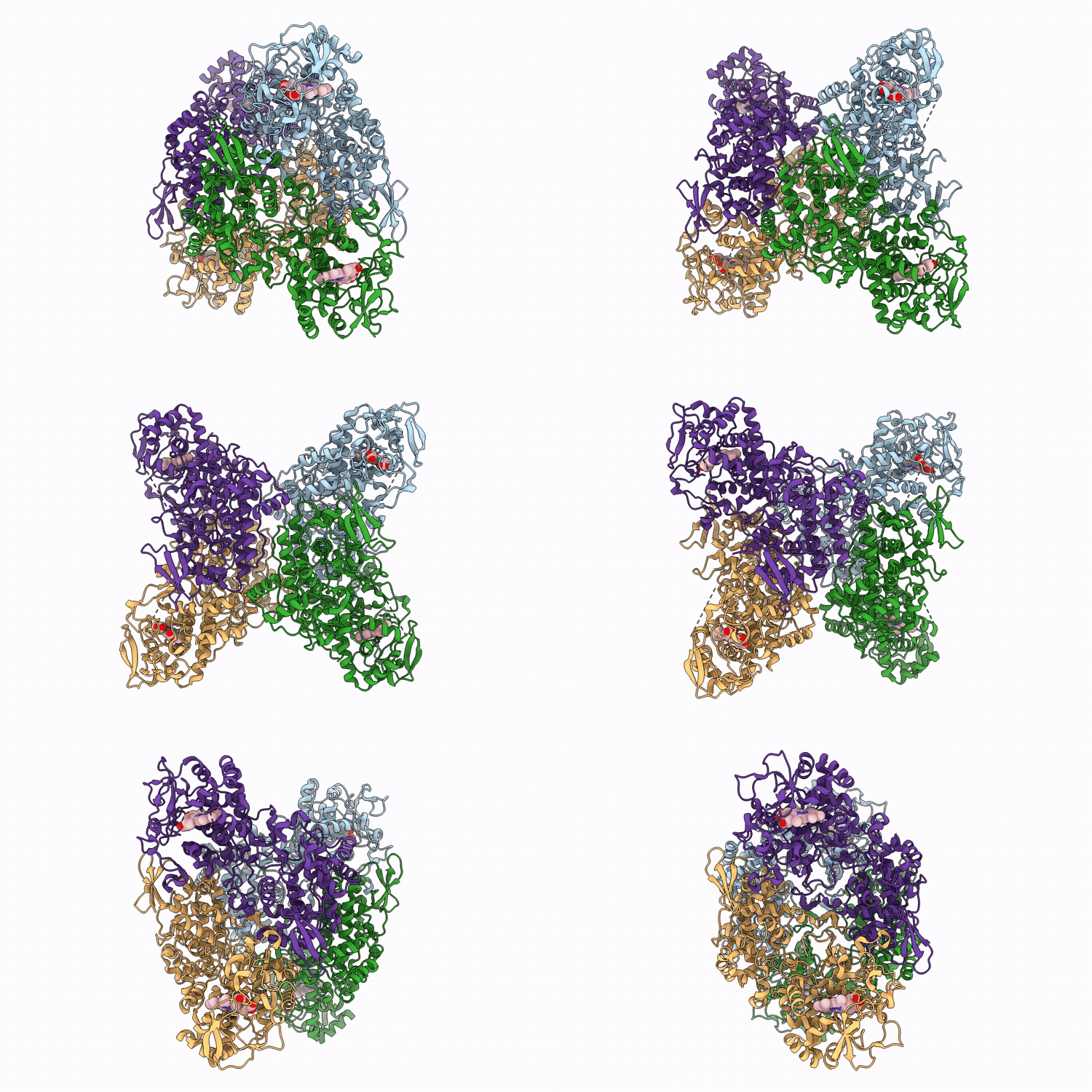
9O6A image
Deposition Date 2025-04-11
Release Date 2026-04-22
Last Version Date 2026-08-19
Entry Detail
PDB ID:
9O6A
Keywords:
Title:
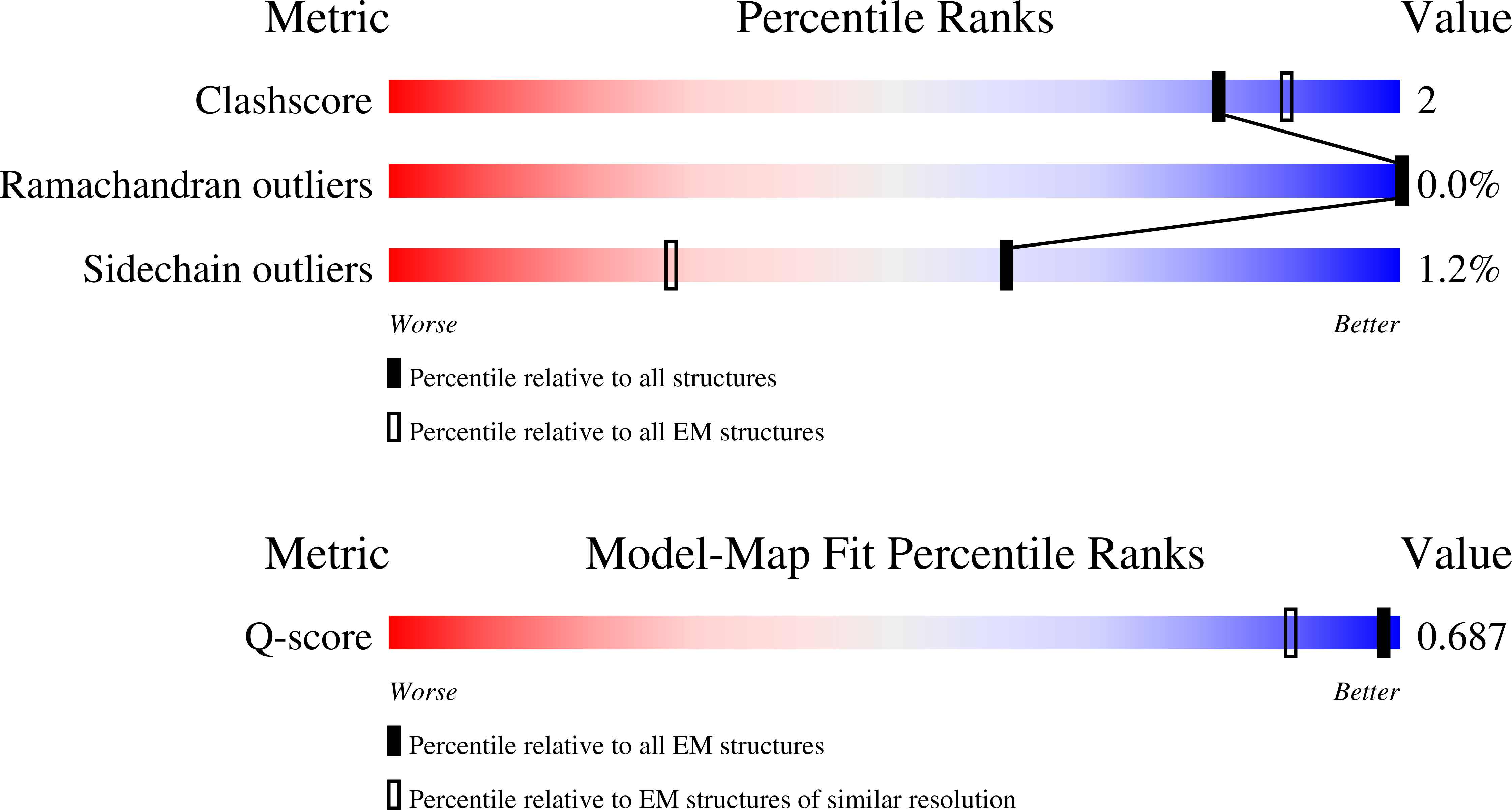
CryoEM structure of EcKatG S-Trp105 at 2.22 Angstrom resolution revealing an asymmetric sulfur center in O=S-Trp
Biological Source:
Source Organism(s):
Expression System(s):
Method Details:
Experimental Method:
Resolution:
2.22 Å
Aggregation State:
PARTICLE
Reconstruction Method:
SINGLE PARTICLE
Macromolecular Entities
Polymer Type:polypeptide(L)
Molecule:Catalase-peroxidase
Chain IDs:A, B, C, D
Chain Length:733
Number of Molecules:4
Biological Source:Escherichia coli K-12
Modified Residue
Compound ID Chain ID Parent Comp ID Details 2D Image
A1B9V A, B, C, D TRP modified residue
Ligand Molecules
Primary Citation
Single-atom substitution redirects KatG reactivity from cofactor biogenesis to stereoselective sulfoxidation.
Nat Commun 17 ? ? (2026)
PMID: 42288482 DOI: 10.1038/s41467-026-73579-y

Abstact

Protein-derived cofactors rely on precisely positioned heteroatoms to direct redox chemistry, yet isolating their individual contributions remains challenging. The indole N-H of tryptophan plays a central yet elusive role in biogenesis and function of the Met-Tyr-Trp (MYW) cofactor in catalase-peroxidase (KatG). Here, we use genetic code expansion to replace cofactor-forming Trp105 with thiotryptophan (S-Trp), enabling a single-heteroatom (N --> S) substitution. Instead of forming the MYW crosslink, KatG bearing S-Trp105 undergoes site-specific monooxygenation to yield a chiral sulfoxide. HPLC-MS, circular dichroism, and FT-IR spectroscopy identify selective oxygen insertion at the sulfur, establishing enantioselective formation of an (S)-configured sulfoxide. A 2.22 A cryo-EM structure visualizes the oxidized S-Trp105, revealing the S = O moiety orienting toward the iron and confirming the absence of crosslinking. The S-atom oxygenation is heme-dependent and proceeds via a two-electron oxygen-atom transfer, contrasting with the radical-mediated one-electron chemistry of native tryptophan. This redirection suppresses catalase activity by perturbing cofactor formation. These results show that a single-atom substitution reroutes the distal heme site from radical crosslinking to stereoselective sulfoxidation, uncovering a monooxygenase-like capability within KatG. This work highlights using noncanonical amino acids to achieve atomic-level control over reaction pathways and to interrogate cofactor biogenesis with unprecedented precision.

Legend

Protein

Chemical

Disease

Primary Citation of related structures
Feedback Form
Name
Email
Institute
Feedback