

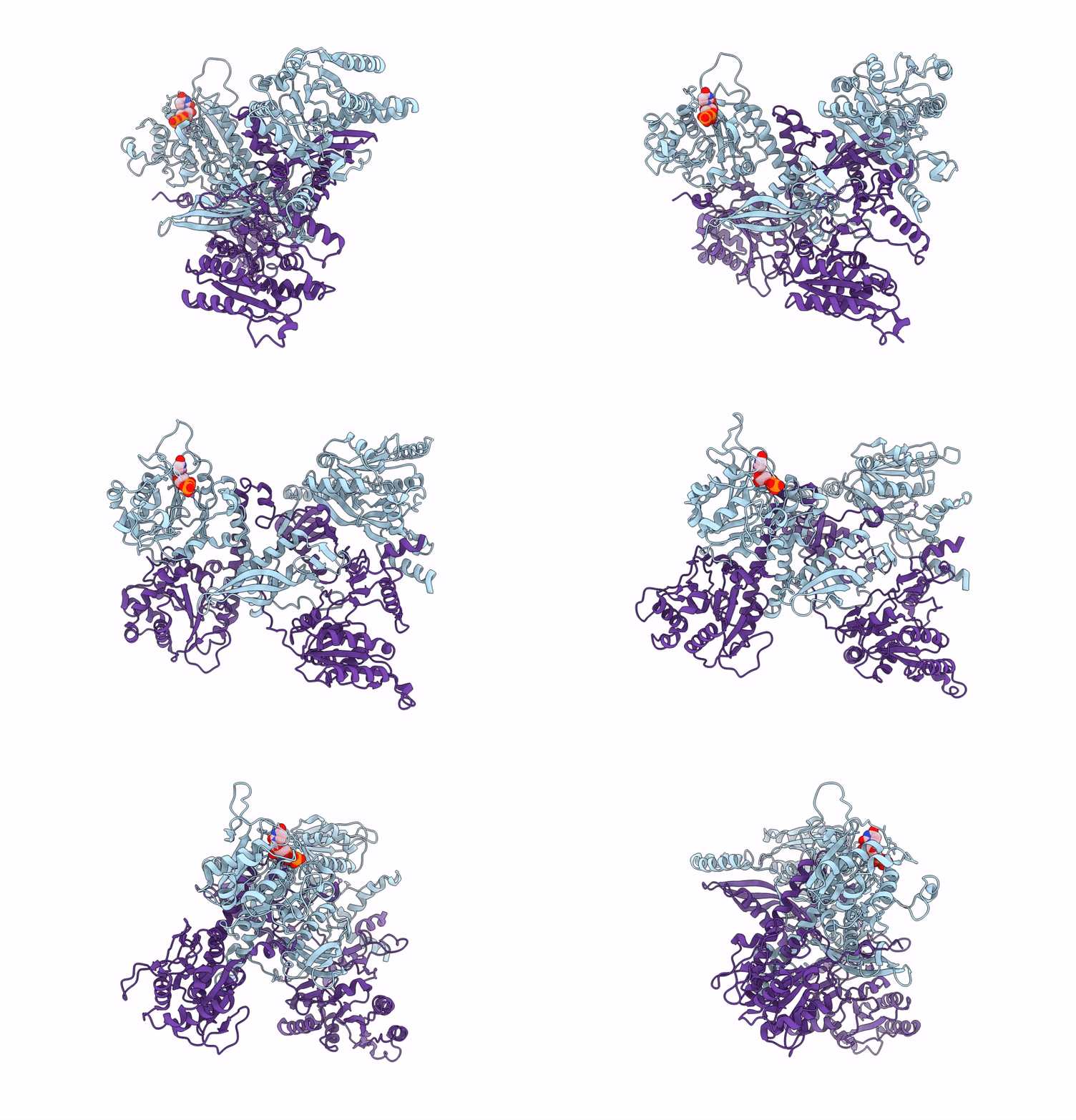
9O4G image
Deposition Date 2025-04-08
Release Date 2026-03-04
Last Version Date 2026-06-10
Entry Detail
PDB ID:
9O4G
Title:
Cryo-EM structure of the CHSY3-CHPF1 chondroitin synthase heterodimer
Biological Source:
Source Organism(s):
Expression System(s):
Method Details:
Experimental Method:
Resolution:
3.42 Å
Aggregation State:
PARTICLE
Reconstruction Method:
SINGLE PARTICLE
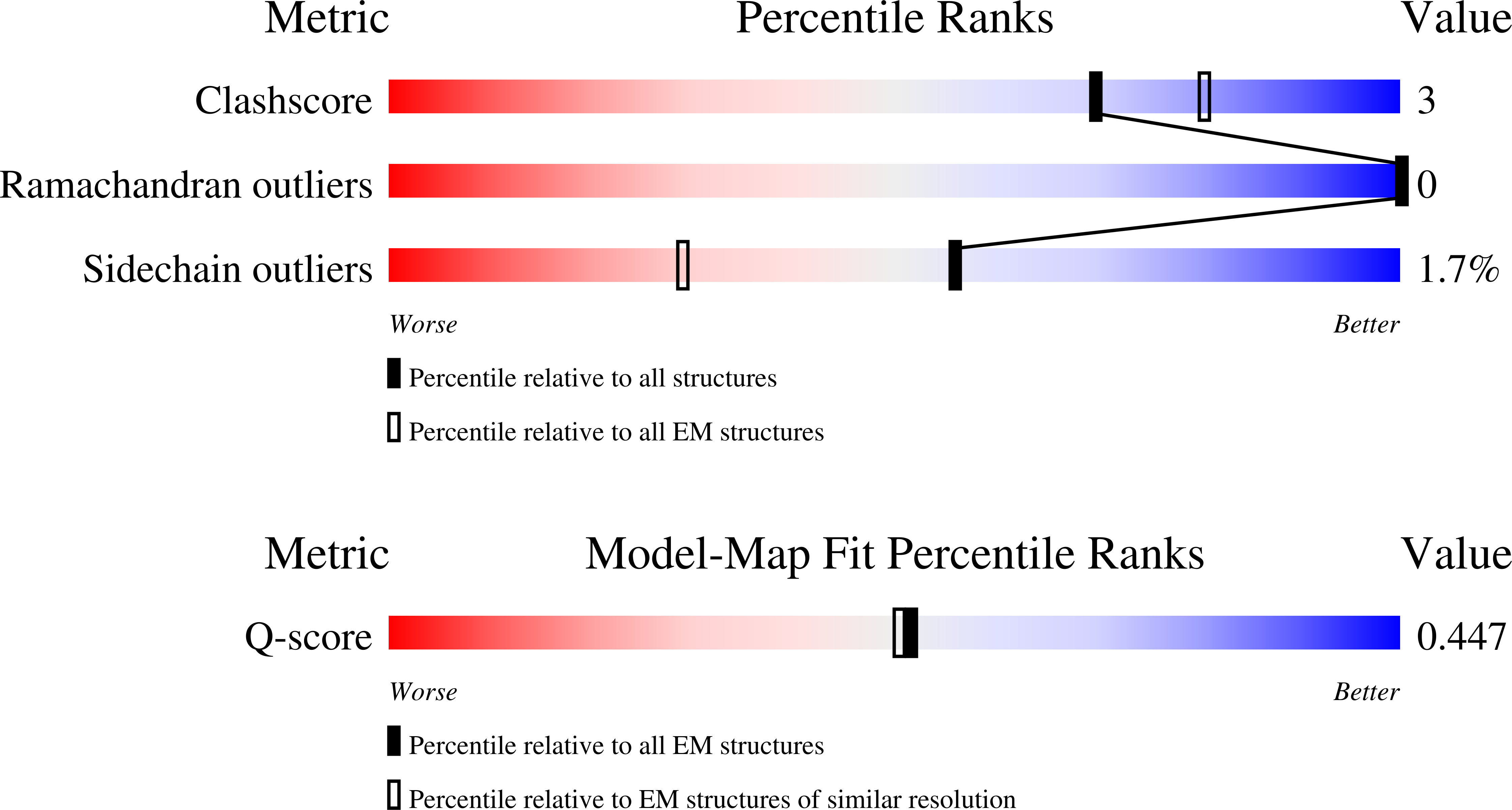
Macromolecular Entities
Structures with similar UniProt ID
Protein Blast
Polymer Type:polypeptide(L)
Molecule:Chondroitin sulfate synthase
Gene (Uniprot):CHSY3
Chain IDs:A
Chain Length:851
Number of Molecules:1
Biological Source:Human adenovirus sp.
Structures with similar UniProt ID
Protein Blast
Polymer Type:polypeptide(L)
Molecule:Chondroitin sulfate synthase
Gene (Uniprot):CHPF
Chain IDs:B
Chain Length:741
Number of Molecules:1
Biological Source:Homo sapiens
Primary Citation
Structural basis of chondroitin sulfate backbone polymer synthesis.
Nat Commun ? ? ? (2026)
PMID: 42204168 DOI: 10.1038/s41467-026-73361-0

Abstact

Chondroitin sulfate (CS) proteoglycans are extended (-GlcAbeta1,3GalNAcbeta1,4-)(n) co-polymers attached to cell surface and extracellular matrix core proteins that are further modified by extensive sulfation and epimerization. Four homologous proteins contribute to CS backbone synthesis (CHPF1, CHPF2, CHSY1, and CHSY3) and prior data suggests assembly of the proteins into heterocomplexes is required for function. Here we show by sequence alignment and structural modeling that all CHSYs and CHPFs contain an N-terminal CAZy GT31-like domain and a C-terminal GT7-like domain separated by a cystatin-like linker domain. Co-expression of one CHPF and one CHSY is required to form a soluble, functional heterodimeric CS synthase and structural modeling indicates all four potential CHSY-CHPF combinations can form equivalent heterodimeric complexes. Cryo-EM studies on CHSY3-CHPF1 confirm the structure, interface, and active site features predicted by the structural models. Enzymatic analyses of catalytic mutants demonstrate that only the glycosyltransferase domains in the CHSYs are responsible for polymer synthesis: the GT31 domain transfers beta1,3-GlcA while the GT7 domain transfers beta1,4-GalNAc. The corresponding CHPF domains do not contribute to polymer synthesis but stabilize the corresponding CHSY functional domains. Additional mutagenesis and modeling suggest that the bridging cystatin-like domains may contribute to efficient polymer synthesis.

Legend

Protein

Chemical

Disease

Primary Citation of related structures
Feedback Form
Name
Email
Institute
Feedback