

9O1I image
Deposition Date 2025-04-03
Release Date 2026-04-15
Last Version Date 2026-05-06
Entry Detail
PDB ID:
9O1I
Keywords:
Title:
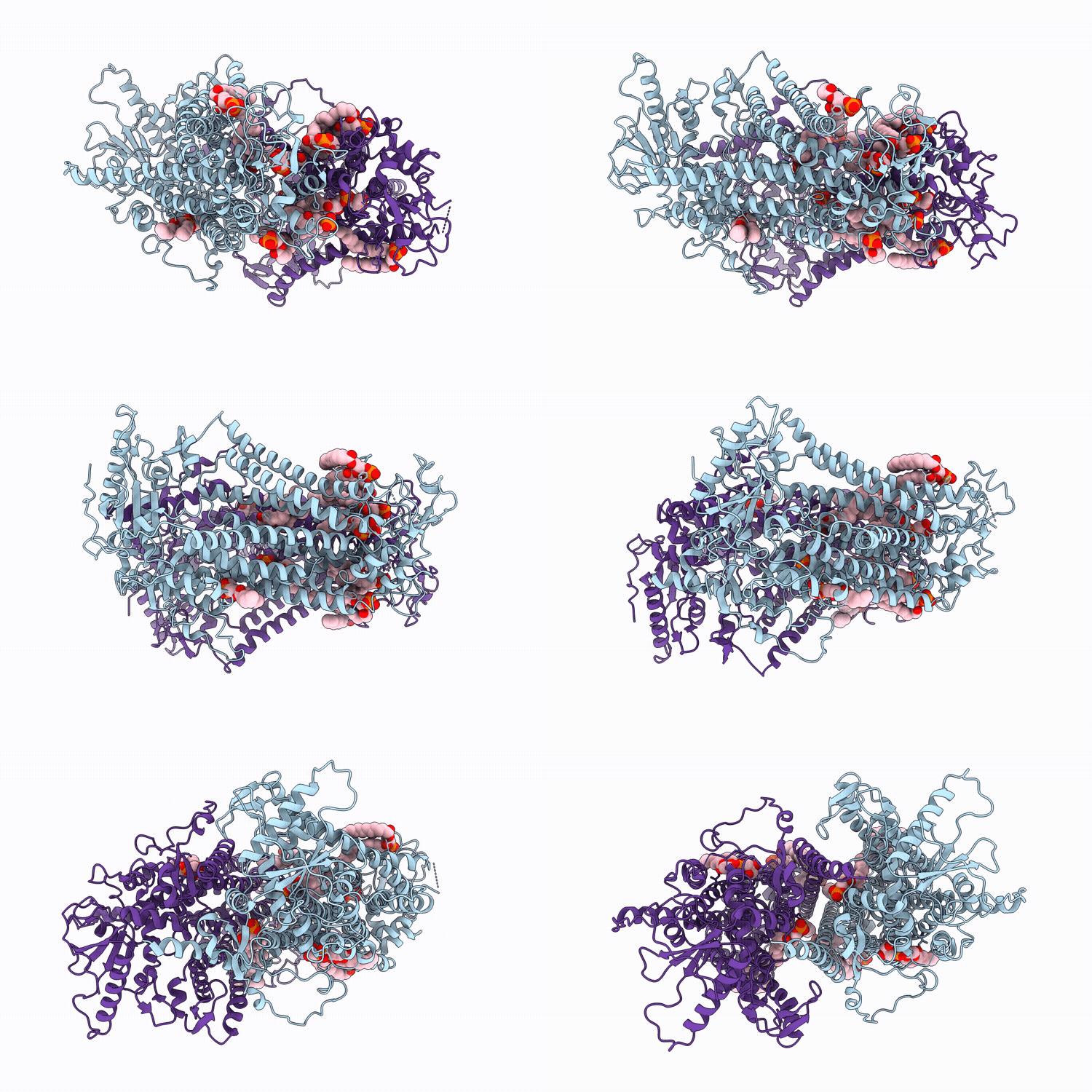
TMEM16F in liposomes in the absence of Ca2+ (contracted state)
Biological Source:
Source Organism(s):
Mus musculus (Taxon ID: 10090)
Expression System(s):
Method Details:
Experimental Method:
Resolution:
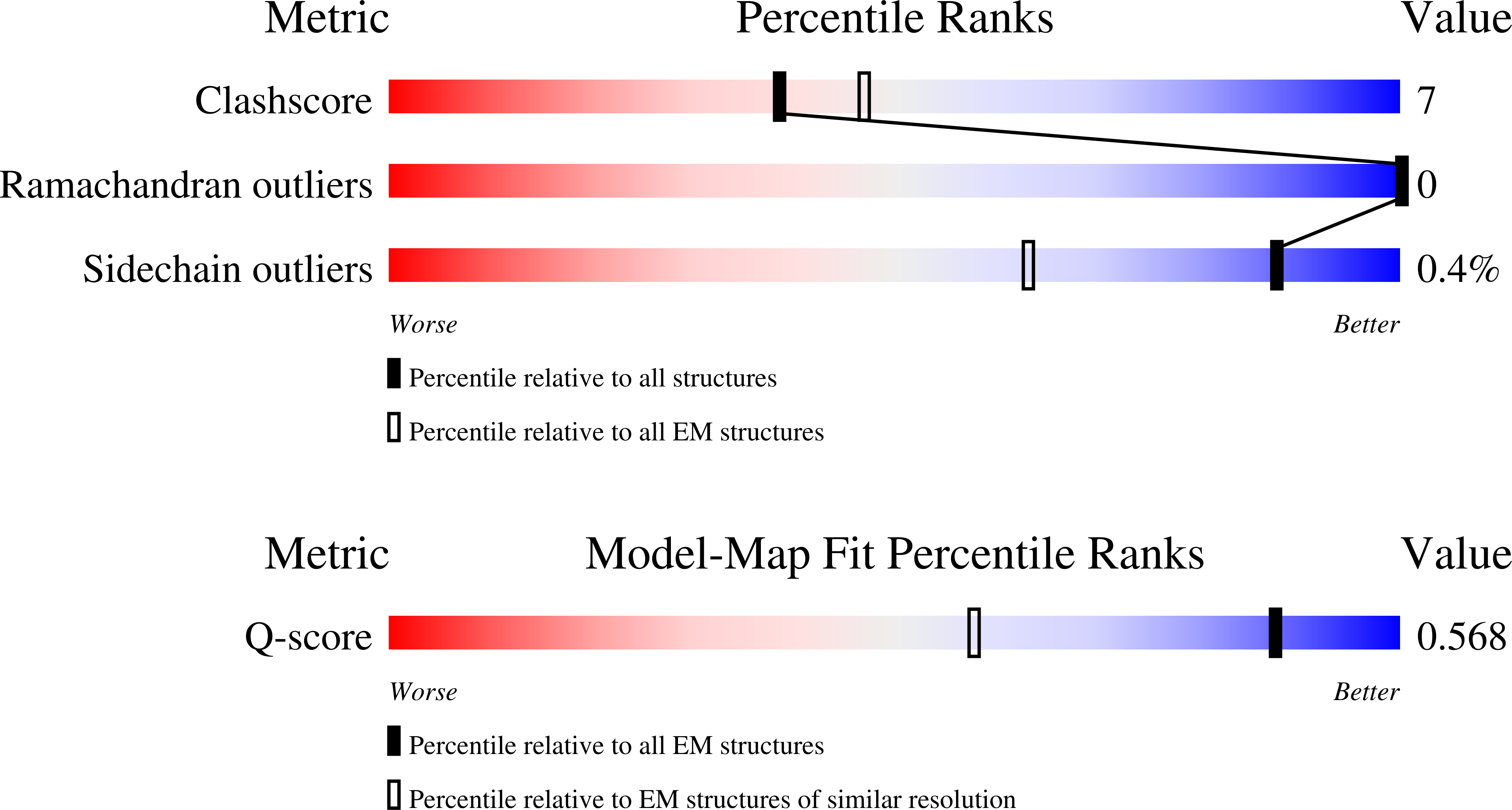
2.49 Å
Aggregation State:
PARTICLE
Reconstruction Method:
SINGLE PARTICLE
Macromolecular Entities
Structures with similar UniProt ID
Protein Blast
Polymer Type:polypeptide(L)
Molecule:Anoctamin-6
Gene (Uniprot):Ano6
Chain IDs:A (auth: B), B (auth: A)
Chain Length:911
Number of Molecules:2
Biological Source:Mus musculus
Ligand Molecules
Primary Citation
Calcium dependent activation of the TMEM16F scramblase and ion channel.
Nat.Struct.Mol.Biol. 33 664 676 (2026)
PMID: 41998358 DOI: 10.1038/s41594-026-01789-5

Abstact

The ubiquitous transmembrane protein 16F (TMEM16F) Ca(2+)-activated channel and scramblase catalyzes phosphatidylserine externalization to enable blood coagulation, membrane fusion and brain immune surveillance. Despite its importance, the molecular mechanisms underlying TMEM16F activation remain poorly understood. Here, we obtained high-resolution cryo-electron microscopy structures of TMEM16F active in liposomes. In high-activity conditions, TMEM16F adopts two conformations, the canonical Ca(2+)-bound closed state and one where the upward rotation of the cytosolic domain leads to an X-shaped groove that forms a transmembrane pore and locally thins the membrane. Using mutagenesis, functional assays and molecular dynamics simulations, we show that the X-shaped groove is active and mediates nonselective ion flux and lipid scrambling through distinct pathways; ions move within the protein-delimited pore, whereas lipids skirt the X-shaped groove. Our findings provide a complete picture of TMEM16F Ca(2+)-dependent gating and demonstrate that imaging membrane proteins in a native-like environment can allow capturing otherwise inaccessible active states.

Legend

Protein

Chemical

Disease

Primary Citation of related structures
Feedback Form
Name
Email
Institute
Feedback