

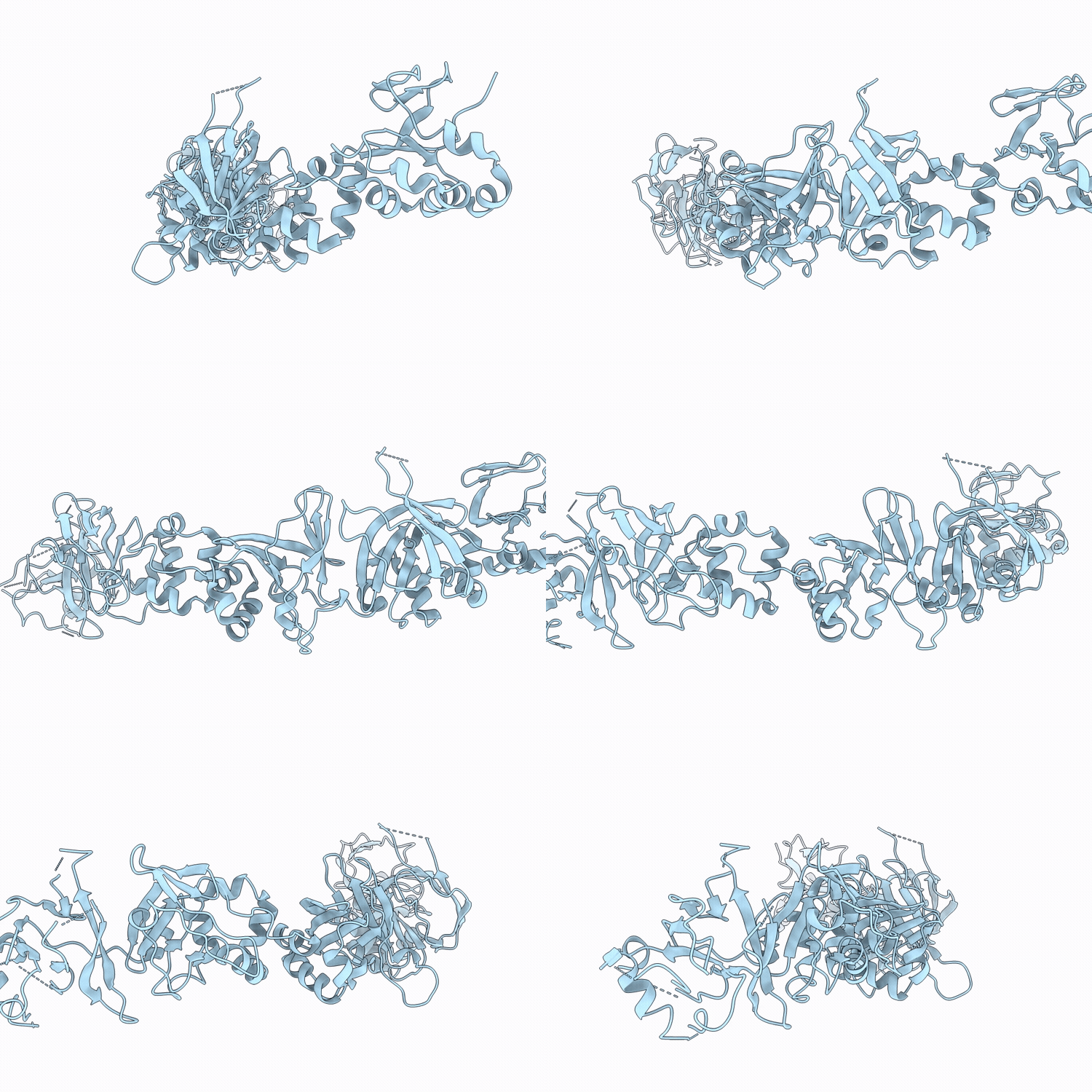
9O0B image
Deposition Date 2025-04-02
Release Date 2026-04-01
Last Version Date 2026-04-15
Entry Detail
PDB ID:
9O0B
Keywords:
Title:
X-ray Crystal Structure of Fission Yeast Fsc1 protein in P43212
Biological Source:
Source Organism(s):
Expression System(s):
Method Details:
Experimental Method:
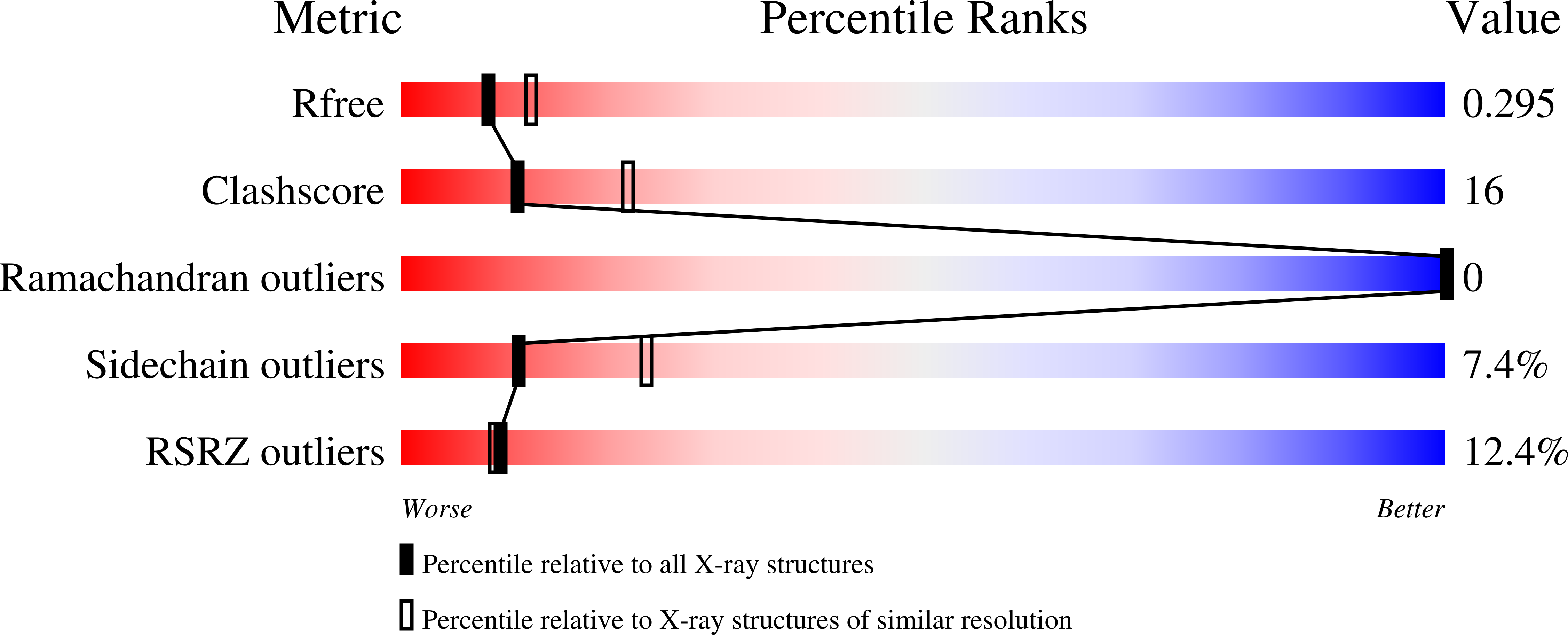
Resolution:
2.50 Å
R-Value Free:
0.29
R-Value Work:
0.24
Space Group:
P 43 21 2
Macromolecular Entities
Structures with similar UniProt ID
Protein Blast
Polymer Type:polypeptide(L)
Molecule:FAS1 domain-containing protei
Gene (Uniprot):fsc1
Chain IDs:A
Chain Length:649
Number of Molecules:1
Biological Source:Schizosaccharomyces pombe
Modified Residue
Compound ID Chain ID Parent Comp ID Details 2D Image
MSE A MET modified residue
Primary Citation
Crystal structures of Fsc1, a novel autophagy factor that mediates autophagosome-vacuole fusion in fission yeast.
Acta Crystallogr D Struct Biol 82 358 369 (2026)
PMID: 41879517 DOI: 10.1107/S205979832600197X

Abstact

Fsc1 is a recently identified autophagy factor in the fission yeast Schizosaccharomyces pombe that is implicated in the autophagosome-vacuole fusion step during the final stages of autophagy. Despite its critical role, the structural basis of Fsc1 function has remained unknown. Here, we report the first crystal structures of the luminal domain of Fsc1, revealing an elongated, modular architecture composed of five tandem fasciclin (FAS1) domains. Each domain adopts a hallmark beta-sandwich fold, and the overall assembly forms a continuous scaffold featuring a conserved surface groove within the FAS1-4 domain. Structural and biochemical analyses demonstrate that Fsc1 forms a homodimer in solution through a shared interface observed in two independent crystal forms, supporting a biologically relevant but potentially low-affinity association. Comparative sequence and structural analyses reveal significant homology between Fsc1 and human fasciclin proteins, including TGFBI and periostin, suggesting similar structural principles underlying their functions. Together, these findings provide the first structural insights into Fsc1 and establish a structural framework for understanding how its modular architecture and context-dependent dimerization may facilitate late-stage membrane fusion during autophagy.

Legend

Protein

Chemical

Disease

Primary Citation of related structures
Feedback Form
Name
Email
Institute
Feedback