

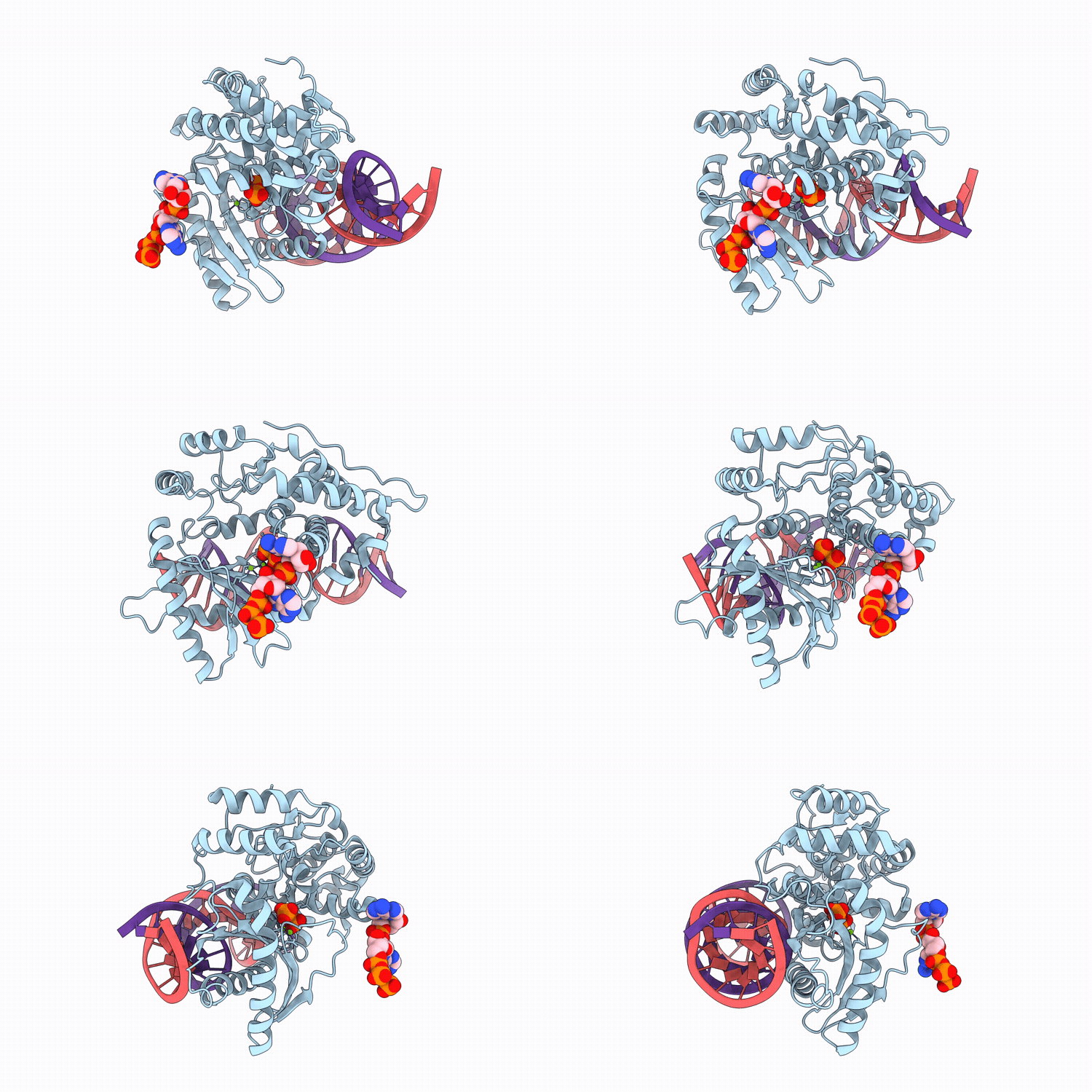
9NY9 image
Deposition Date 2025-03-27
Release Date 2026-04-08
Last Version Date 2026-05-20
Entry Detail
PDB ID:
9NY9
Keywords:
Title:
Crystal structure of the post-reactive state of porcine OAS1 in complex with dsRNA, catalytic center bound PPi, and dissociated 25A2.
Biological Source:
Source Organism(s):
Sus scrofa (Taxon ID: 9823)
synthetic construct (Taxon ID: 32630)
Expression System(s):
Method Details:
Experimental Method:
Resolution:
2.74 Å
R-Value Free:
0.25
R-Value Work:
0.23
Space Group:
P 43 21 2

Macromolecular Entities
Structures with similar UniProt ID
Protein Blast
Polymer Type:polypeptide(L)
Molecule:2'-5'-oligoadenylate synthase
Gene (Uniprot):OAS1
Chain IDs:A
Chain Length:357
Number of Molecules:1
Biological Source:Sus scrofa
Polymer Type:polyribonucleotide
Molecule:RNA (5'-R(*GP*GP*CP*UP*UP*UP*
Chain IDs:B
Chain Length:19
Number of Molecules:1
Biological Source:synthetic construct
Polymer Type:polyribonucleotide
Molecule:RNA (5'-R(*UP*UP*CP*AP*UP*AP*
Chain IDs:C
Chain Length:19
Number of Molecules:1
Biological Source:synthetic construct
Primary Citation
The Enzymatic Mechanism of OAS: How Metal Ions and Quantum Effects Help Activate Innate Immunity.
Acs Omega 11 24250 24268 (2026)
PMID: 42077911 DOI: 10.1021/acsomega.5c13236

Abstact

2'-5'-Oligoadenylate synthetases (OAS) are crucial innate immune sensors that activate antiviral responses upon detecting viral double-stranded RNA. Understanding the molecular mechanism of OAS is vital for advancing immunomodulatory therapies. This study provides a detailed enzymatic mechanism of the OAS, integrating structural, kinetic, and quantum chemical analyses. Crystallographic data of the OAS1 postreactive complexes shed light on the geometry of OAS1 following product formation and dissociation, the sequential order of product release, and the pivotal role of divalent metal ions in catalysis. Our data reveal the unanticipated involvement of a third metal ion, which may play a transient supporting role in the catalytic cycle. Moreover, they highlight the central role of quantum mechanisms in the OAS function. Strikingly, substituting catalytic Mg(2+) with Mn(2+) ions increases the substrate binding rate 9-fold and activates OAS for catalysis. The results of this study are pertinent to the OAS/cGAS family of innate immune sensors and offer insights that can be applied to a broader class of nucleotidyltransferases, which play key roles in various biological processes.

Legend

Protein

Chemical

Disease

Primary Citation of related structures
Feedback Form
Name
Email
Institute
Feedback