

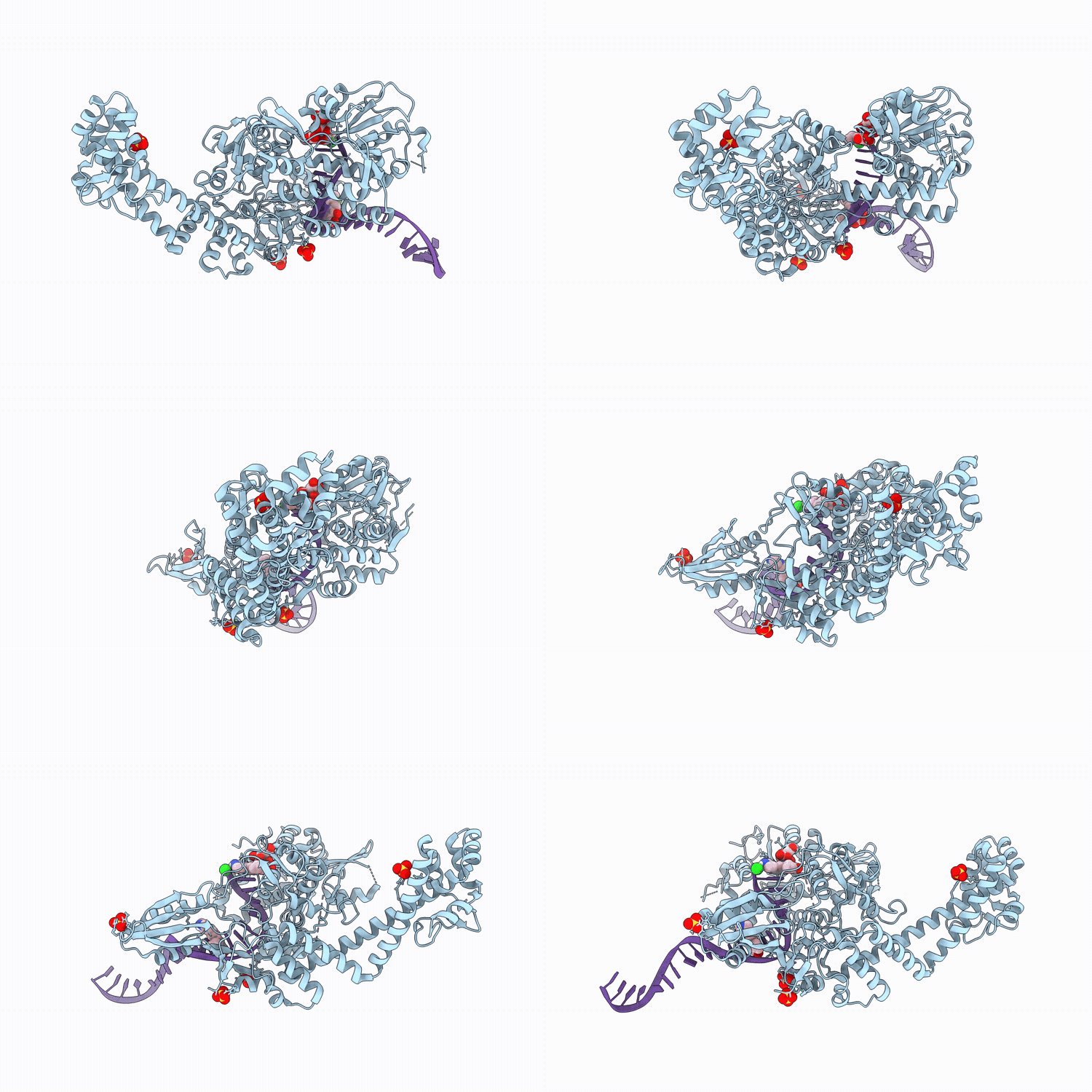
9NX4 image
Deposition Date 2025-03-25
Release Date 2026-04-22
Last Version Date 2026-04-22
Entry Detail
PDB ID:
9NX4
Title:
Crystal Structure of a P. Aeruginosa Gyrase Chimera In Complex with 20mer DNA and Ciprofloxacin
Biological Source:
Source Organism(s):
Expression System(s):
Method Details:
Experimental Method:
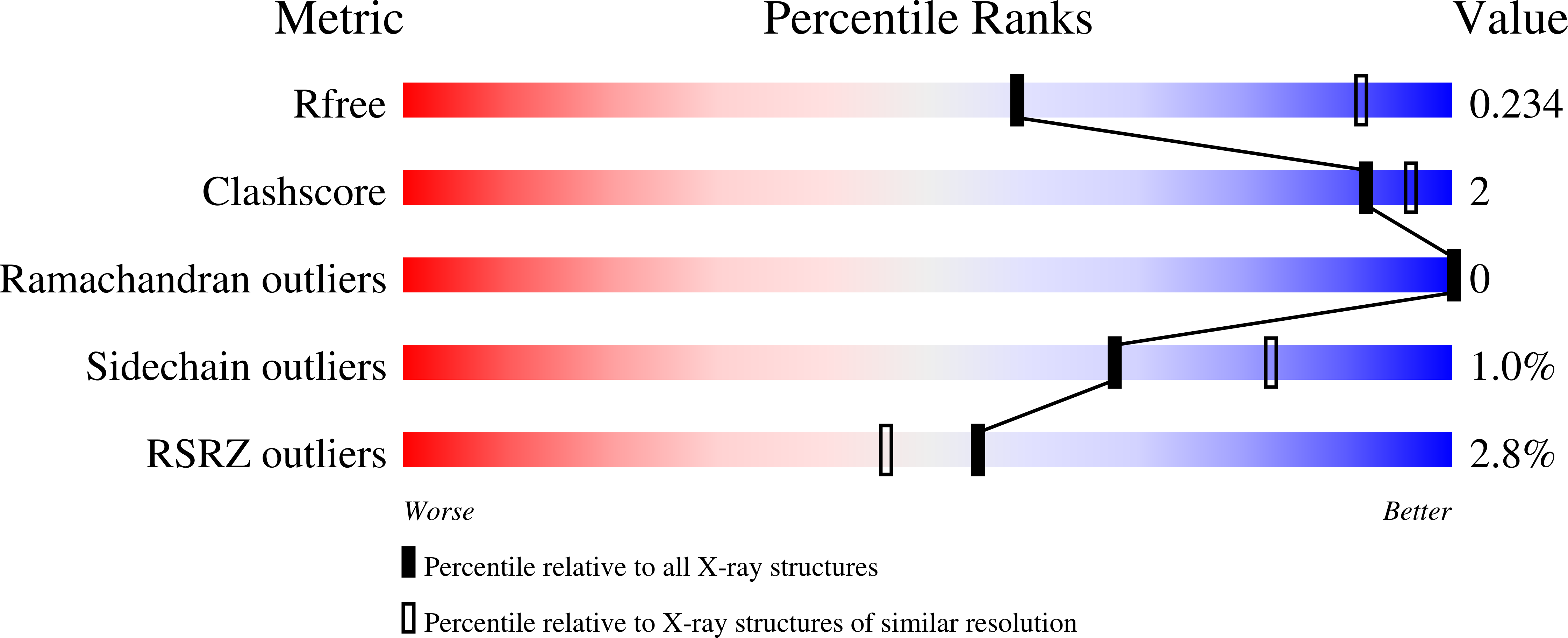
Resolution:
2.85 Å
R-Value Free:
0.23
R-Value Work:
0.20
R-Value Observed:
0.20
Space Group:
P 63 2 2
Macromolecular Entities
Protein Blast
Polymer Type:polypeptide(L)
Molecule:DNA gyrase subunit B,DNA gyra
Gene (Uniprot):gyrA, gyrB
Chain IDs:A
Chain Length:942
Number of Molecules:1
Biological Source:Pseudomonas aeruginosa
Polymer Type:polydeoxyribonucleotide
Molecule:DNA (5'-D(*AP*GP*CP*CP*GP*TP*
Chain IDs:B (auth: C)
Chain Length:20
Number of Molecules:1
Biological Source:Escherichia coli
Primary Citation
Structural and Computational Analysis of Pseudomonas aeruginosa DNA Gyrase Reveals Molecular Characteristics That May Contribute to Ciprofloxacin Resistance.
Biomolecules 16 ? ? (2026)
PMID: 41750386 DOI: 10.3390/biom16020318

Abstact

Pseudomonas aeruginosa is considered a priority pathogen by the World Health Organization due to its resistance to antibiotics. Isolates resistant to ciprofloxacin (CPFX), a bactericide commonly used against P. aeruginosa, usually carry the mutations T83I or D87N in the GyrA subunit of the DNA gyrase. Yet, the molecular mechanisms by which these mutations confer CPFX-resistance to P. aeruginosa are unknown. Here we solved the crystal structure of the P. aeruginosa gyrase catalytic cleavage core and used it to carry out molecular dynamic (MD) simulations of CPFX-gyrase binding in the wild-type as well as the T83I and the D87N mutant systems. Our results show that DNA plays the most prominent stabilizing role once CPFX is bound, with relatively minor contributions from Thr83 or Asp87. Interestingly, we found a solvent cavity adjacent to these residues that may provide CPFX access to the active site. Interaction energy analysis using Umbrella Sampling indicates that Thr83 and Asp87 may influence CPFX trajectory during binding. In the mutant systems, the repulsive potential increases at the cavity site, which may hinder CPFX accessing the binding site. These results shed light on P. aeruginosa resistance to CPFX and may help provide a methodology to identify new therapeutic agents to target fluoroquinolone resistant bacteria.

Legend

Protein

Chemical

Disease

Primary Citation of related structures
Feedback Form
Name
Email
Institute
Feedback