

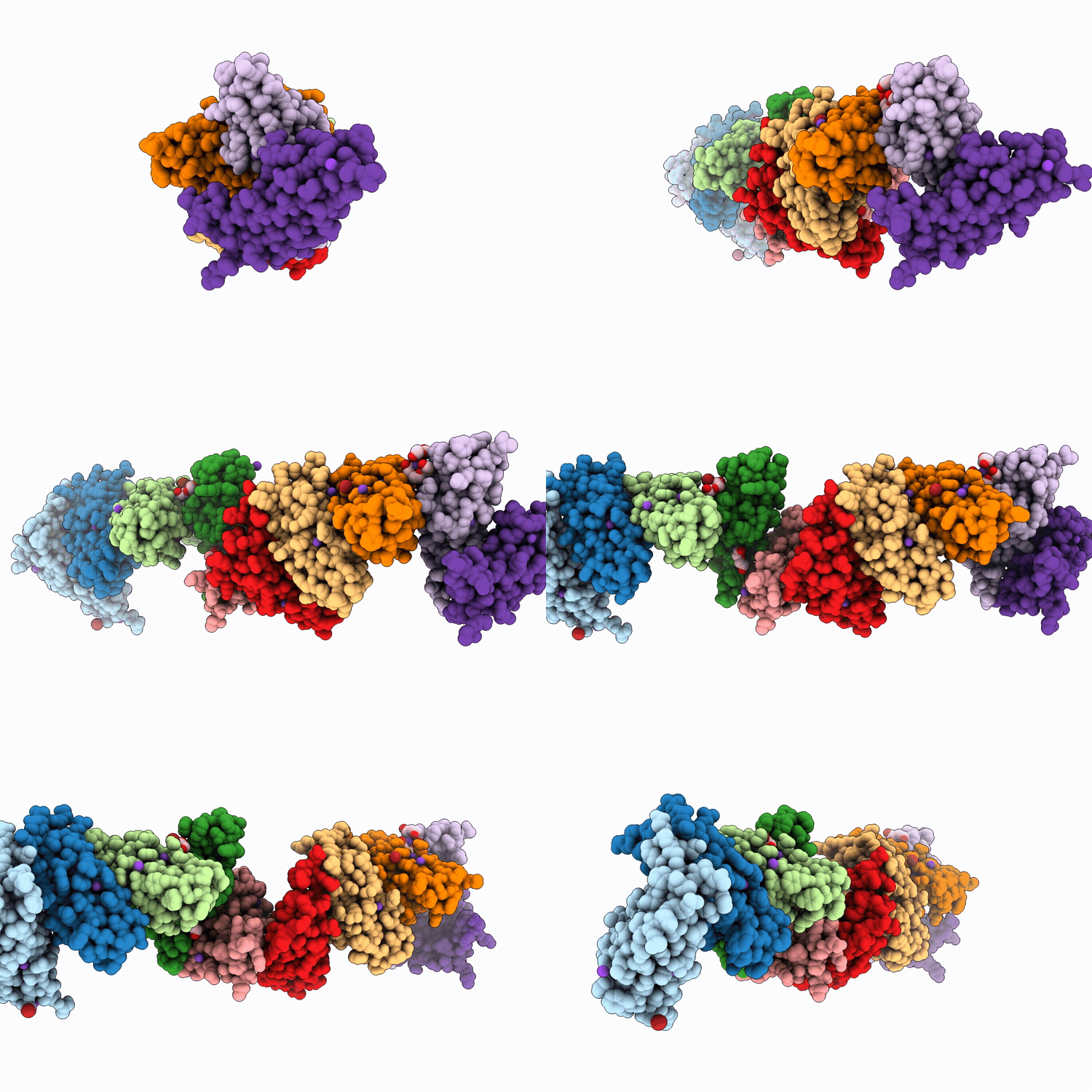
9NWH image
Deposition Date 2025-03-22
Release Date 2026-04-15
Last Version Date 2026-04-22
Entry Detail
PDB ID:
9NWH
Title:
Long-wavelength SAD Crystal Structure of the Third Immunoglobulin-Like Domain of Human Muscle-Specific Kinase (MuSK)
Biological Source:
Source Organism(s):
Homo sapiens (Taxon ID: 9606)
Expression System(s):
Method Details:
Experimental Method:
Resolution:
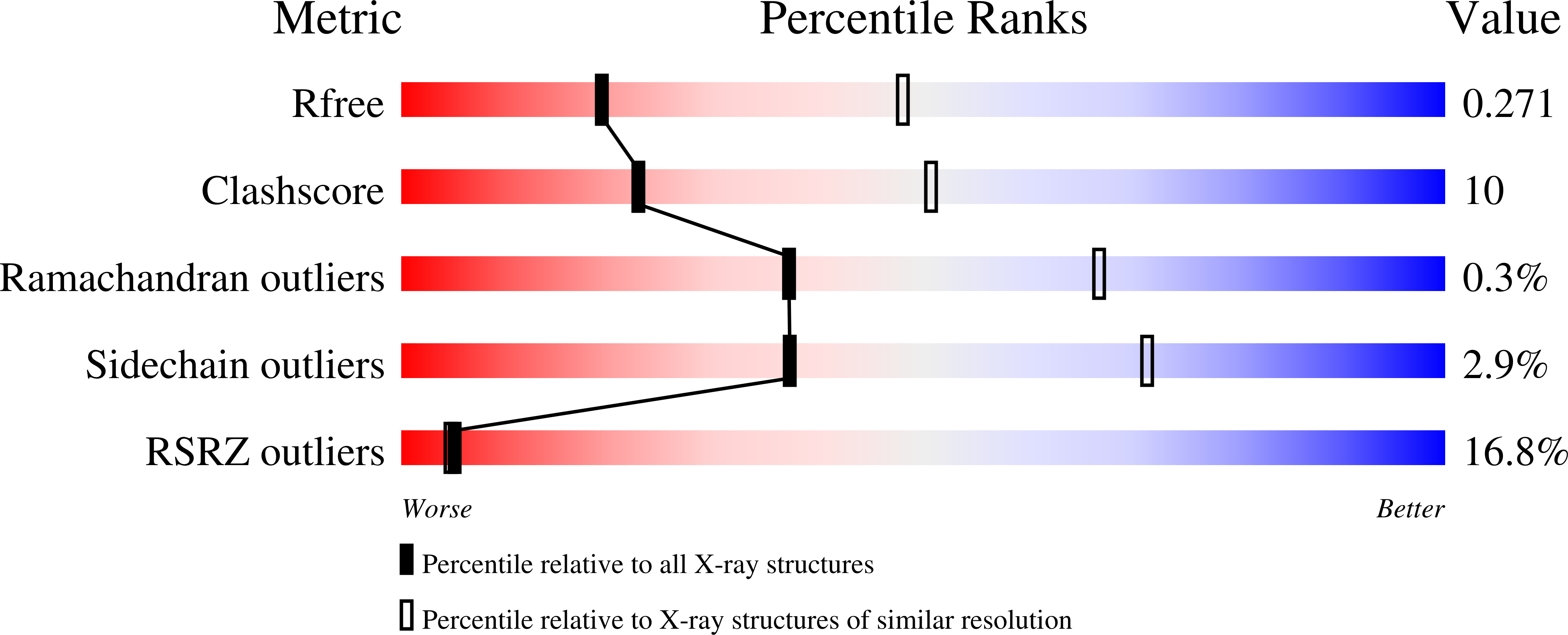
2.80 Å
R-Value Free:
0.26
R-Value Work:
0.23
R-Value Observed:
0.24
Space Group:
P 1 21 1
Macromolecular Entities
Structures with similar UniProt ID
Protein Blast
Polymer Type:polypeptide(L)
Molecule:Muscle, skeletal receptor tyr
Gene (Uniprot):MUSK
Chain IDs:A, B, C, D, E, F, G, H, I, J
Chain Length:104
Number of Molecules:10
Biological Source:Homo sapiens
Primary Citation
Molecular structure of the third immunoglobulin domain (Ig3) of human Muscle-Specific kinase (MuSK).
J. Struct. Biol. 218 108320 108320 (2026)
PMID: 41956176 DOI: 10.1016/j.jsb.2026.108320

Abstact

The Muscle-Specific Kinase (MuSK) is a monotopic transmembrane receptor responsible for key signaling events during development and maintenance of neuromuscular junctions. The N-terminal extracellular portion of MuSK is characterized by multiple domains, extensively involved in molecular interactions with co-receptor LRP4 during MuSK activation. The molecular mechanisms underlying MuSK activation through self- and non-self- molecular interactions are still poorly understood. In this work, we have recombinantly produced and characterized the third Ig domain of human MuSK (hMuSK-Ig3) using X-ray crystallography. Long-wavelength experimental phasing serendipitously revealed several potassium ions bound to the ten copies of hMuSK-Ig3 found in the crystallographic asymmetric unit, arranged in a super-helical fashion with paired antiparallel inter-domain molecular contacts involving beta-sheets from two neighboring molecules. Collectively, our data highlight unique structural features of this domain, including metal ion binding and surface contact hot-spots possibly suggestive of contact sites relevant for interactions with co-receptor LRP4 and/or other molecular partners involved in MuSK signaling.

Legend

Protein

Chemical

Disease

Primary Citation of related structures
Feedback Form
Name
Email
Institute
Feedback