

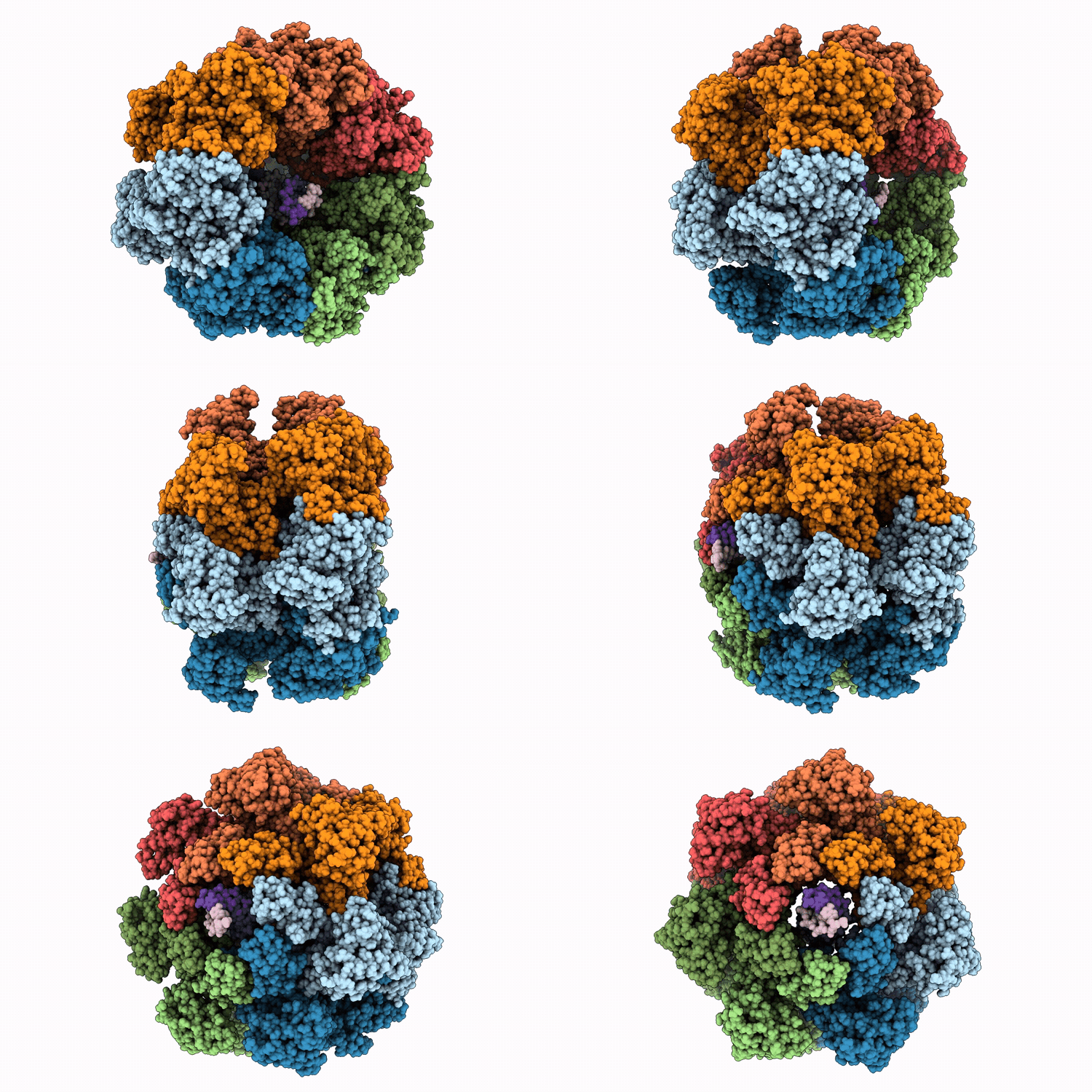
9NUY image
Deposition Date 2025-03-19
Release Date 2026-04-01
Last Version Date 2026-06-17
Entry Detail
PDB ID:
9NUY
Keywords:
Title:
SsoPfMCM:DNA class 3 from DNA 2
Biological Source:
Source Organism(s):
Expression System(s):
Method Details:
Experimental Method:
Resolution:
3.52 Å
Aggregation State:
PARTICLE
Reconstruction Method:
SINGLE PARTICLE
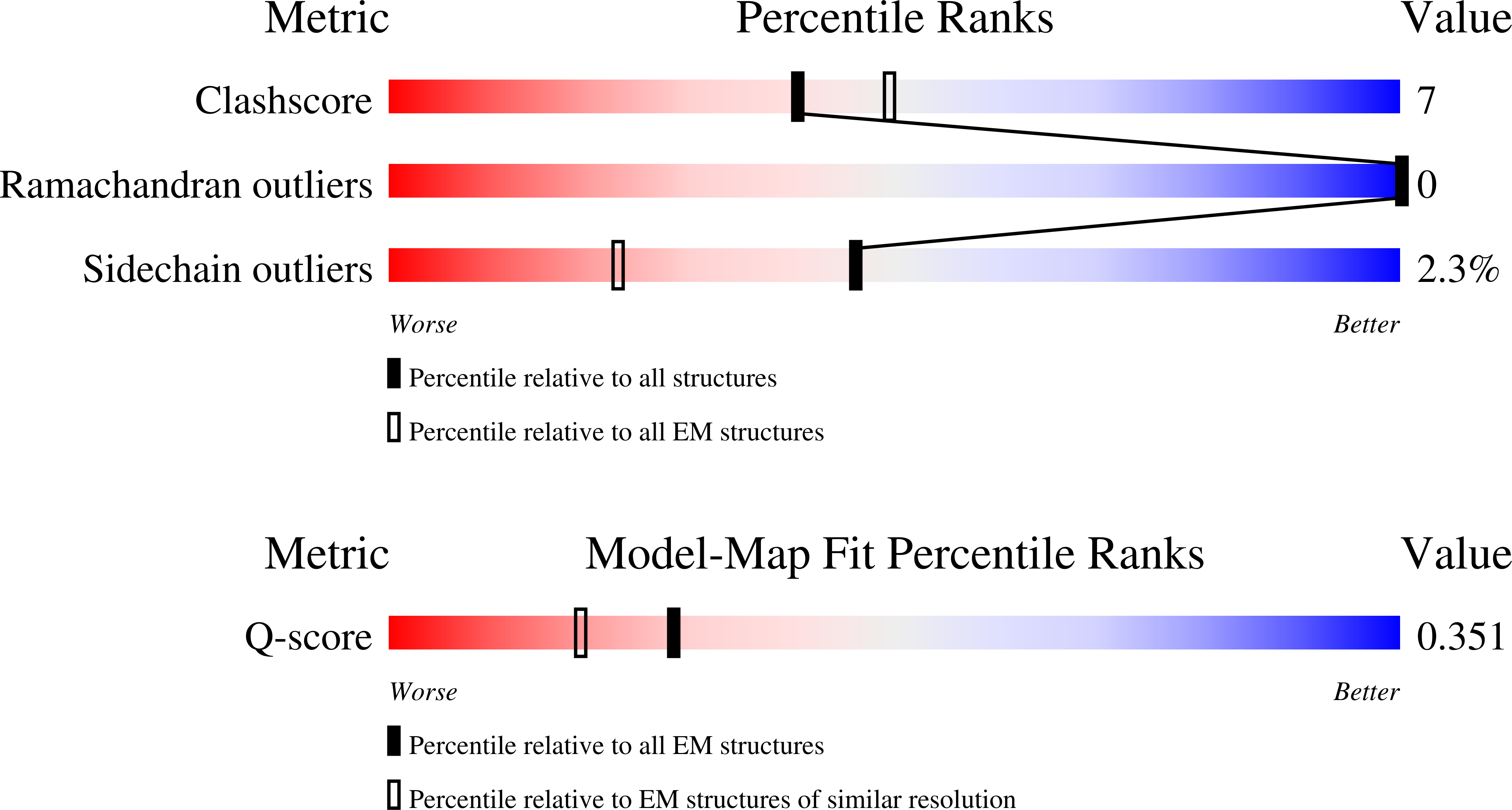
Macromolecular Entities
Structures with similar UniProt ID
Protein Blast
Polymer Type:polypeptide(L)
Molecule:Minichromosome maintenance pr
Gene (Uniprot):MCM
Chain IDs:A, B, C, D, E, F, G
Chain Length:613
Number of Molecules:7
Biological Source:Saccharolobus solfataricus P2
Polymer Type:polydeoxyribonucleotide
Molecule:DNA (60-MER)
Chain IDs:H (auth: X), I (auth: Y)
Chain Length:60
Number of Molecules:2
Biological Source:synthetic construct
Primary Citation
Archaeal and eukaryotic MCM rings sequentially melt DNA for replication initiation.
Nat Commun 17 ? ? (2026)
PMID: 41916983 DOI: 10.1038/s41467-026-70961-8

Abstact

DNA replication initiation requires local melting of fully base-paired DNA for a helicase to gain a foothold and initiate processive DNA unwinding. In eukaryotes and archaea, the helicase engine is the hexameric ring minichromosome maintenance (MCM) complex. In eukaryotes, a defined biochemical sequence assembles two Cdc45-MCM-GINS (CMG) complexes that provide limited DNA unwinding as the species that immediately precedes extensive unwinding. A prior structure revealed how MCM subunits interact with this form of DNA, but the atomic progression from undistorted DNA to this melted DNA species is unknown. Here, we present a sequential DNA melting mechanism determined by snapshots of an archaeal MCM ring with DNA in varying degrees of melting. In this mechanism, successive ATP-binding at MCM ATPase sites drives sequential discrete DNA melting steps mediated a specific MCM aromatic residue. Analysis of eukaryotic structures shows loaded MCM rings principally adopt only two molecular arrangements at the ATPase: one that does not melt DNA and one tuned to melt DNA with equivalent aromatic residues, indicating a universal sequential mechanism melts DNA in archaea and eukaryotes for replication initiation.

Legend

Protein

Chemical

Disease

Primary Citation of related structures
Feedback Form
Name
Email
Institute
Feedback