

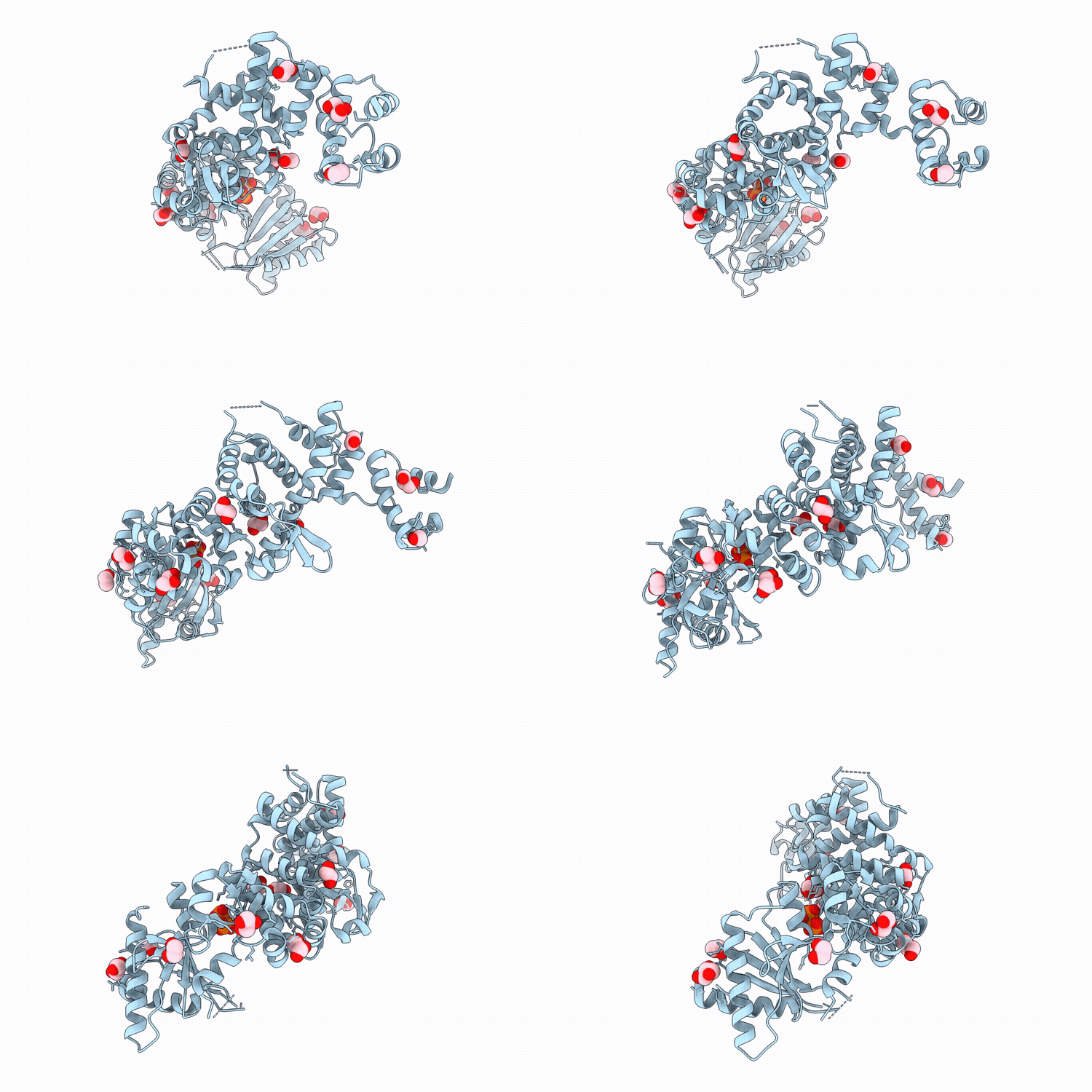
9NS2 image
Deposition Date 2025-03-15
Release Date 2026-05-13
Last Version Date 2026-05-27
Entry Detail
PDB ID:
9NS2
Keywords:
Title:
Structure of S. pombe CC-Adding Enzyme in complex with Pyrophosphate
Biological Source:
Source Organism(s):
Expression System(s):
Method Details:
Experimental Method:
Resolution:
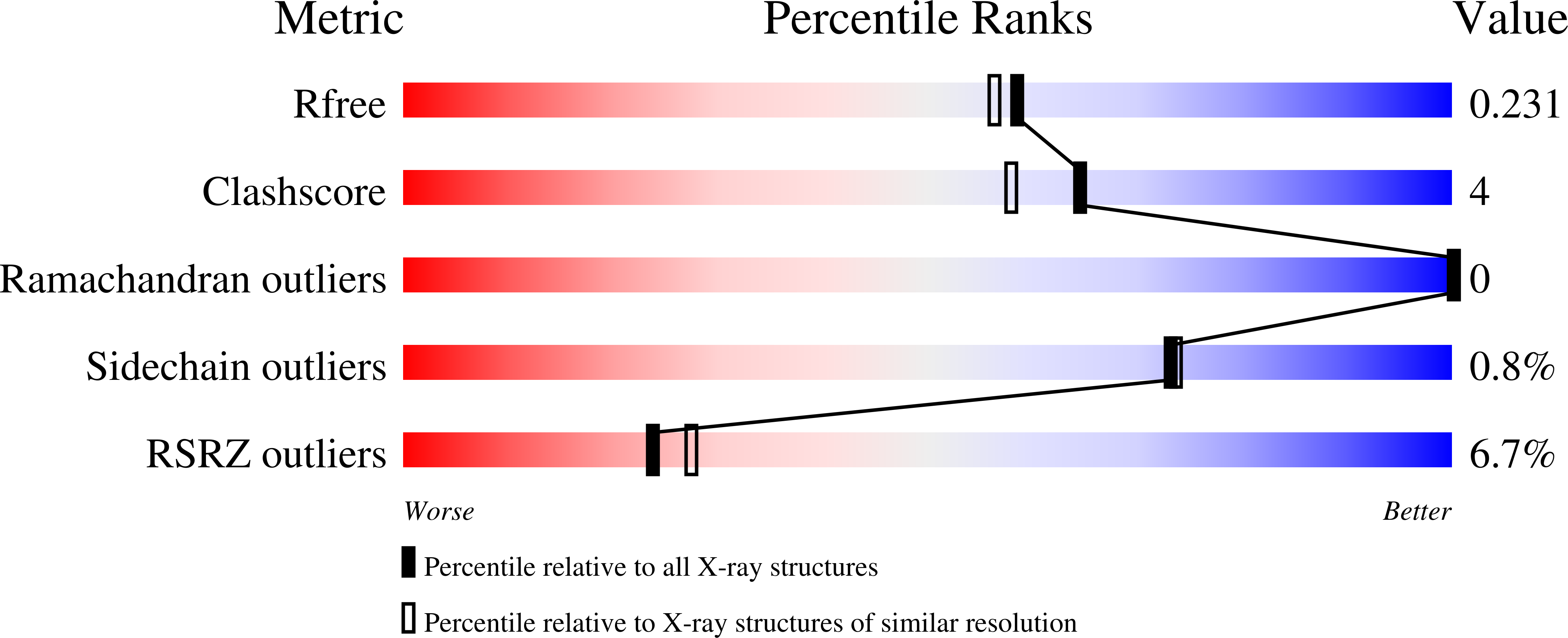
1.95 Å
R-Value Free:
0.23
R-Value Work:
0.18
R-Value Observed:
0.18
Space Group:
C 1 2 1
Macromolecular Entities
Structures with similar UniProt ID
Protein Blast
Polymer Type:polypeptide(L)
Molecule:tRNA nucleotidyltransferase c
Gene (Uniprot):cca1
Chain IDs:A
Chain Length:502
Number of Molecules:1
Biological Source:Schizosaccharomyces pombe
Primary Citation
Enzyme structure and kinetics produce tRNA and nucleotide specificity of Schizosaccharomyces pombe CC- and A-adding enzymes.
Nucleic Acids Res. 54 ? ? (2026)
PMID: 42130072 DOI: 10.1093/nar/gkag475

Abstact

Transfer RNAs (tRNAs) are transcribed and then processed through a series of post-transcriptional steps to produce mature forms that are charged with amino acids for translation. A CCA sequence is added at their 3' ends as the site of aminoacylation. Although a single enzyme typically adds the CCA tail without a nucleic acid template, Schizosaccharomyces pombe encodes two enzymes: CCA1 that adds the two cytosines and CCA2 that adds the adenosine. Here we explore how these two S. pombe enzymes evolved specificity to generate the 3' CCA tails. Enzymology (activity and kinetic assays) indicates distinct nucleotide addition specificity. CCA1 adds the sequential cytosines with a slower first addition followed by a quicker second addition. CCA2 then rapidly adds the terminal adenosine. Moreover, structural biology (crystal structures and molecular dynamics simulations) explains how the active site configuration and distances between active site and tRNA elbow binding residues of CCA1 and CCA2 restrict their tRNA substrate specificity. Together the data presented here describe how S. pombe CCA1 and CCA2 interrogate complete reaction complexes of tRNA and nucleotide substrates that arrange the particular components for active site catalysis and therefore specificity.

Legend

Protein

Chemical

Disease

Primary Citation of related structures
Feedback Form
Name
Email
Institute
Feedback