

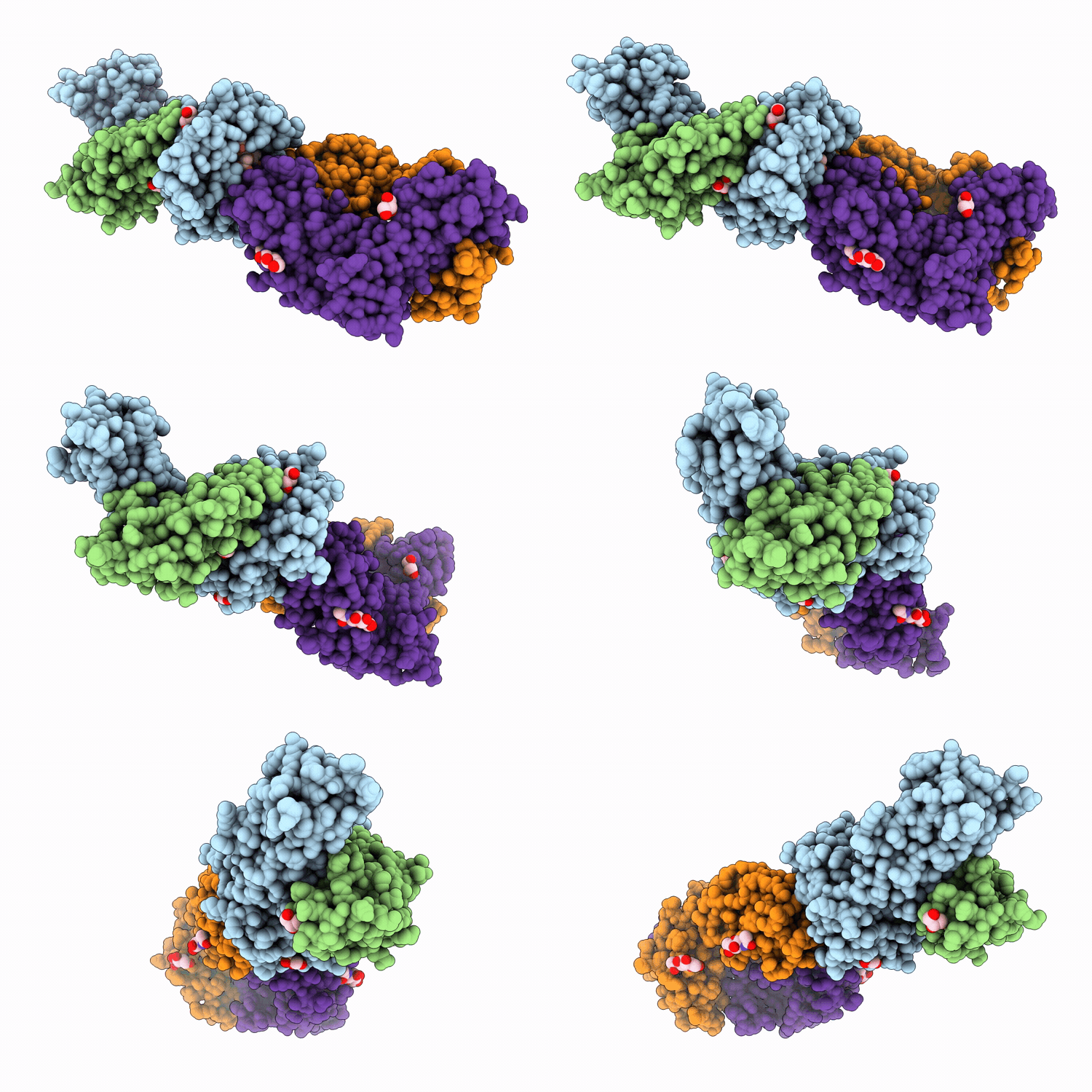
9NMU image
Deposition Date 2025-03-04
Release Date 2026-03-18
Last Version Date 2026-04-29
Entry Detail
PDB ID:
9NMU
Keywords:
Title:
TCR156 bound to HLA A*02:01-PAP
Biological Source:
Source Organism(s):
Homo sapiens (Taxon ID: 9606)
Method Details:
Experimental Method:
Resolution:
2.10 Å
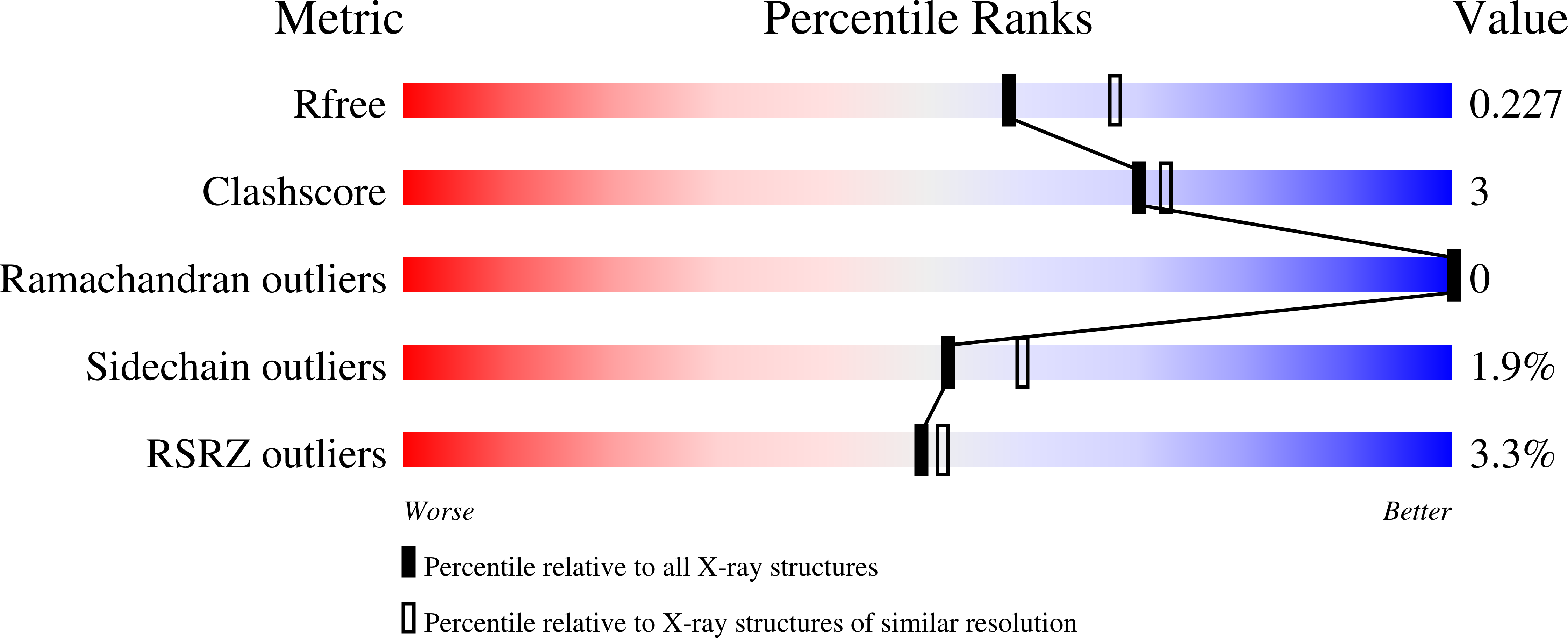
R-Value Free:
0.22
R-Value Work:
0.19
R-Value Observed:
0.19
Space Group:
C 1 2 1
Macromolecular Entities
Structures with similar UniProt ID
Protein Blast
Polymer Type:polypeptide(L)
Molecule:HLA class I histocompatibilit
Gene (Uniprot):HLA-A
Chain IDs:A
Chain Length:279
Number of Molecules:1
Biological Source:Homo sapiens
Structures with similar UniProt ID
Protein Blast
Polymer Type:polypeptide(L)
Molecule:Beta-2-microglobulin
Gene (Uniprot):B2M
Chain IDs:B
Chain Length:100
Number of Molecules:1
Biological Source:Homo sapiens
Structures with similar UniProt ID
Protein Blast
Polymer Type:polypeptide(L)
Molecule:Prostatic acid phosphatase
Gene (Uniprot):ACP3
Chain IDs:C
Chain Length:9
Number of Molecules:1
Biological Source:Homo sapiens
Protein Blast
Polymer Type:polypeptide(L)
Molecule:TCR156 alpha chain
Chain IDs:D
Chain Length:255
Number of Molecules:1
Biological Source:Homo sapiens
Protein Blast
Polymer Type:polypeptide(L)
Molecule:TCR156 beta chain
Chain IDs:E
Chain Length:307
Number of Molecules:1
Biological Source:Homo sapiens
Primary Citation
Overcoming T cell tolerance to tumor self-antigens through catch-bond engineering.
Science 391 eadx3162 eadx3162 (2026)
PMID: 41855322 DOI: 10.1126/science.adx3162

Abstact

T cells are often weakly responsive to tumor self-antigens because of central tolerance, constraining their ability to eliminate tumors. We exploited mechanical force to engineer a weakly reactive T cell receptor (TCR) specific for a nonmutated tumor-associated antigen (TAA), prostatic acid phosphatase (PAP). We identified a catch-bonding "hotspot" whose mutation enhanced T cell activity by increasing TCR-pMHC (peptide-major histocompatibility complex) bond lifetime while preserving physiological affinities and antigen fine specificities. T cells expressing these engineered TCRs showed vastly superior expansion in the tumor, effector phenotypes, and tumor elimination. Crystal structures and molecular dynamics simulations revealed a single amino acid mutation at the catch-bond hotspot primes the TCR for peptide interaction through water reorganization at the TCR-pMHC interface. Catch-bond engineering is a viable biophysically based strategy for transforming tolerized antitumor T cells into potent TCR-T cell therapy killers.

Legend

Protein

Chemical

Disease

Primary Citation of related structures
Feedback Form
Name
Email
Institute
Feedback