

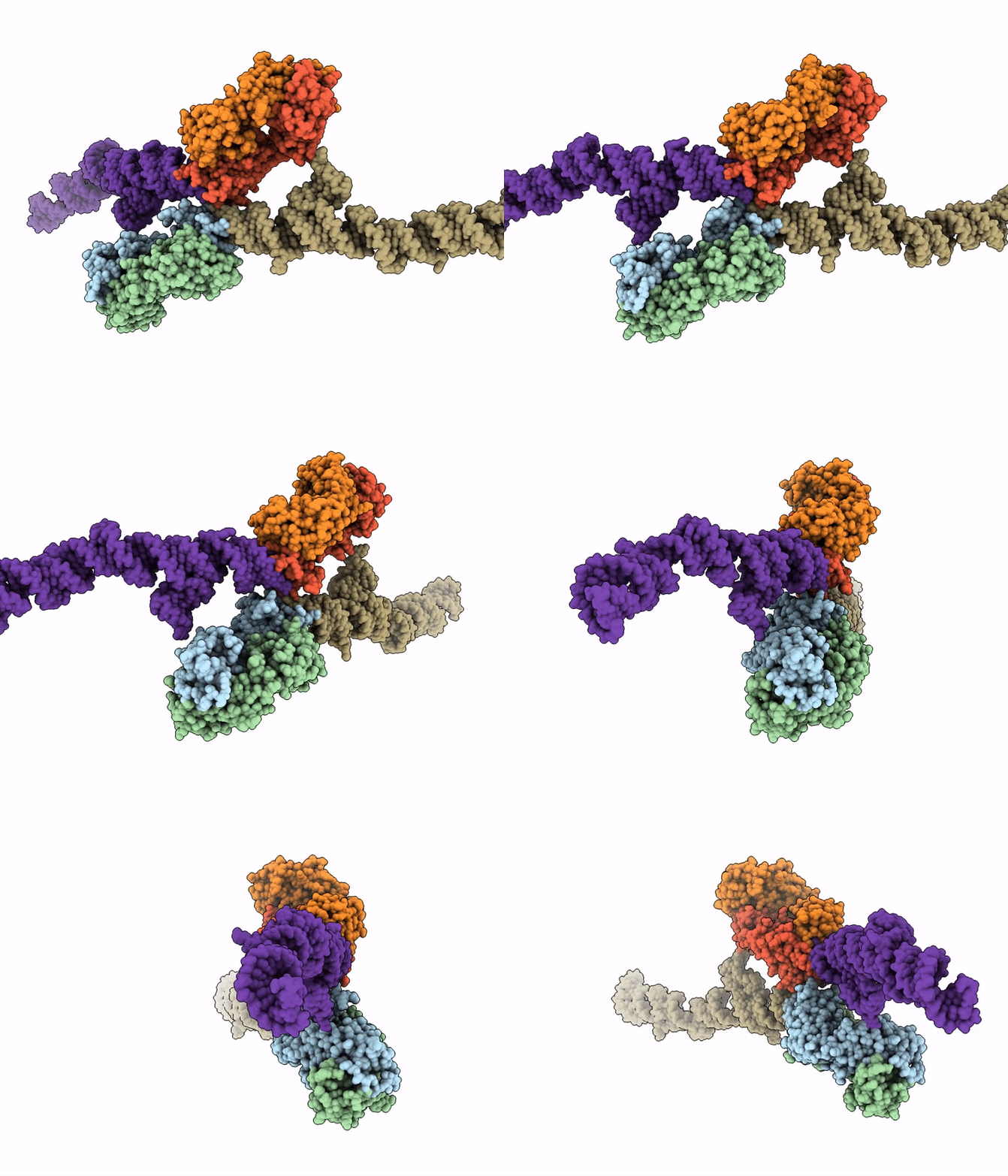
9NLN image
Deposition Date 2025-03-03
Release Date 2026-02-18
Last Version Date 2026-05-06
Entry Detail
PDB ID:
9NLN
Title:
Crystal Structure of Coxsackievirus B3 IRES Domain V in Complex with a Fab
Biological Source:
Source Organism(s):
Expression System(s):
Method Details:
Experimental Method:
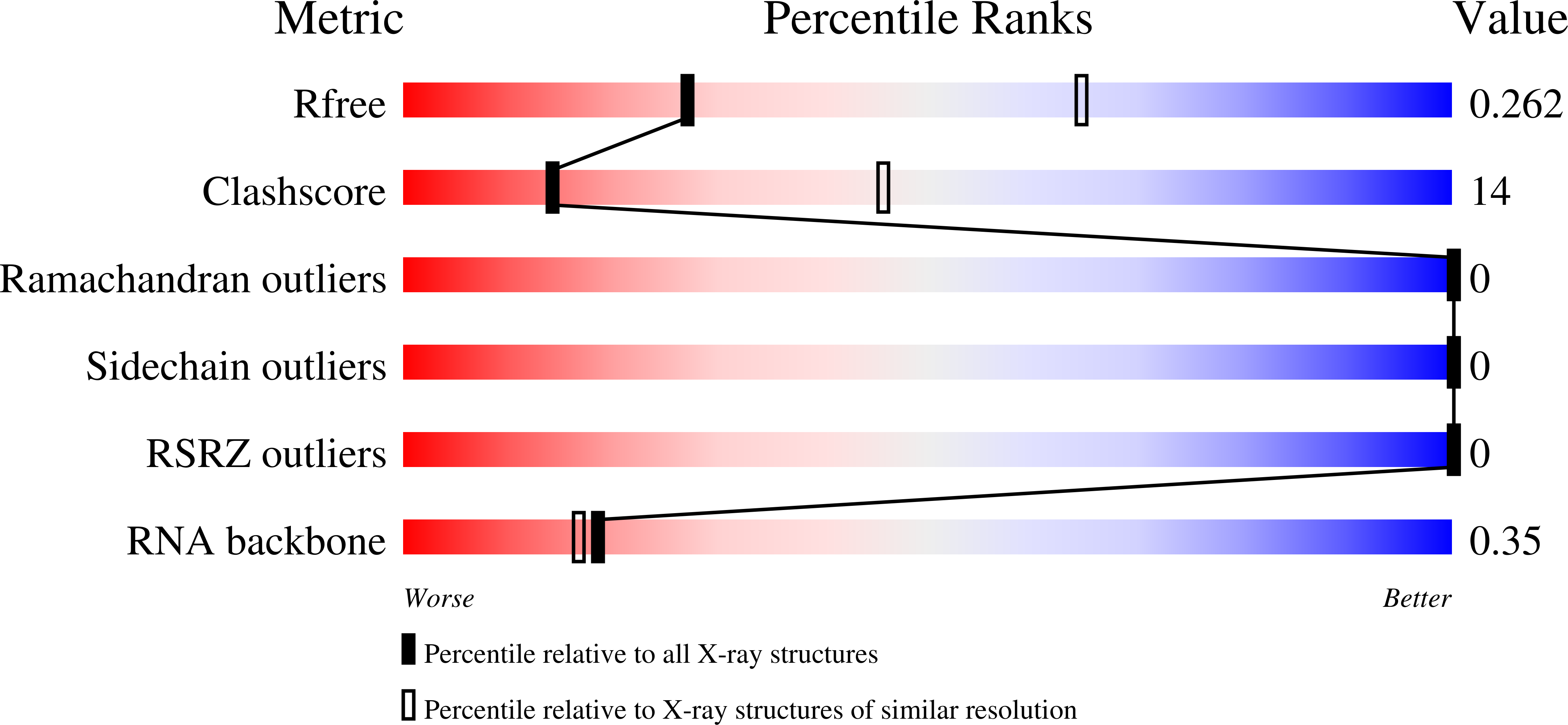
Resolution:
3.00 Å
R-Value Free:
0.26
R-Value Work:
0.21
R-Value Observed:
0.21
Space Group:
P 1 21 1
Macromolecular Entities
Protein Blast
Polymer Type:polypeptide(L)
Molecule:BL3-6 Fab Heavy Chain
Chain IDs:A, E (auth: H)
Chain Length:233
Number of Molecules:2
Biological Source:Homo sapiens
Protein Blast
Polymer Type:polypeptide(L)
Molecule:BL3-6 Fab Light Chain
Chain IDs:B, F (auth: L)
Chain Length:215
Number of Molecules:2
Biological Source:Homo sapiens
Polymer Type:polyribonucleotide
Molecule:RNA (CVB3 IRES Domain V)
Mutagens:U1G, C2G, A48G, G51A, C53A, A54C, U113C, G114C
Chain IDs:C, D (auth: R)
Chain Length:114
Number of Molecules:2
Biological Source:Coxsackievirus B3 (strain Nancy)
Ligand Molecules
Primary Citation
Structures of the eIF4G-binding RNA domains among picornaviral IRES types are topologically conserved.
Nat Commun 17 ? ? (2026)
PMID: 41690908 DOI: 10.1038/s41467-026-69554-2

Abstact

RNA domains within viral IRESs are crucial for initiating cap-independent translation of the genome in many positive-sense RNA viruses. However, the structures and mechanisms of these IRES domains remain unclear. Here, we present the 3 A resolution crystal structure of the coxsackievirus B3 (CVB3) IRES domain V (dV) as a model for type I IRESs. The crystal structure revealed an elongated architecture of dV, with two sets of coaxially stacked stems forming an H-type four-way junction (4WJ) organized by an A-rich motif. Despite sequence dissimilarities, this dV from a type I IRES exhibits remarkable structural similarity to the analogous tertiary structures of the encephalomyocarditis virus (EMCV) JK domain and the hepatitis A virus (HAV) dV, which are typical domains in the type II and III IRESs, respectively. While SAXS studies indicate a similar RNA fold of dV in solution, structure-guided binding, computational modeling, and X-ray footprinting studies with and without the HEAT1 domain of eIF4G, compared to the analogous type II (EMCV JK) and III (HAV dV) domains, suggest that various IRESs maintain a common mechanism of eIF4G binding interactions during viral genome translation. Despite sequence variability, this structural conservation across IRES types may offer unique opportunities to develop universal antivirals targeting these structures.

Legend

Protein

Chemical

Disease

Primary Citation of related structures
Feedback Form
Name
Email
Institute
Feedback