

9NKN image
Deposition Date 2025-03-01
Release Date 2026-02-04
Last Version Date 2026-02-25
Entry Detail
PDB ID:
9NKN
Keywords:
Title:
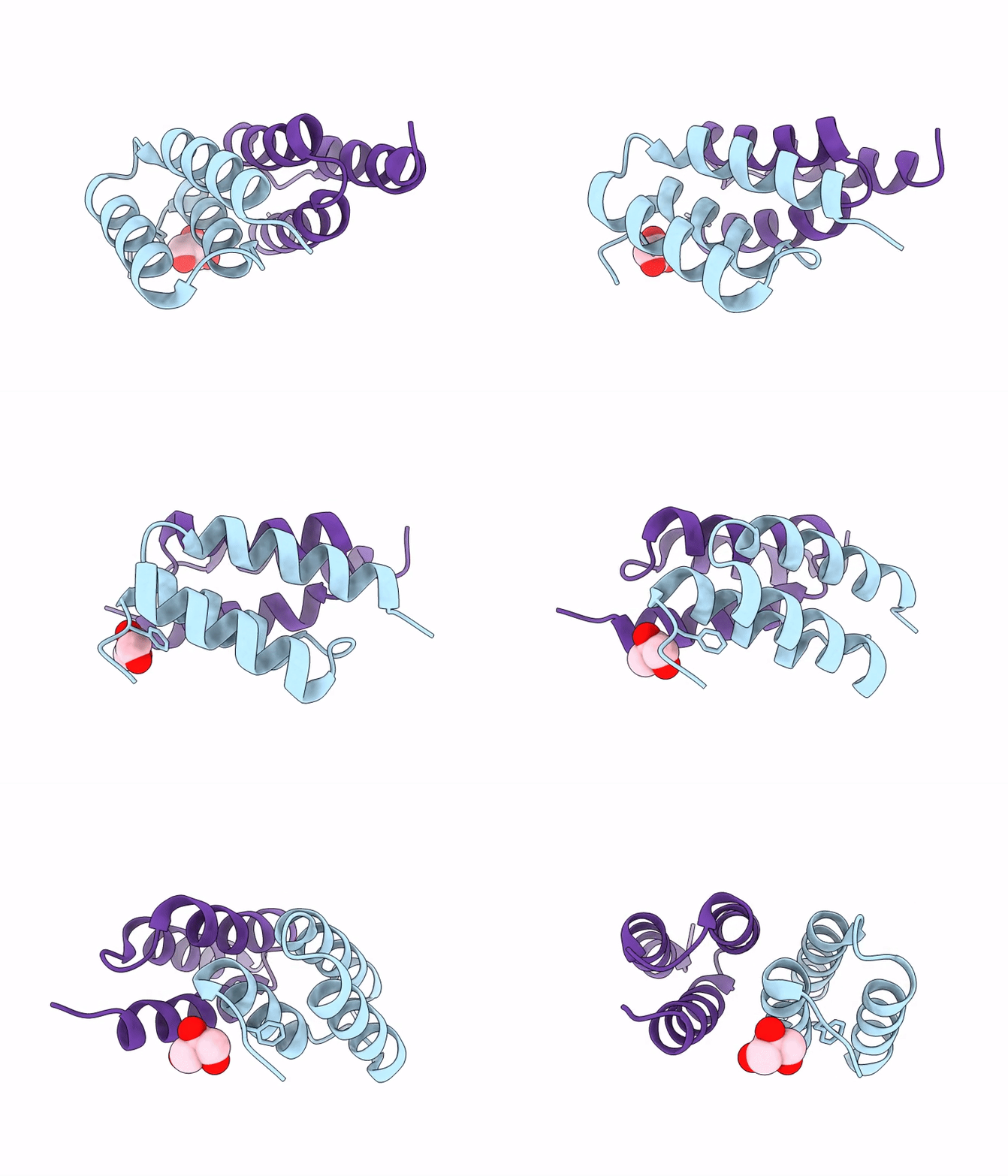
Coevolved affibody pair A2B2
Biological Source:
Source Organism(s):
Expression System(s):
Method Details:
Experimental Method:
Resolution:
1.95 Å
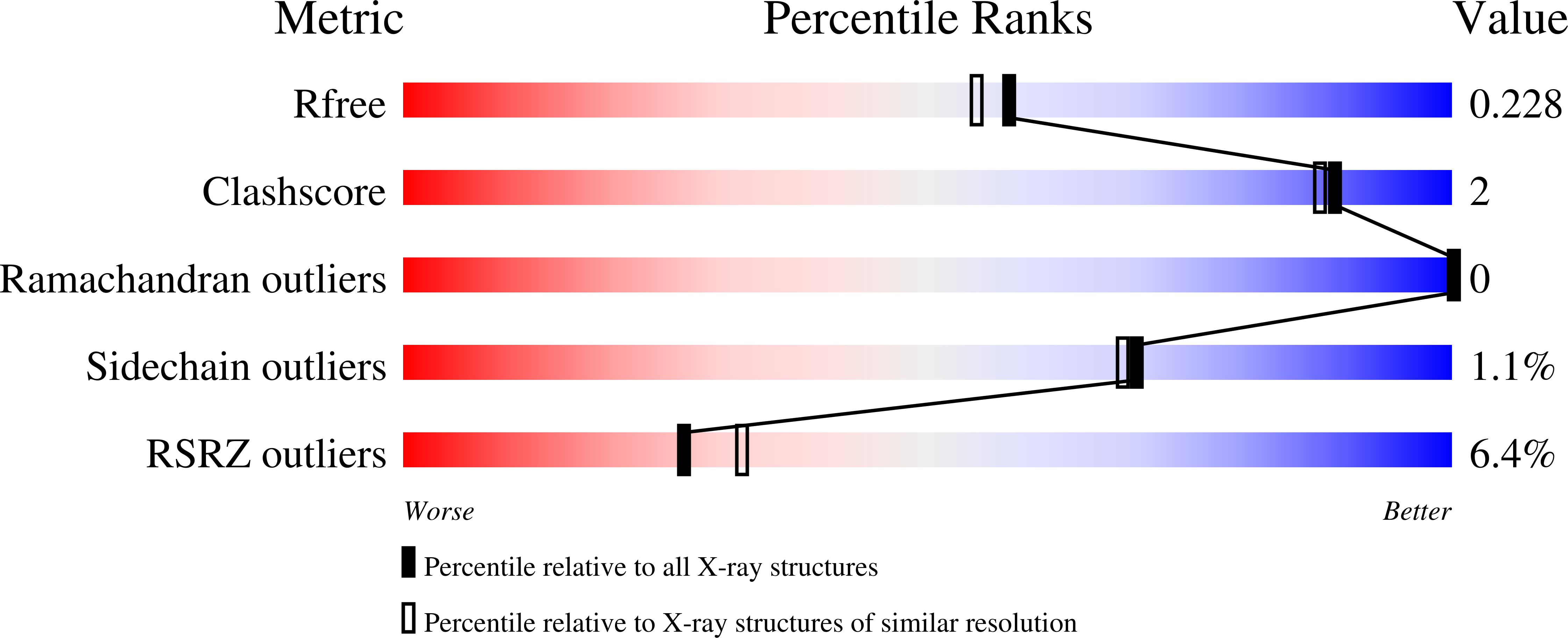
R-Value Free:
0.22
R-Value Work:
0.20
R-Value Observed:
0.20
Space Group:
P 21 21 2
Macromolecular Entities
Protein Blast
Polymer Type:polypeptide(L)
Molecule:A2 affibody
Chain IDs:A
Chain Length:68
Number of Molecules:1
Biological Source:synthetic construct
Protein Blast
Polymer Type:polypeptide(L)
Molecule:B2 affibody
Chain IDs:B
Chain Length:68
Number of Molecules:1
Biological Source:synthetic construct
Ligand Molecules
Primary Citation
Structural ontogeny of protein-protein interactions.
Science 391 eadx6931 eadx6931 (2026)
PMID: 41678610 DOI: 10.1126/science.adx6931

Abstact

Understanding how protein binding sites evolve interactions with other proteins could hold clues to targeting "undruggable" surfaces. We used synthetic coevolution to engineer new interactions between naive surfaces, simulating the de novo formation of protein complexes. We isolated seven distinct structural families of protein Z-domain complexes and found that synthetic complexes explore multiple shallow energy wells through ratchet-like docking modes, whereas complexes formed by natural binding sites converged in a deep energy well with a relatively fixed geometry. Epistasis analysis of a machine learning-estimated fitness landscape revealed "seed" contacts between binding partners that anchored the earliest stages of encounter complex formation. Our results suggest that "silent" surfaces have a shallower energy landscape than natural binding sites, disfavoring tight binding, likely owing to evolutionary counterselection.

Legend

Protein

Chemical

Disease

Primary Citation of related structures
Feedback Form
Name
Email
Institute
Feedback