

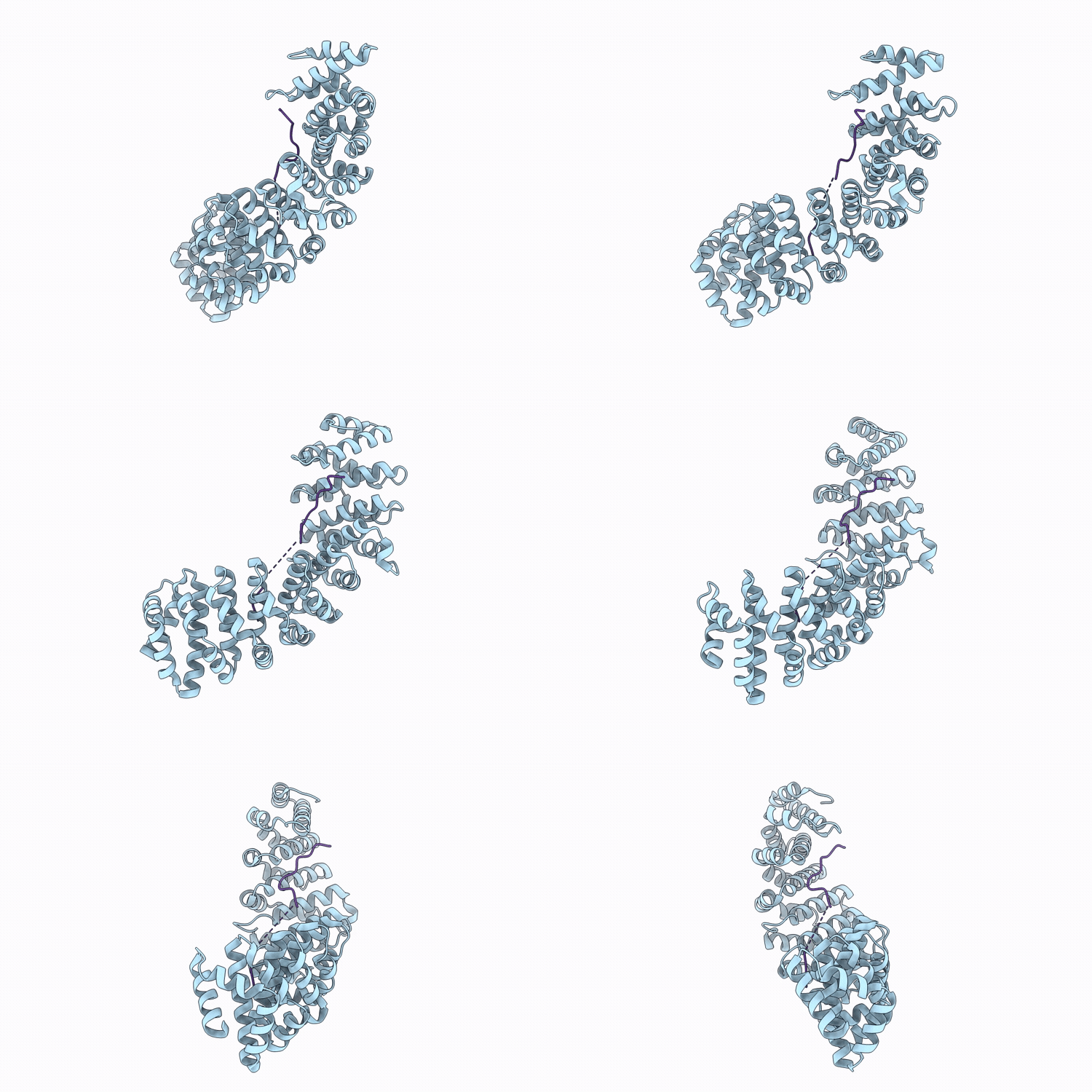
9NIB image
Deposition Date 2025-02-25
Release Date 2026-04-01
Last Version Date 2026-10-14
Entry Detail
PDB ID:
9NIB
Title:
Black sea bass polyomavirus LTA NLS bound to improtin alpha 2
Biological Source:
Source Organism(s):
Expression System(s):
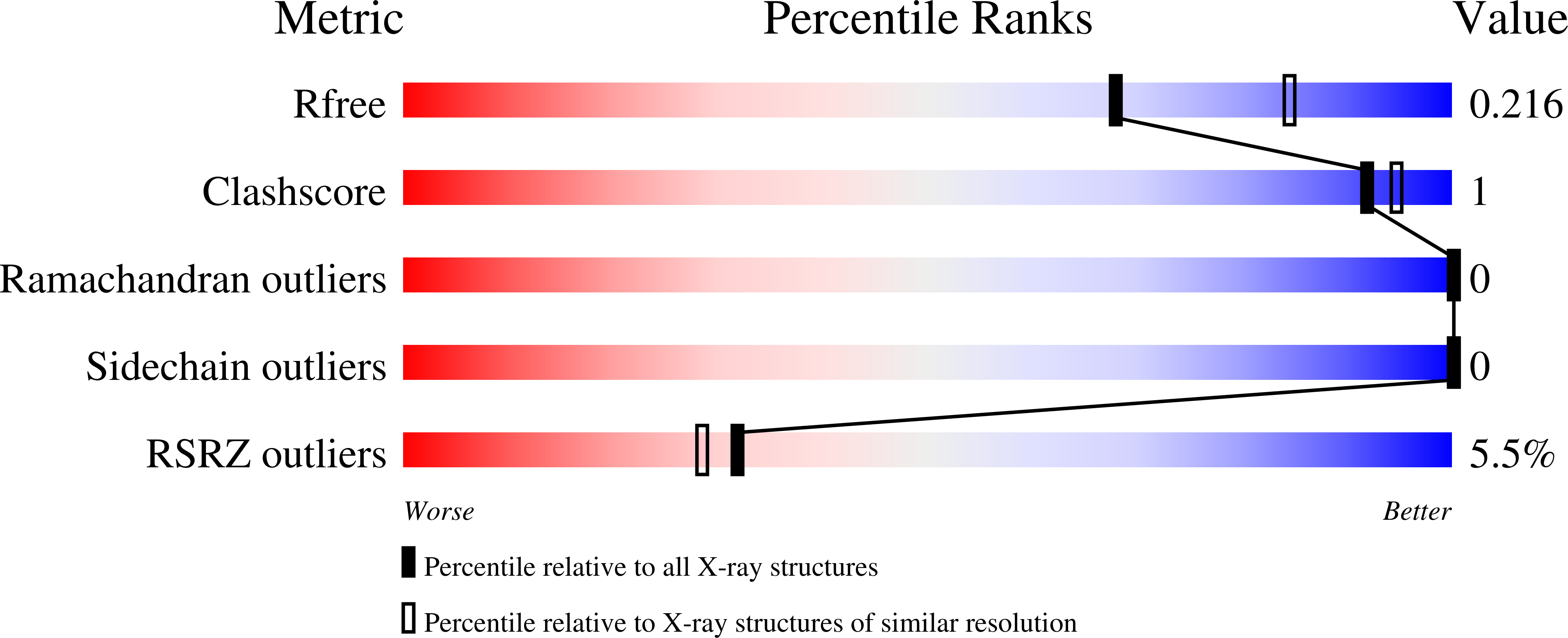
Method Details:
Experimental Method:
Resolution:
2.20 Å
R-Value Free:
0.21
R-Value Work:
0.18
R-Value Observed:
0.19
Space Group:
P 21 21 21
Macromolecular Entities
Polymer Type:polypeptide(L)
Molecule:Importin subunit alpha-1
Gene (Uniprot):Kpna2
Chain IDs:A
Chain Length:510
Number of Molecules:1
Biological Source:Mus musculus
Polymer Type:polypeptide(L)
Molecule:Truncated large T antigen
Chain IDs:B
Chain Length:24
Number of Molecules:1
Biological Source:Black sea bass polyomavirus 1
Primary Citation
Importin alpha / beta 1 dependent nuclear import of black sea bass polyomavirus large tumor antigen is mediated by a classical NLS located downstream of the SF3 helicase domain.
Biochim Biophys Acta Mol Cell Res 1873 120074 120074 (2026)
PMID: 41173331 DOI: 10.1016/j.bbamcr.2025.120074

Abstact

Polyomaviruses (PyVs) are small dsDNA viruses replicating in the host cell nucleus, thanks to the viral encoded large tumor antigen (LTA). Aided by recent advances in molecular biology techniques, the list of known PyVs is rapidly growing, revealing unexpected broad sequence, and host heterogenicity. Given their dependence on nuclear localization, LTAs represent an attractive model for studying the nuclear transport process. A comprehensive analysis of the evolution of classical nuclear localization signals (cNLSs) within LTAs encoded by PyVs infecting mammals highlighted strong positional conservation of cNLSs between the LXCXE motif and the origin-binding domain (OBD). Here we extend such analysis to PyVs infecting non-mammalian hosts. We combined biochemical, structural and functional assays to demonstrate that black sea bass (BSB) PyV-LTA is transported into the nucleus by the Importin (IMP)alpha/beta1 heterodimer thanks to the recognition of a bipartite cNLS located downstream of the SF3 helicase domain, rather than between the LXCXE motif and the OBD. Such cNLS binds with high affinity to several IMPalpha paralogs by simultaneously interacting with the minor and major binding sites. Substitution of NLS key basic residues abrogating binding to IMPalpha, or co-expression with the well characterized IMPalpha/beta1 inhibitor Bimax2 suppressed nuclear localization. Intriguingly a cNLS could be identified in a similar position in LTAs from other PyVs infecting ray-finned fishes, but not cartilaginous fishes, birds or scorpions, where cNLSs were predicted elsewhere. Our study suggests that LTAs from PyVs infecting different non-mammalian hosts might bear cNLS in distinctive positions, possibly reflecting processes of virus-host adaptation.

Legend

Protein

Chemical

Disease

Primary Citation of related structures
Feedback Form
Name
Email
Institute
Feedback