

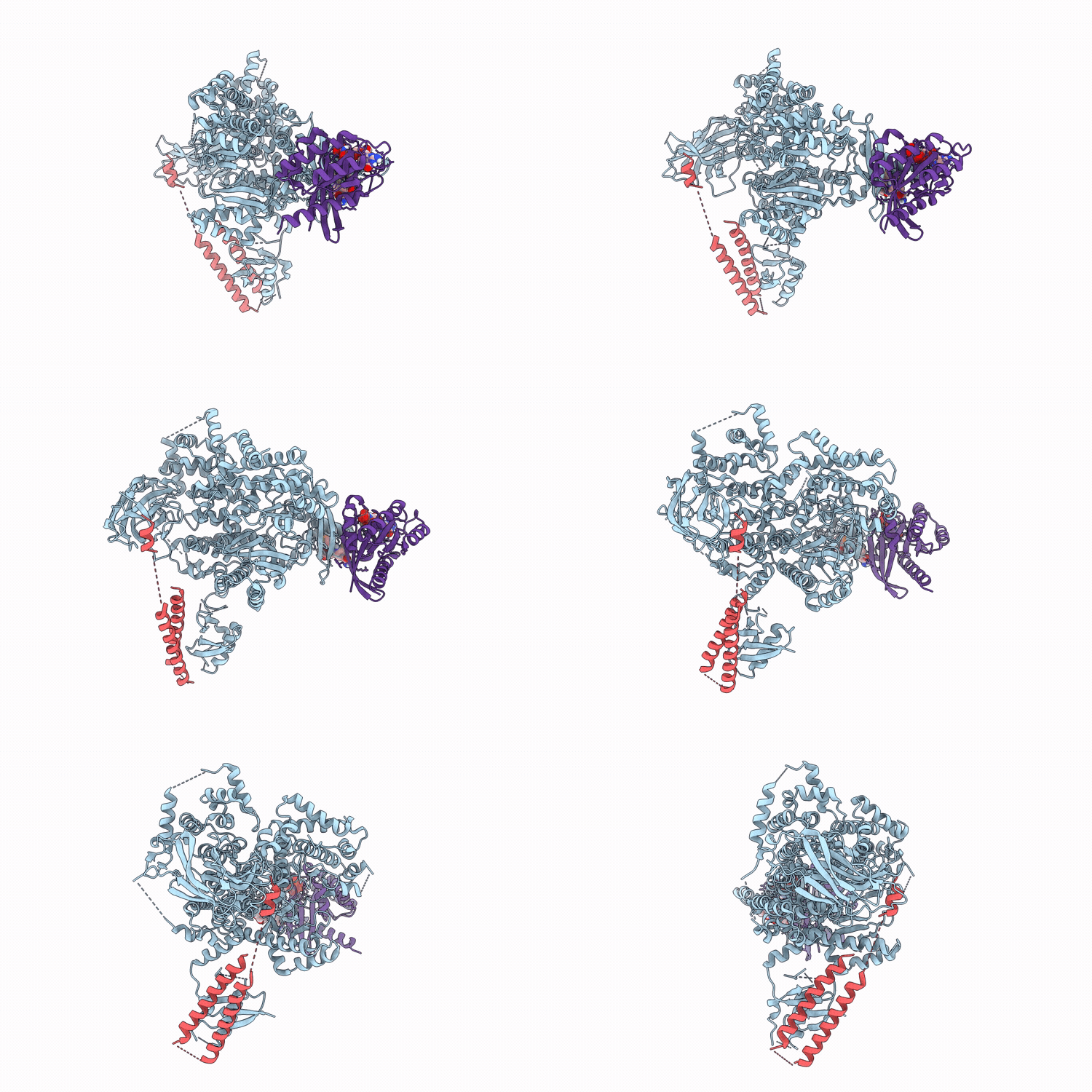
9NI8 image
Deposition Date 2025-02-25
Release Date 2026-05-27
Last Version Date 2026-05-27
Entry Detail
PDB ID:
9NI8
Title:
Cryo-EM structure of the Class 2 PI3K alpha/KRas complex on POPC/POPS nanodiscs
Biological Source:
Source Organism(s):
Homo sapiens (Taxon ID: 9606)
Expression System(s):
Method Details:
Experimental Method:
Resolution:
3.23 Å
Aggregation State:
PARTICLE
Reconstruction Method:
SINGLE PARTICLE
Macromolecular Entities
Structures with similar UniProt ID
Protein Blast
Polymer Type:polypeptide(L)
Molecule:Phosphatidylinositol 4,5-bisp
Gene (Uniprot):PIK3CA
Chain IDs:A
Chain Length:1096
Number of Molecules:1
Biological Source:Homo sapiens
Structures with similar UniProt ID
Protein Blast
Polymer Type:polypeptide(L)
Molecule:Phosphatidylinositol 3-kinase
Gene (Uniprot):PIK3R1
Chain IDs:B
Chain Length:724
Number of Molecules:1
Biological Source:Homo sapiens
Structures with similar UniProt ID
Protein Blast
Polymer Type:polypeptide(L)
Molecule:Isoform 2B of GTPase KRas
Gene (Uniprot):KRAS
Chain IDs:C
Chain Length:189
Number of Molecules:1
Biological Source:Homo sapiens
Primary Citation
Structures of the PI3K alpha /KRas complex on lipid bilayers reveal the molecular mechanism of PI3K alpha activation.
Biorxiv ? ? ? (2025)
PMID: 40196507 DOI: 10.1101/2025.03.22.644753

Abstact

PI3Kalpha is a potent oncogene that converts PIP2 to PIP3 at the plasma membrane upon activation by receptor tyrosine kinases and Ras GTPases. In the absence of any structures of activated PI3Kalpha, the molecular details of its activation remain unknown. Here, we present cryo-EM structures of the PI3Kalpha/KRas complex embedded in lipid nanodiscs, revealing a rich ensemble of PI3Kalpha states adopted at the membrane surface. The sequential addition of a lipid bilayer, PIP2 and an activating phosphopeptide leads to the progressive release of key inhibitory domains from the PI3Kalpha catalytic core, which directly correlates with the reorganization of its active site. While association with POPC/POPS nanodiscs partially relieves PI3Kalpha autoinhibition, incorporation of PIP2 triggers near-complete displacement of PI3Kalpha inhibitory domains and significant restructuring of active site regulatory motifs. The addition of the activating phosphopeptide induces dimerization of the PI3Kalpha/KRas complex through a p110alpha catalytic subunit-mediated interface that is sterically occluded in autoinhibited PI3Kalpha. In cells, this dimeric PI3Kalpha complex amplifies Akt signaling in response to growth factor stimulation. Collectively, our structures map the conformational landscape of PI3Kalpha activation and reveal previously unexplored interfaces for potential therapeutic targeting.

Legend

Protein

Chemical

Disease

Primary Citation of related structures
Feedback Form
Name
Email
Institute
Feedback