

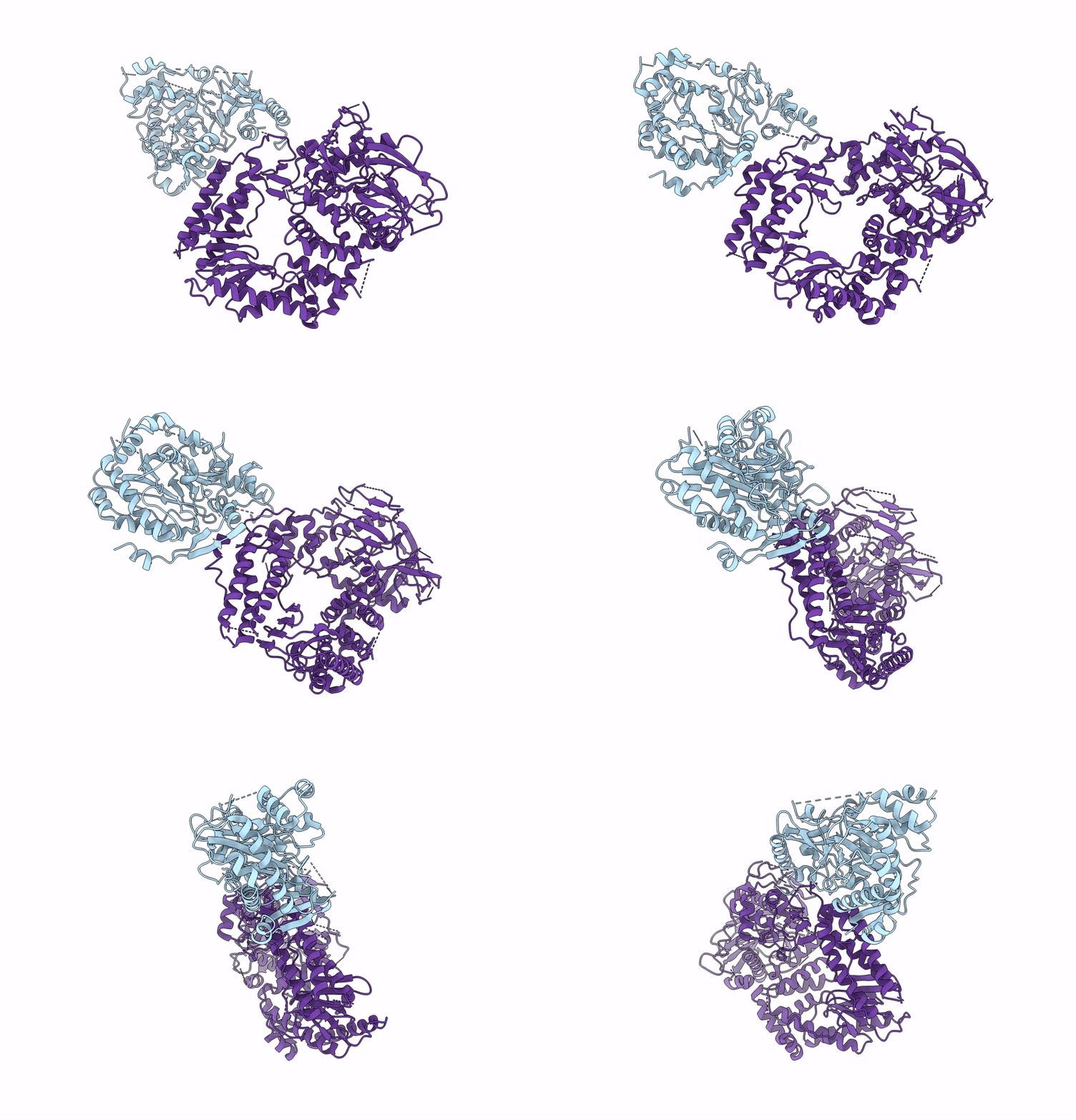
9NDQ image
Deposition Date 2025-02-18
Release Date 2025-08-13
Last Version Date 2026-02-25
Entry Detail
PDB ID:
9NDQ
Title:
The rigid portion of Cryo-EM structure of Herpesvirus Helicase-Primase complex prepared with forked DNA and ATP-gamma-S
Biological Source:
Source Organism(s):
Herpesviridae (Taxon ID: 10292)
Expression System(s):
Method Details:
Experimental Method:
Resolution:
3.00 Å
Aggregation State:
PARTICLE
Reconstruction Method:
SINGLE PARTICLE
Macromolecular Entities
Structures with similar UniProt ID
Protein Blast
Polymer Type:polypeptide(L)
Molecule:DNA primase
Gene (Uniprot):UL52
Chain IDs:A
Chain Length:1057
Number of Molecules:1
Biological Source:Herpesviridae
Structures with similar UniProt ID
Protein Blast
Polymer Type:polypeptide(L)
Molecule:DNA helicase/primase complex-
Gene (Uniprot):UL8
Chain IDs:B (auth: C)
Chain Length:747
Number of Molecules:1
Biological Source:Herpesviridae
Ligand Molecules
Primary Citation
Structural and mechanistic insights into herpesvirus helicase-primase and its therapeutic inhibitors.
Nat Microbiol 10 3191 3201 (2025)
PMID: 41188384 DOI: 10.1038/s41564-025-02168-4

Abstact

The herpes simplex virus (HSV) helicase-primase (HP) complex is a promising anti-herpes therapeutic target. However, progress in developing highly effective small-molecule HP inhibitors (HPIs) for the treatment of genital herpes has been hindered by the lack of structural information on the HP complex and the incomplete understanding of the mechanism of action of HPIs. Here we present the cryogenic electron microscopy structure of the HSV-1 HP apo-complex (3.8 A), along with structures bound to pritelivir (3.2 A) and amenamevir (3.2 A)-two clinically active, chemically distinct HPIs. The potency of both inhibitors against HSV variants bearing mutations within the HPI binding pocket supports the high-resolution mapping of key molecular interactions while revealing residues that govern their antiviral spectrum against alphaherpesviruses. Our results provide important insight into the unique architecture of the HP complex and the mechanism of inhibition of HPIs, paving the way for the development of next-generation antivirals to treat herpesvirus infections.

Legend

Protein

Chemical

Disease

Primary Citation of related structures
Feedback Form
Name
Email
Institute
Feedback