

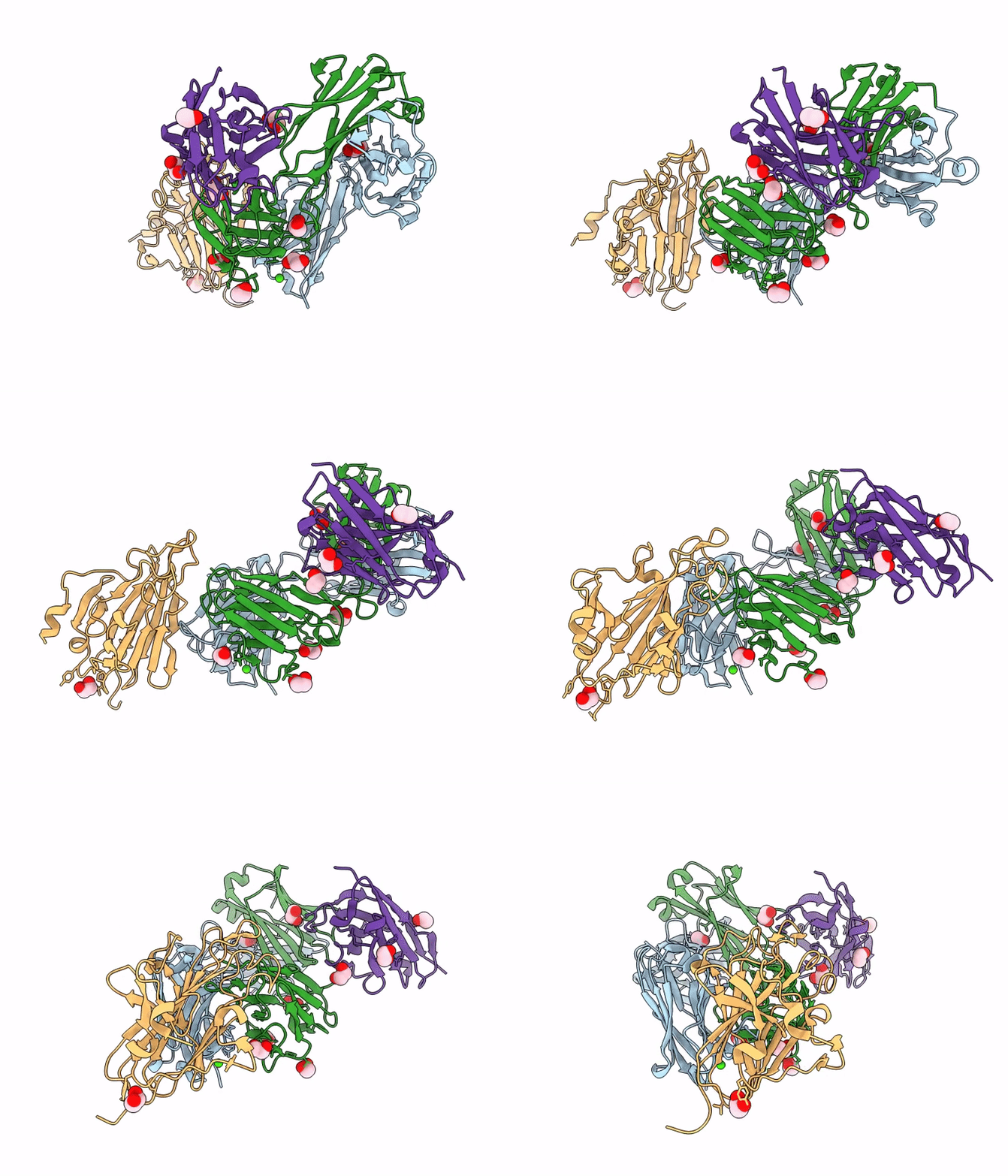
9N8I image
Deposition Date 2025-02-08
Release Date 2026-02-04
Last Version Date 2026-06-10
Entry Detail
PDB ID:
9N8I
Keywords:
Title:
Pfs230 domain 1 bound by RUPA-39 Fab
Biological Source:
Source Organism(s):
Expression System(s):
Method Details:
Experimental Method:
Resolution:
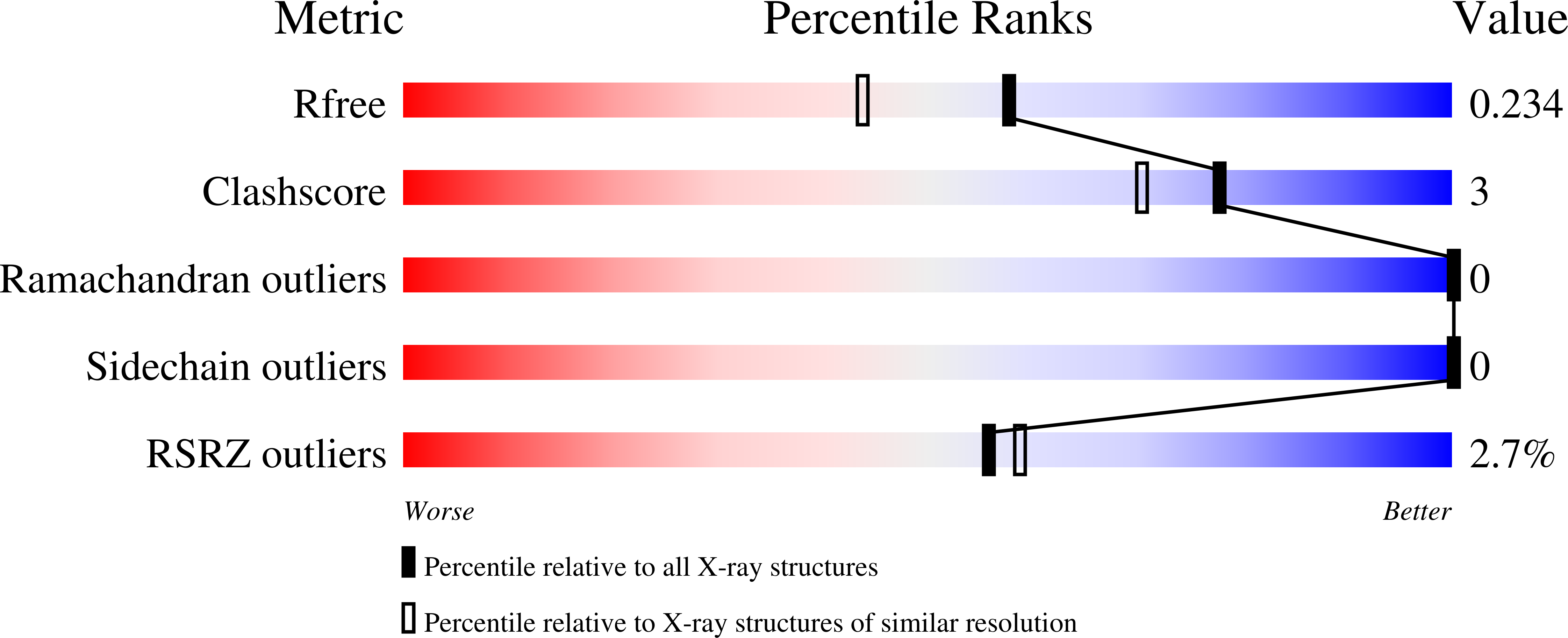
1.85 Å
R-Value Free:
0.23
R-Value Work:
0.18
R-Value Observed:
0.18
Space Group:
P 1 21 1
Macromolecular Entities
Protein Blast
Polymer Type:polypeptide(L)
Molecule:RUPA-39 Heavy chain
Chain IDs:A
Chain Length:227
Number of Molecules:1
Biological Source:Homo sapiens
Protein Blast
Polymer Type:polypeptide(L)
Molecule:RUPA-39 Kappa chain
Chain IDs:B
Chain Length:215
Number of Molecules:1
Biological Source:Homo sapiens
Structures with similar UniProt ID
Protein Blast
Polymer Type:polypeptide(L)
Molecule:Gametocyte surface protein P2
Gene (Uniprot):PFS230
Chain IDs:C (auth: E)
Chain Length:181
Number of Molecules:1
Biological Source:Plasmodium falciparum 3D7
Protein Blast
Polymer Type:polypeptide(L)
Molecule:Anti-kappa nanobody
Chain IDs:D (auth: F)
Chain Length:122
Number of Molecules:1
Biological Source:Lama glama
Primary Citation
A stabilized tandem antigen chimera that elicits potent malaria transmission-reducing activity.
Nat Commun 17 ? ? (2026)
PMID: 41580424 DOI: 10.1038/s41467-026-68761-1

Abstact

Malaria parasite transmission remains a barrier to elimination since asymptomatic individuals sustain the infectious reservoir. Transmission-blocking vaccine (TBV) candidates targeting Plasmodium falciparum (Pf) gametocyte surface proteins Pfs230 and Pfs48/45 have shown promise in clinical trials. Several vaccine candidates have been developed for these antigens, yet it is unclear which elicit the most robust and durable transmission-blocking responses. From structure-function relationships of monoclonal antibodies in complex with both antigens, we report the development of a stabilized tandem antigen chimera (STAC), which presents the most potent epitopes from Pfs230 domain 1 (Pfs230-D1) and Pfs48/45 domain 3 (Pfs48/45-D3) in a single construct, while masking non-functional epitopes using an engineered pseudo-native domain disposition. Iterative structure-guided optimization improved antigen yields and stability, while nanoparticle-based multimerization enhanced the functional transmission-reducing activity elicited by the immunogen in female mice. Immunizations with STAC genetically conjugated to self-assembling protein nanoparticles elicited antibodies with potent transmission-reducing activity comparable or superior to the multimerized Pfs230-D1 and Pfs48/45-D3. These findings establish STAC as a promising next-generation TBV candidate to disrupt malaria transmission and accelerate elimination efforts. More broadly, our results support the engineering of highly ordered and stable multi-domain antigens in a single protein as a strategy for the cost-efficient development of multi-component vaccines.

Legend

Protein

Chemical

Disease

Primary Citation of related structures
Feedback Form
Name
Email
Institute
Feedback