

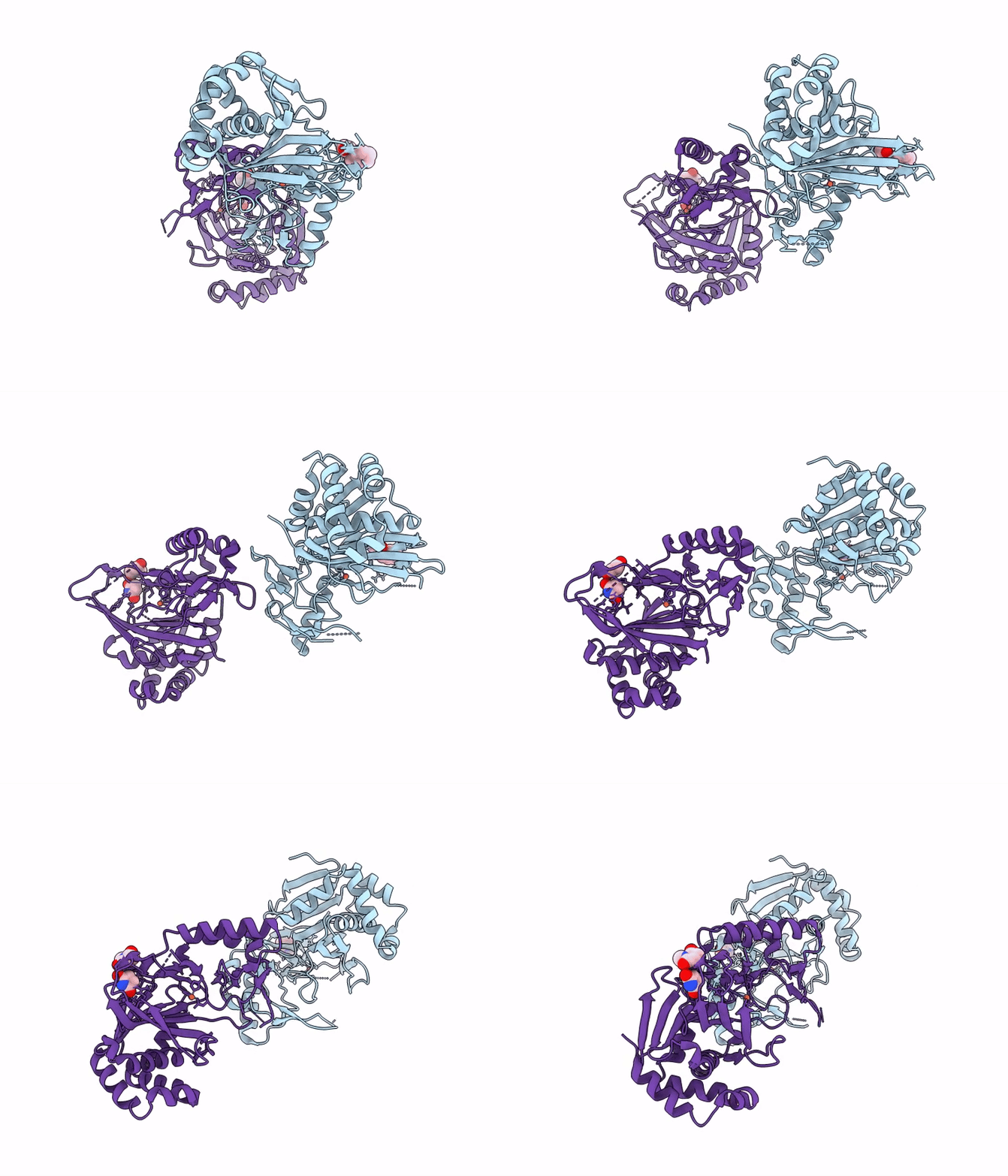
9N33 image
Deposition Date 2025-01-29
Release Date 2026-02-04
Last Version Date 2026-08-12
Entry Detail
PDB ID:
9N33
Title:
Glutarate L-2-hydroxylase N187C mutant-5'-Mal-C6-AGCT DNA conjugate
Biological Source:
Source Organism(s):
Escherichia coli (Taxon ID: 562)
Expression System(s):
Method Details:
Experimental Method:
Resolution:
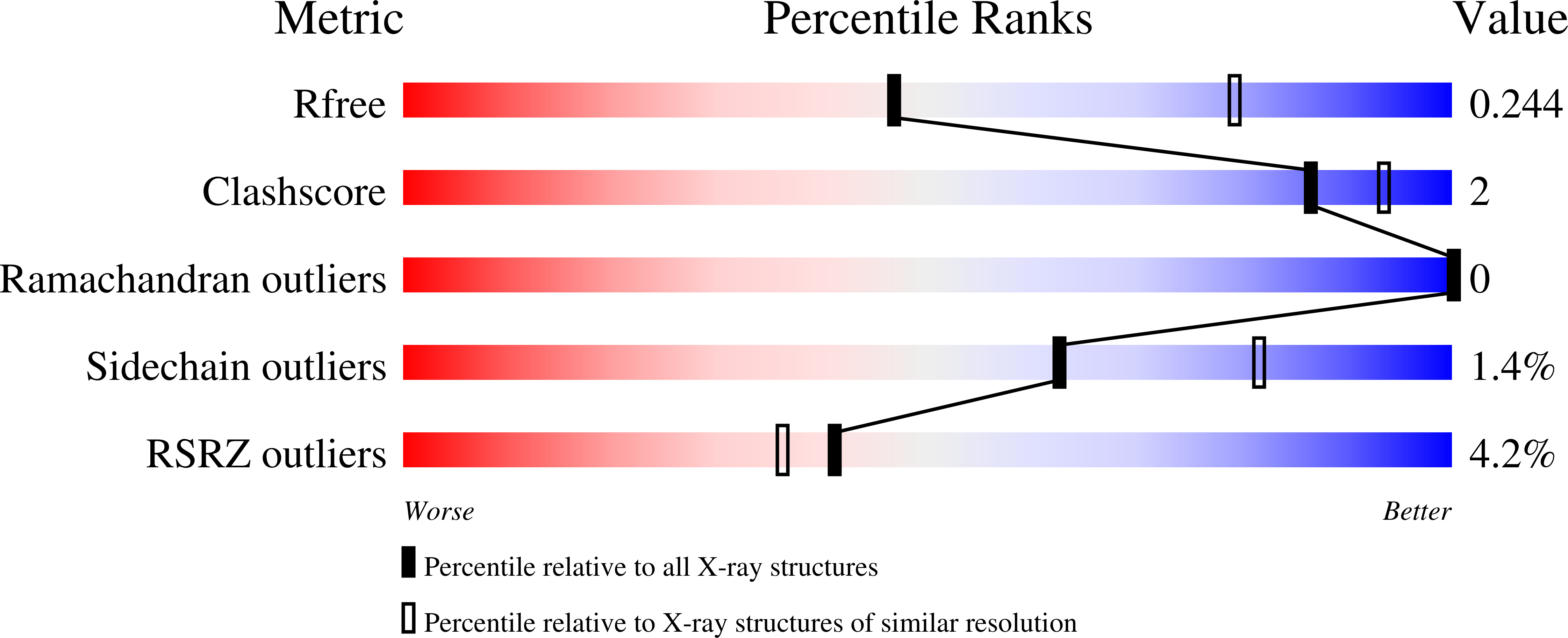
2.61 Å
R-Value Free:
0.23
R-Value Work:
0.19
Space Group:
P 4 21 2
Macromolecular Entities
Polymer Type:polypeptide(L)
Molecule:Glutarate 2-hydroxylase
Gene (Uniprot):glaH
Chain IDs:A, B
Chain Length:324
Number of Molecules:2
Biological Source:Escherichia coli
Primary Citation
Diffraction-quality, ultraflexible protein single crystals engineered with DNA.
Sci Adv 12 eaeh2948 eaeh2948 (2026)
PMID: 42525757 DOI: 10.1126/sciadv.aeh2948

Abstact

DNA-functionalized colloidal nanoparticles assemble through flexible, nanoscale DNA hybridization interactions that limit atomic-level structural order. Here, we report a valence-centric strategy that enables DNA-bonded, protein single crystals with unconventional mechanical properties. An octameric enzyme, glutarate L-2-hydroxylase, was site- and number-selectively conjugated with eight self-complementary single-stranded DNA, yielding octavalent molecular bonds. The resulting conjugate assembled into the designed body-centered tetragonal crystals that diffracted to 1.42- to 2.61-angstrom resolution, with contacts mediated by B-form DNA helices spanning 17 to 25 angstroms. Increasing oligonucleotide length induces anisotropic lattice expansion while preserving atomic periodicity, even with partial DNA occupancy. Mechanistic studies suggest that the dynamic motion of unhybridized DNA facilitates crystallization, analogous to fluctuating electron clouds in atomic bonding. Compared with native protein crystals, DNA-hybridized crystals are 23-fold softer. These results challenge the assumption that flexibility is incompatible with structural order and establish a programmable framework for biomolecular crystallization and nanomaterials engineering with atomic precision.

Legend

Protein

Chemical

Disease

Primary Citation of related structures
Feedback Form
Name
Email
Institute
Feedback