

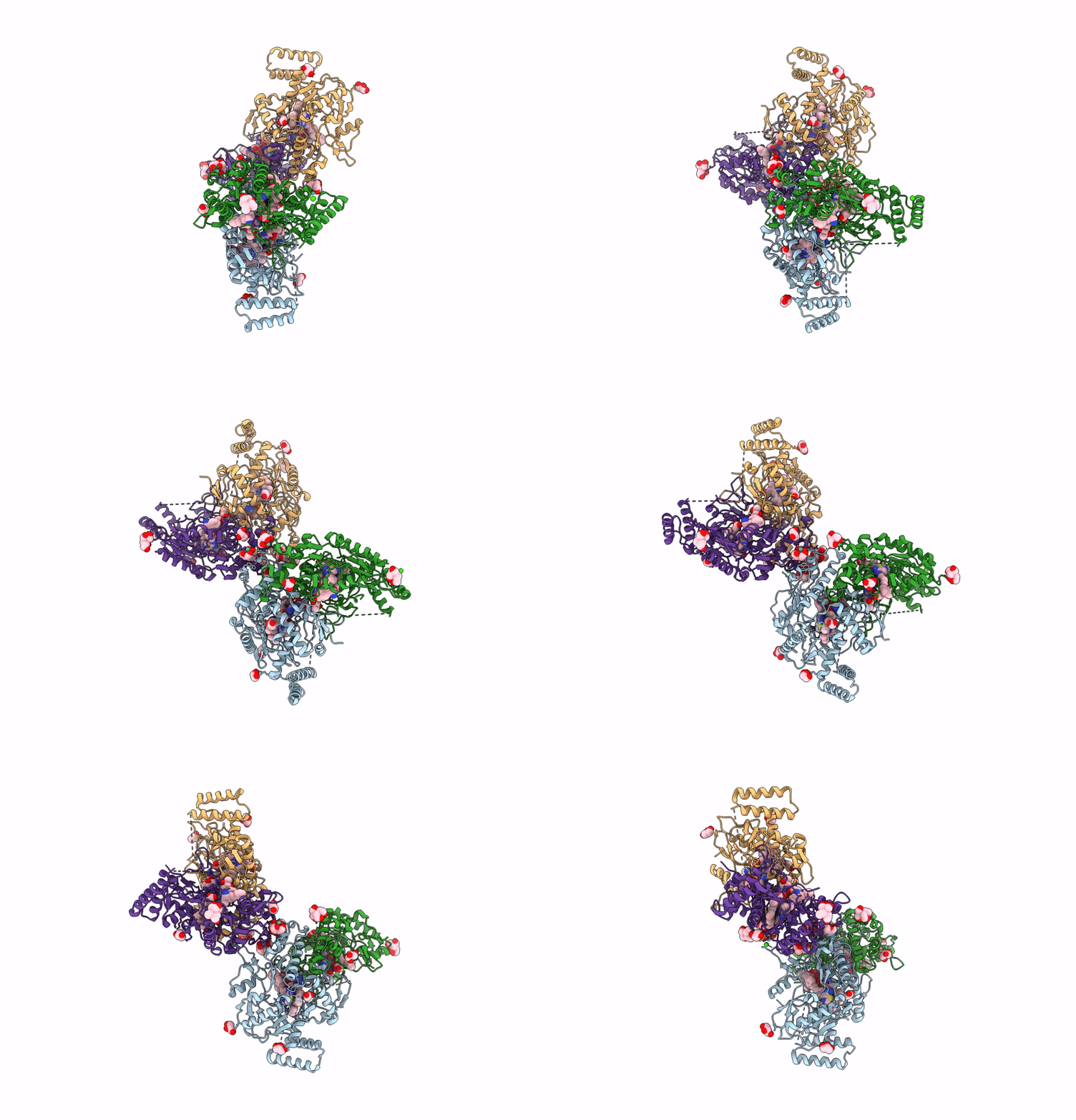
9MWW image
Deposition Date 2025-01-17
Release Date 2025-11-26
Last Version Date 2026-04-01
Entry Detail
PDB ID:
9MWW
Keywords:
Title:
Structure of human endothelial nitric oxide synthase heme domain bound with N-(3-(((2-(3-(aminomethyl)-[1,1'-biphenyl]-4-yl)ethyl)amino)methyl)phenyl)thiazole-5-carboximidamide
Biological Source:
Source Organism(s):
Homo sapiens (Taxon ID: 9606)
Expression System(s):
Method Details:
Experimental Method:
Resolution:
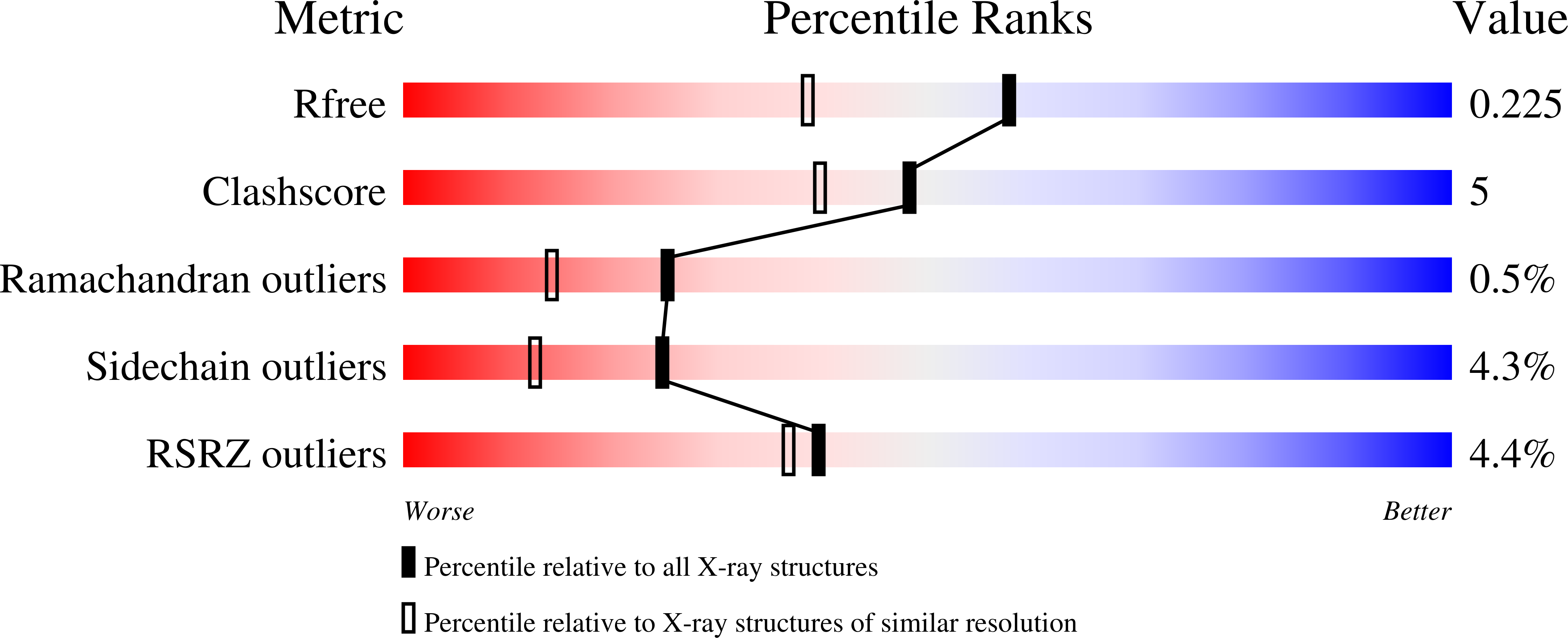
1.80 Å
R-Value Free:
0.23
R-Value Work:
0.19
R-Value Observed:
0.19
Space Group:
P 1 21 1
Macromolecular Entities
Structures with similar UniProt ID
Protein Blast
Polymer Type:polypeptide(L)
Molecule:Nitric oxide synthase, endoth
Gene (Uniprot):NOS3
Chain IDs:A, B, C, D
Chain Length:440
Number of Molecules:4
Biological Source:Homo sapiens
Primary Citation
New Inhibitors of Neuronal Nitric Oxide Synthase for the Treatment of Melanoma.
J. Med. Chem. 69 2310 2329 (2026)
PMID: 41615895 DOI: 10.1021/acs.jmedchem.5c02154

Abstact

In 2024, an estimated 100,640 new cases of invasive melanoma were diagnosed in the U.S., with 9290 deaths. Our previous studies revealed that neuronal nitric oxide synthase (nNOS) derived nitric oxide plays a critical role in melanoma progression, making nNOS inhibition a promising strategy. High structural similarity among NOS isoforms requires careful design of nNOS inhibitors to avoid off-target effects. Our previous lead, HH044, demonstrated potent antimelanoma activity but exhibited only moderate nNOS selectivity. Here, we utilized a structure-based approach to design nNOS inhibitors that promote interactions with human nNOS-specific residue His342. Compound 9 exhibited inhibition of both human (K(i) = 1.7 nM) and rat nNOS (K(i) = 2.3 nM), with 5654-fold selectivity over human eNOS and 250-fold selectivity over iNOS. X-ray crystallography and molecular modeling revealed a novel SAR, forming the basis for nNOS inhibition and providing a foundation for further innovative design of nNOS inhibitors for melanoma treatment.

Legend

Protein

Chemical

Disease

Primary Citation of related structures
Feedback Form
Name
Email
Institute
Feedback