

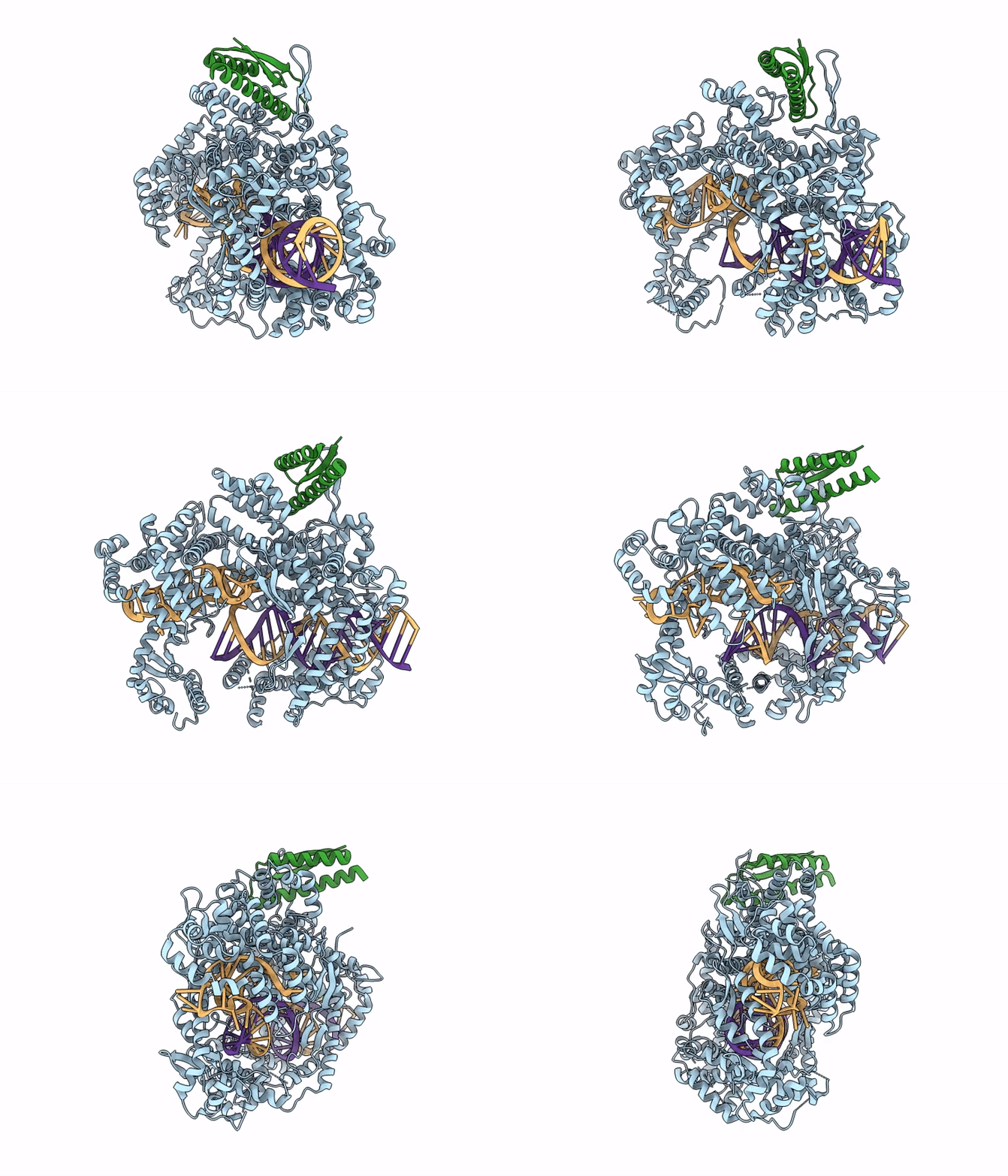
9MVS image
Deposition Date 2025-01-15
Release Date 2026-02-25
Last Version Date 2026-04-29
Entry Detail
PDB ID:
9MVS
Title:
Activated Leptotrichia buccalis (Lbu) CRISPR-Cas13a bound to AI-designed anti-CRISPR AIcrVIA1
Biological Source:
Source Organism(s):
Expression System(s):
Method Details:
Experimental Method:
Resolution:
3.43 Å
Aggregation State:
PARTICLE
Reconstruction Method:
SINGLE PARTICLE
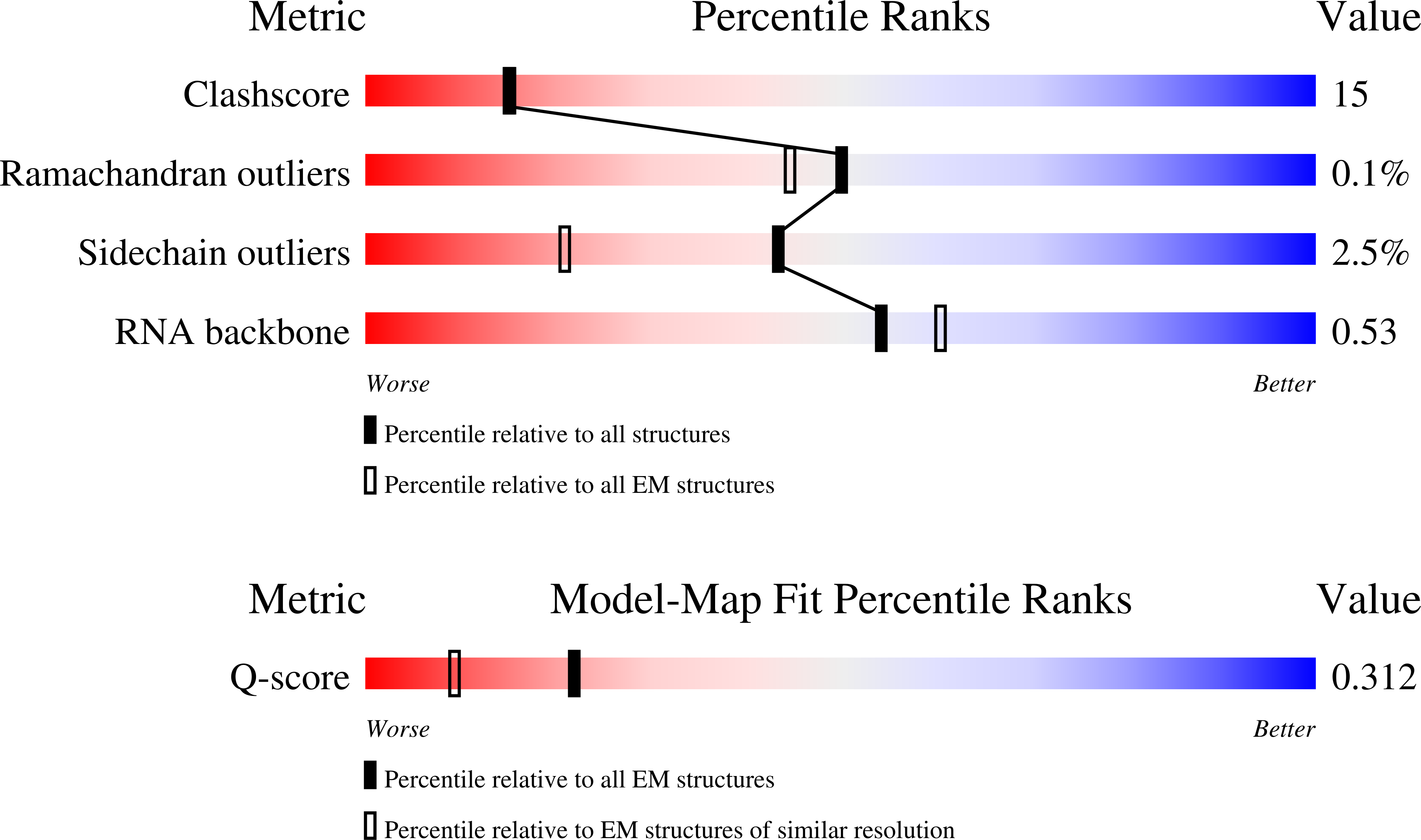
Macromolecular Entities
Structures with similar UniProt ID
Protein Blast
Polymer Type:polypeptide(L)
Molecule:CRISPR-associated endoribonuc
Gene (Uniprot):cas13a
Chain IDs:B (auth: A)
Chain Length:1162
Number of Molecules:1
Biological Source:Leptotrichia buccalis
Protein Blast
Polymer Type:polypeptide(L)
Molecule:AIcrVIA1
Chain IDs:A (auth: B)
Chain Length:83
Number of Molecules:1
Biological Source:synthetic construct
Polymer Type:polyribonucleotide
Molecule:crRNA
Chain IDs:C
Chain Length:56
Number of Molecules:1
Biological Source:Leptotrichia buccalis
Polymer Type:polyribonucleotide
Molecule:Guide complementary activator
Chain IDs:D
Chain Length:26
Number of Molecules:1
Biological Source:synthetic construct
Ligand Molecules
Primary Citation

Abstact

CRISPR-Cas systems are transformative tools for gene editing that can be tuned or controlled by anti-CRISPRs (Acrs)-phage-derived inhibitors that regulate CRISPR-Cas activity. However, Acrs that can inhibit biotechnologically relevant CRISPR systems are relatively rare and challenging to discover. To overcome this limitation, we describe a highly successful and rapid approach that leverages de novo protein design to develop new-to-nature proteins for controlling CRISPR-Cas activity. Here, using Leptotrichia buccalis CRISPR-Cas13a as a representative example, we demonstrate that Acrs designed using artificial intelligence (AIcrs) are capable of highly potent and specific inhibition of CRISPR-Cas13a nuclease activity. We present a comprehensive workflow for design validation and demonstrate AIcr functionality in controlling CRISPR-Cas13 activity in bacterial and human cells. The ability to design bespoke inhibitors of Cas effectors will contribute to the ongoing development of CRISPR-Cas tools in diverse applications across research, medicine, agriculture and microbiology.

Legend

Protein

Chemical

Disease

Primary Citation of related structures
Feedback Form
Name
Email
Institute
Feedback