

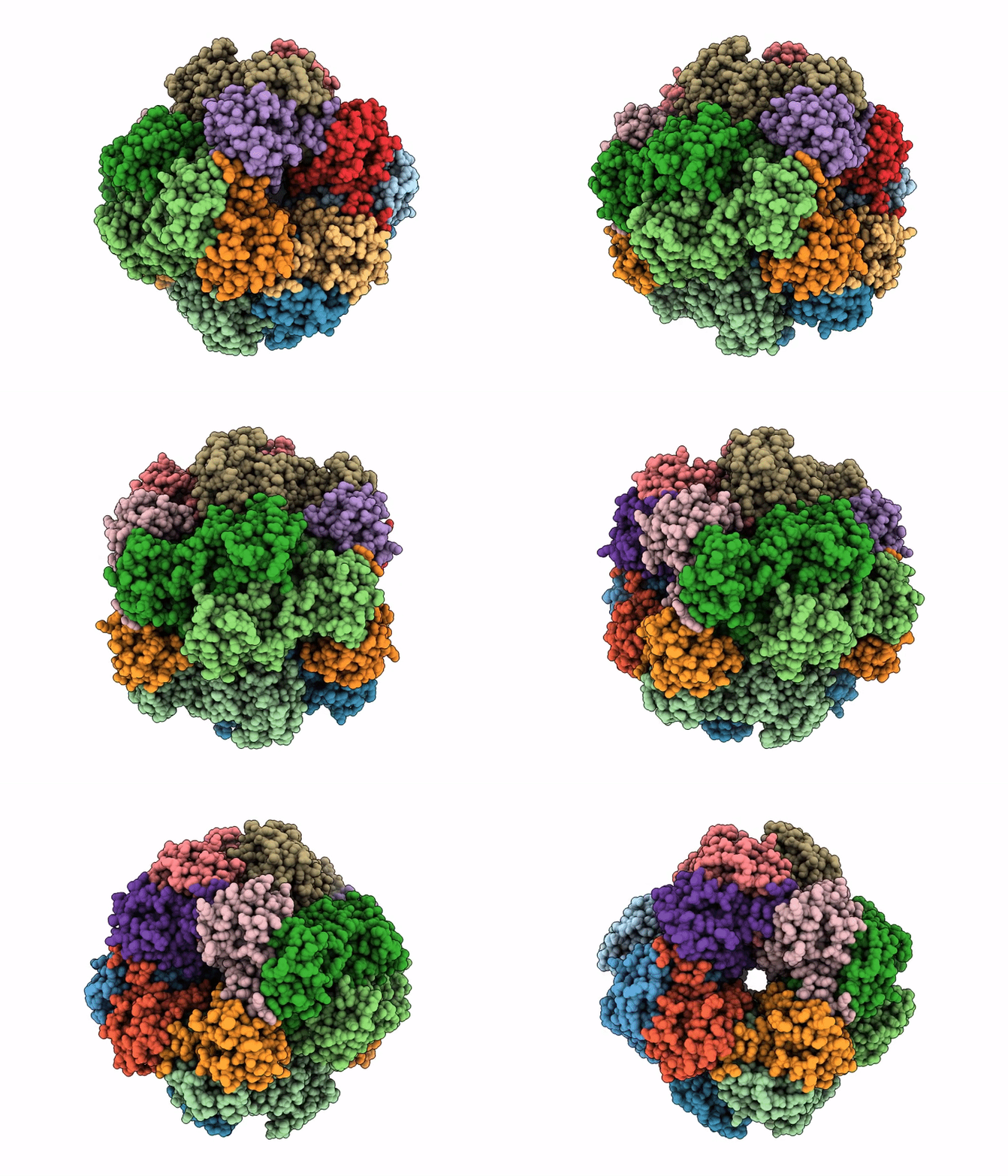
9MUR image
Deposition Date 2025-01-14
Release Date 2026-01-21
Last Version Date 2026-04-22
Entry Detail
PDB ID:
9MUR
Keywords:
Title:
Cryo-EM structure of Rubisco from Arabidopsis thaliana with the 2B small subunit isoform
Biological Source:
Source Organism(s):
Method Details:
Experimental Method:
Resolution:
2.48 Å
Aggregation State:
PARTICLE
Reconstruction Method:
SINGLE PARTICLE
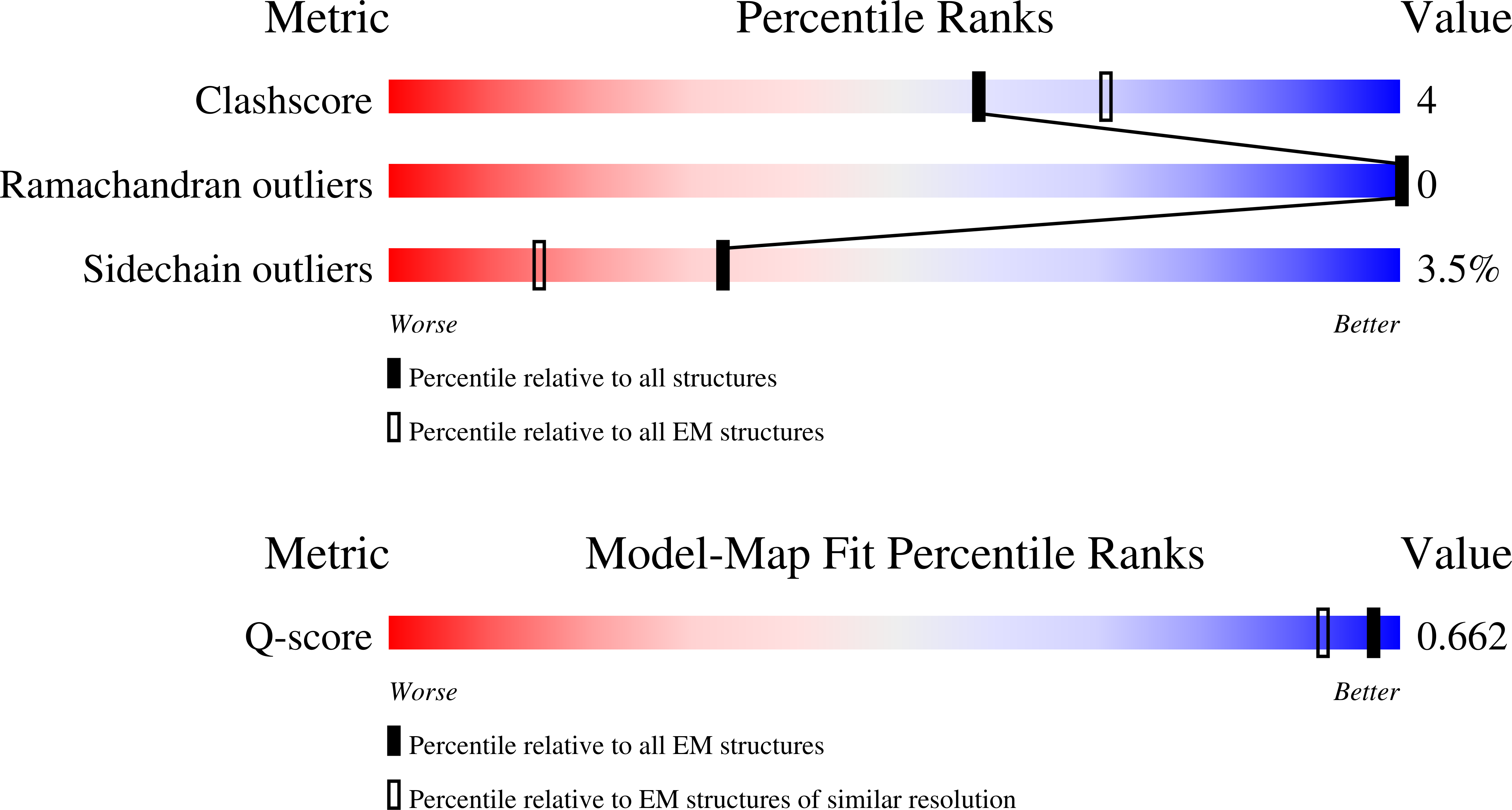
Macromolecular Entities
Structures with similar UniProt ID
Protein Blast
Polymer Type:polypeptide(L)
Molecule:Ribulose bisphosphate carboxy
Gene (Uniprot):rbcL
Chain IDs:A, B, C, D, E, F, G, H
Chain Length:479
Number of Molecules:8
Biological Source:Arabidopsis thaliana
Structures with similar UniProt ID
Protein Blast
Polymer Type:polypeptide(L)
Molecule:Ribulose bisphosphate carboxy
Gene (Uniprot):RBCS-2B
Chain IDs:I, J, K, L, M, N, O, P
Chain Length:132
Number of Molecules:8
Biological Source:Arabidopsis thaliana
Ligand Molecules
Primary Citation
Rubisco kinetic acclimation at the holoenzyme level.
Proc. Natl. Acad. Sci. U.S.A. 123 e2519914123 e2519914123 (2026)
PMID: 41984832 DOI: 10.1073/pnas.2519914123

Abstact

In plants, the CO(2)-fixing enzyme Rubisco is hexadecameric, with each mature holoenzyme containing eight small subunits (SSus). Many plants express multiple SSus and vary their expression in response to environmental cues. Previous work indicates that this may allow fine-tuning of Rubisco's performance in a variable environment (i.e., kinetic acclimation). Despite SSu pools being heterogeneous and dynamic, nearly no evidence exists for holoenzyme-level heterogeneity. Here, we characterized the structural and kinetic plasticity of Rubisco. We first established that SSu-heterogeneous Rubisco exists in Arabidopsis thaliana and quantified the prevalence of heterogeneity. We found SSu-heterogeneous Rubisco to make up over half of the Rubisco pool when heterologously expressed. This Rubisco contained at least four unique SSu ratios, indicating a variety of holoenzyme arrangements are possible. We then tested the kinetic effect of different SSus and found heterogeneity to have an antagonistic effect on substrate and inhibitor affinity. Kinetic differences between the SSus correlated with changes in local flexibility, and cryo-EM analysis illustrated a structural mechanism through which SSus may influence catalysis. Our kinetic and structural findings align with the hypothesized role of SSus in kinetic acclimation, as we observed the warm temperature-expressed SSu of A. thaliana to confer a stabilizing effect to the active site relative to the cool temperature-expressed SSu. This increase in stability manifested as a reduction in flexibility and increase in substrate affinity, indicating that fine-tuning of local stability may underlie Rubisco kinetic acclimation.

Legend

Protein

Chemical

Disease

Primary Citation of related structures
Feedback Form
Name
Email
Institute
Feedback