

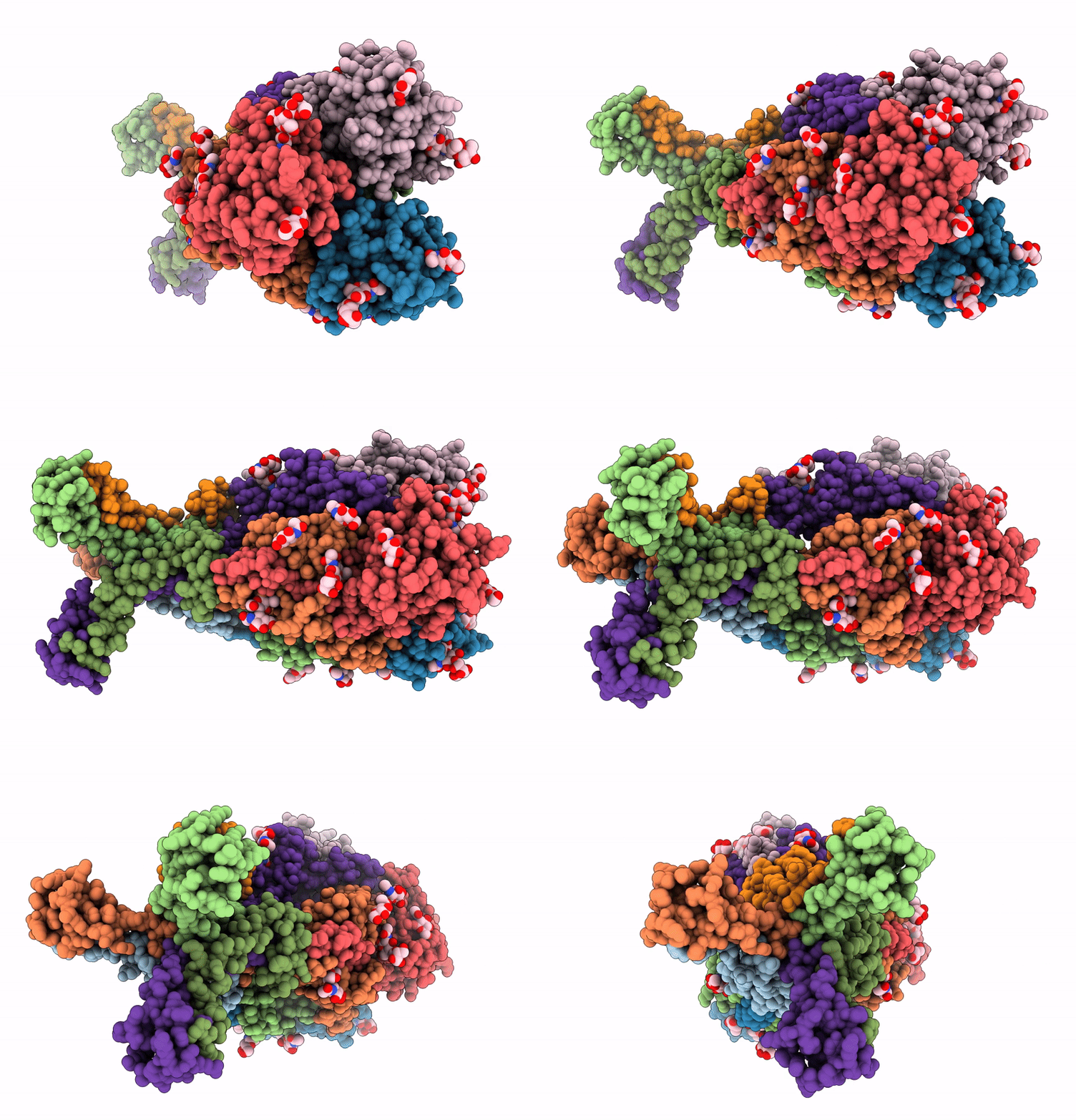
9MT2 image
Deposition Date 2025-01-10
Release Date 2025-07-16
Last Version Date 2026-02-25
Entry Detail
PDB ID:
9MT2
Keywords:
Title:
Structure of the Machupo virus glycoprotein complex
Biological Source:
Source Organism(s):
Expression System(s):
Method Details:
Experimental Method:
Resolution:
2.90 Å
Aggregation State:
PARTICLE
Reconstruction Method:
SINGLE PARTICLE
Macromolecular Entities
Protein Blast
Polymer Type:polypeptide(L)
Molecule:Pre-glycoprotein polyprotein
Gene (Uniprot):GPC
Mutagens:K33A
Chain IDs:A, D, G
Chain Length:58
Number of Molecules:3
Biological Source:Mammarenavirus machupoense
Structures with similar UniProt ID
Protein Blast
Polymer Type:polypeptide(L)
Molecule:Pre-glycoprotein polyprotein
Gene (Uniprot):GPC
Chain IDs:B, E, H
Chain Length:204
Number of Molecules:3
Biological Source:Mammarenavirus machupoense
Protein Blast
Polymer Type:polypeptide(L)
Molecule:Pre-glycoprotein polyprotein
Gene (Uniprot):GPC
Chain IDs:C, F, I
Chain Length:234
Number of Molecules:3
Biological Source:Mammarenavirus machupoense
Primary Citation
Molecular organization of the New World arenavirus spike glycoprotein complex.
Nat Microbiol 10 2207 2220 (2025)
PMID: 40781447 DOI: 10.1038/s41564-025-02085-6

Abstact

Of the multiple arenaviruses that cause haemorrhagic fevers in the Americas, all lack reliable therapeutic options, and only one has a vaccine. The arenavirus glycoprotein complex (GPC) binds cellular receptors and mediates pH-dependent fusion of viral and host cell membranes during entry. GPC comprises GP1, GP2 and stable signal peptide (SSP) subunits. SSP remains associated with the mature glycoprotein complex and regulates pH-dependent membrane fusion through an unclear mechanism. We report cryo-EM structures of Junin virus and Machupo virus GPC stabilized in the prefusion conformation using an amino acid substitution in the transmembrane region of SSP at 3.0 A and 2.9 A resolution, respectively. Mutational analyses, cell-cell fusion assays and molecular dynamics simulations reveal how contacts in the membrane-proximal and transmembrane regions of GPC regulate pH-dependent membrane fusion. The structures may aid in the design of therapeutic antibody cocktails, small-molecule inhibitors and vaccines against arenaviruses.

Legend

Protein

Chemical

Disease

Primary Citation of related structures
Feedback Form
Name
Email
Institute
Feedback