

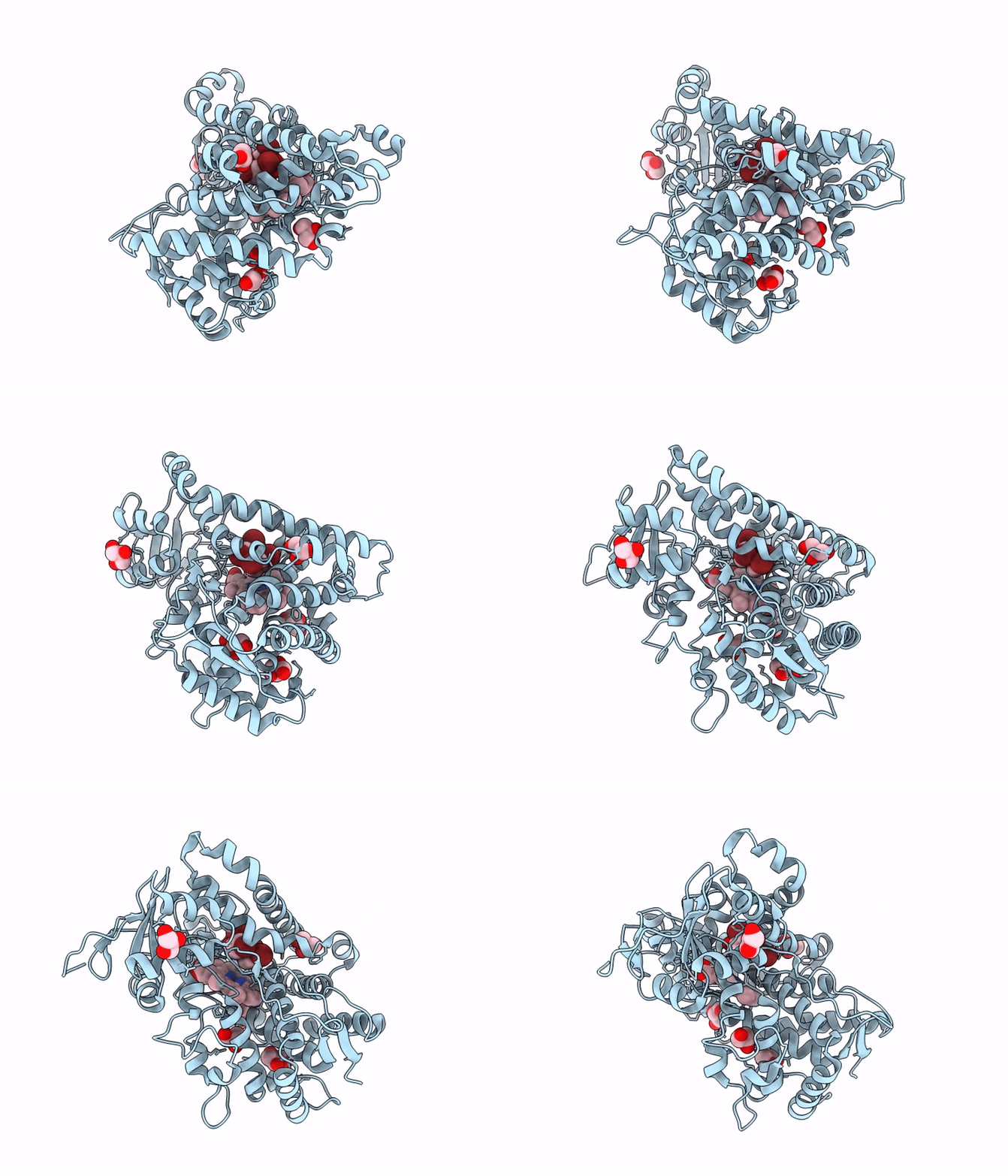
9MS3 image
Deposition Date 2025-01-09
Release Date 2026-01-07
Last Version Date 2026-03-18
Entry Detail
PDB ID:
9MS3
Keywords:
Title:
Crystal structure of Bmp7 in complex with 2,4-dibromophenol generated by substrate soaking
Biological Source:
Source Organism(s):
Expression System(s):
Method Details:
Experimental Method:
Resolution:
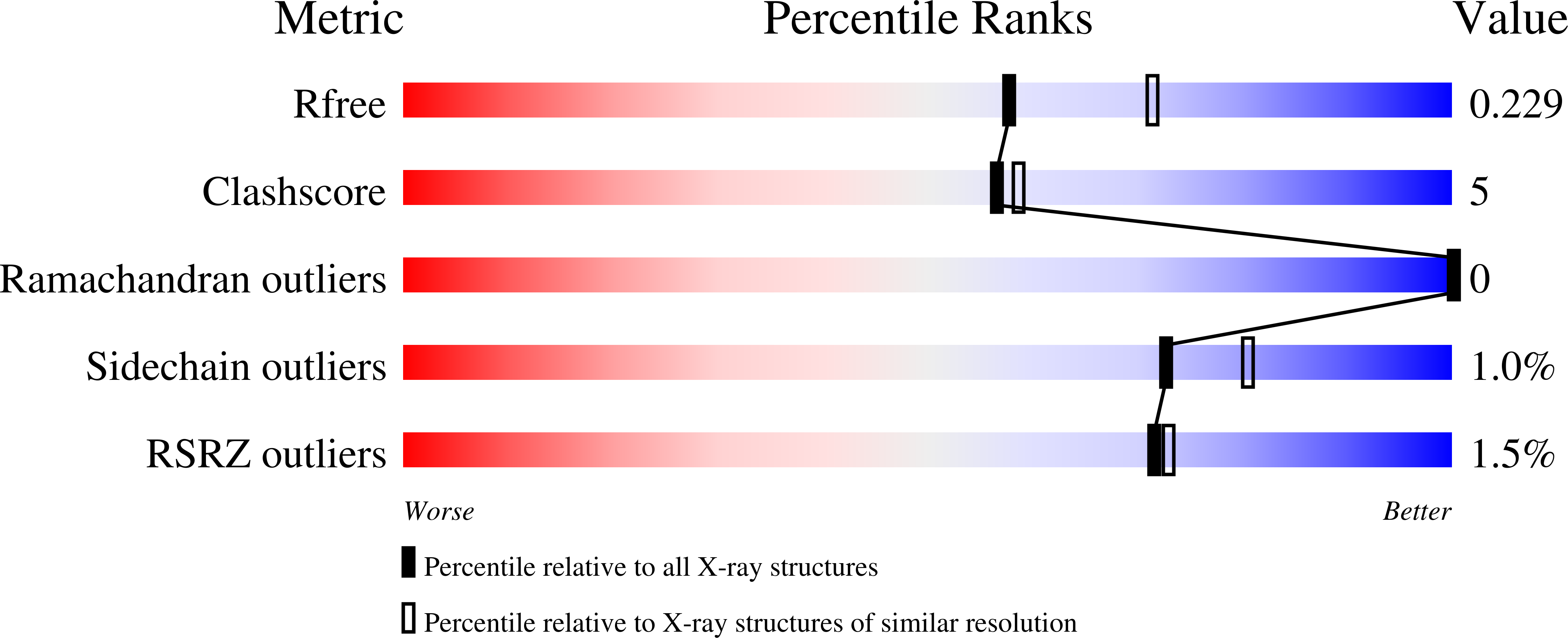
2.25 Å
R-Value Free:
0.22
R-Value Work:
0.18
R-Value Observed:
0.18
Space Group:
P 32 2 1
Macromolecular Entities
Structures with similar UniProt ID
Protein Blast
Polymer Type:polypeptide(L)
Molecule:Polybrominated aromatic compo
Gene (Uniprot):bmp7
Chain IDs:A
Chain Length:495
Number of Molecules:1
Biological Source:Marinomonas mediterranea
Primary Citation
Bacterial cytochrome P450 for oxidative halogenated biaryl coupling.
Acs Catalysis 16 2615 2627 (2026)
PMID: 41789186 DOI: 10.1021/acscatal.5c08060

Abstact

Biaryl motifs are fundamental structural elements in many pharmaceuticals, agrochemicals, and advanced materials. Traditional synthetic approaches for biaryl bond formation often require harsh conditions, costly catalysts, and pre-functionalized starting materials, which limit their efficiency, sustainability, and substrate scope. Enzymatic catalysis offers a greener alternative. However, biocatalysts capable of directly coupling halogenated biaryl compounds remain largely underexplored. Here, we report the functional characterization of the marine-derived cytochrome P450 enzyme Bmp7, which catalyzes the formation of halogenated biaryls. We first characterized the product profile of recombinant Bmp7 using its native substrate 2,4-dibromophenol (1) and confirmed the dominant ortho-ortho C-C homocoupled product as MC21-A. Screening a halogenated aromatic substrate library revealed that Bmp7 binds and catalyzes the coupling of 17 halogenated phenols, as evidenced by spectral shift assays, LC-HRMS, HRMS/MS and GC-MS analyses. Two homocoupled products were structurally confirmed by NMR analysis to possess ortho-ortho C-C linkages. In addition to efficient homocoupling, Bmp7 catalyzed heterocoupling reactions between substrate 1 and 16 other substrates, producing mixtures of homocoupled and heterocoupled halogenated biphenols. X-ray crystallography revealed the binding of two substrate 1 molecules within the active site, while DFT calculations supported a single-radical reaction mechanism, shedding light on the mechanistic basis of the coupling reaction. Together, these findings lay the groundwork for these findings establish a foundation for future efforts in enzyme engineering and the development of biocatalytic strategies for synthetic applications.

Legend

Protein

Chemical

Disease

Primary Citation of related structures
Feedback Form
Name
Email
Institute
Feedback