

9MRG image
Deposition Date 2025-01-07
Release Date 2025-11-05
Last Version Date 2026-05-20
Entry Detail
PDB ID:
9MRG
Keywords:
Title:
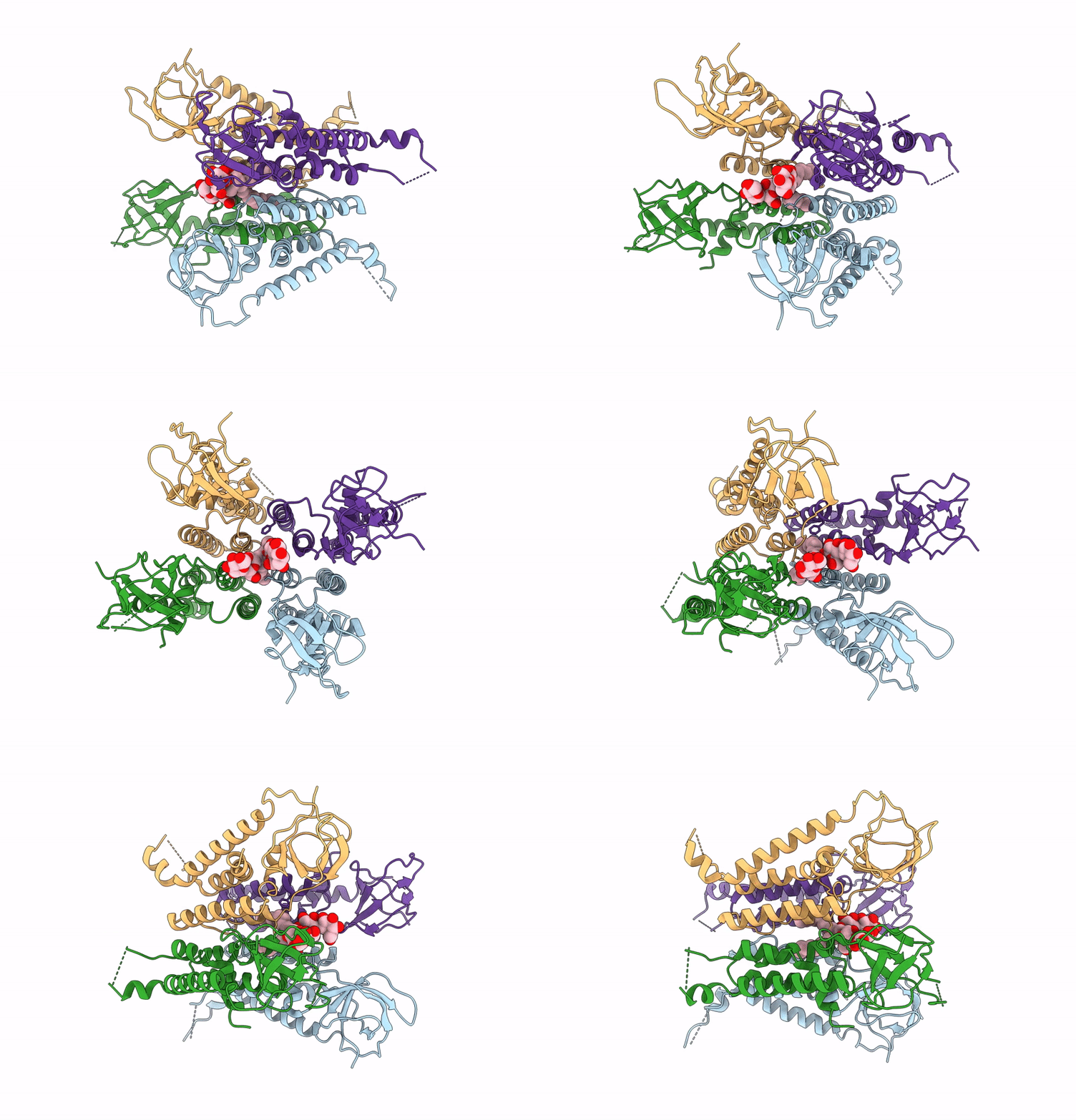
Cryo-EM structure of KwaA tetramer with C2 symmetry
Biological Source:
Source Organism(s):
Escherichia coli (Taxon ID: 562)
Expression System(s):
Method Details:
Experimental Method:
Resolution:
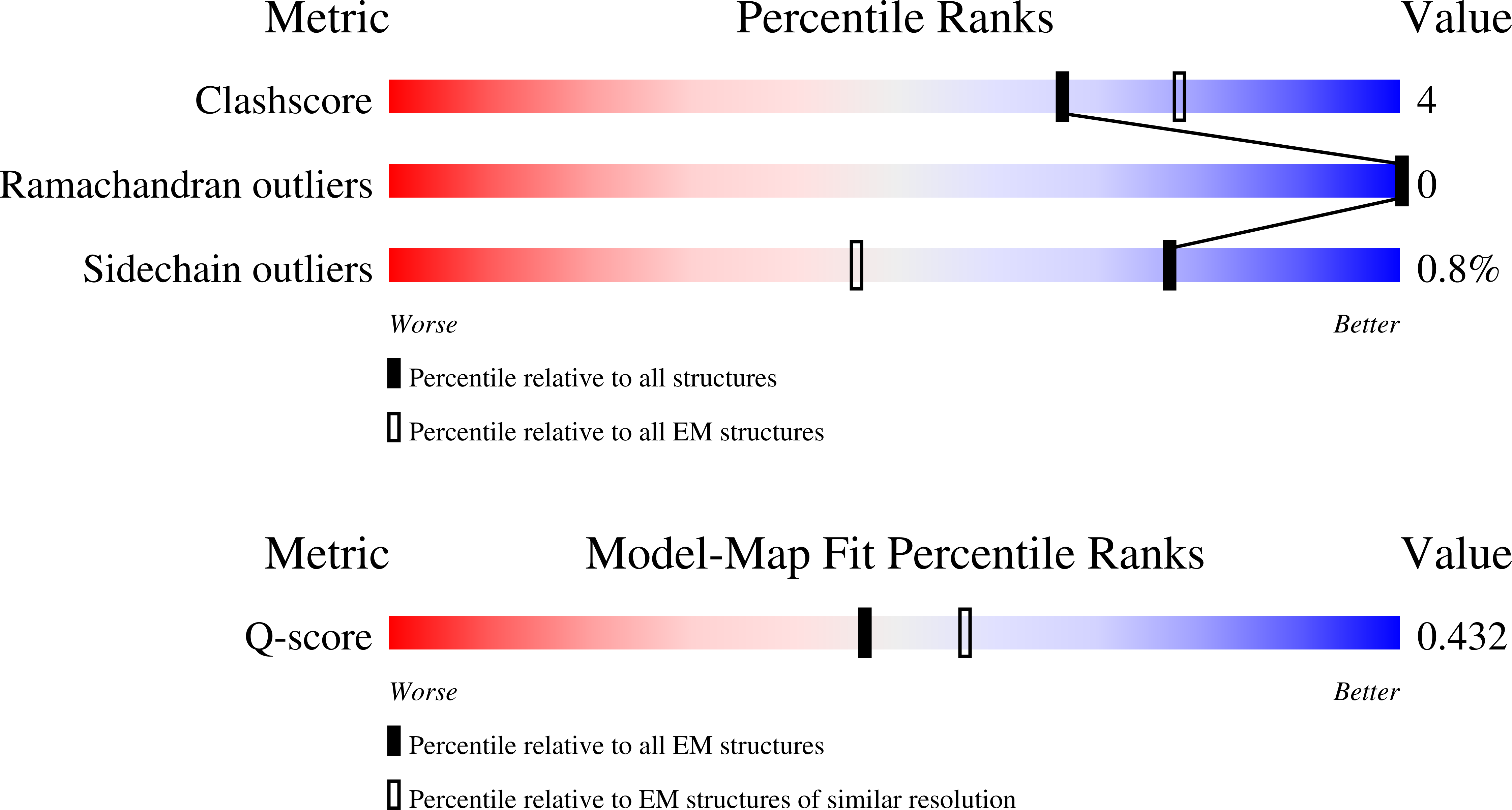
3.69 Å
Aggregation State:
PARTICLE
Reconstruction Method:
SINGLE PARTICLE
Macromolecular Entities
Structures with similar UniProt ID
Protein Blast
Polymer Type:polypeptide(L)
Molecule:Kiwa protein KwaA
Gene (Uniprot):kwaA
Chain IDs:A, B, C, D
Chain Length:195
Number of Molecules:4
Biological Source:Escherichia coli
Ligand Molecules
Primary Citation
Kiwa is a membrane-embedded defense supercomplex activated at phage attachment sites.
Cell 188 5862 5877.e23 (2025)
PMID: 40730155 DOI: 10.1016/j.cell.2025.07.002

Abstact

Bacteria and archaea deploy diverse antiviral defense systems, many of which remain mechanistically uncharacterized. Here, we characterize Kiwa, a widespread two-component system composed of the transmembrane sensor KwaA and the DNA-binding effector KwaB. Cryogenic electron microscopy (cryo-EM) analysis reveals that KwaA and KwaB assemble into a large, membrane-associated supercomplex. Upon phage binding, KwaA senses infection at the membrane, leading to KwaB binding of ejected phage DNA and inhibition of replication and late transcription, without inducing host cell death. Although KwaB can bind DNA independently, its antiviral activity requires association with KwaA, suggesting spatial or conformational regulation. We show that the phage-encoded DNA-mimic protein Gam directly binds and inhibits KwaB but that co-expression with the Gam-targeted RecBCD system restores protection by Kiwa. Our findings support a model in which Kiwa coordinates membrane-associated detection of phage infection with downstream DNA binding by its effector, forming a spatially coordinated antiviral mechanism.

Legend

Protein

Chemical

Disease

Primary Citation of related structures
Feedback Form
Name
Email
Institute
Feedback