

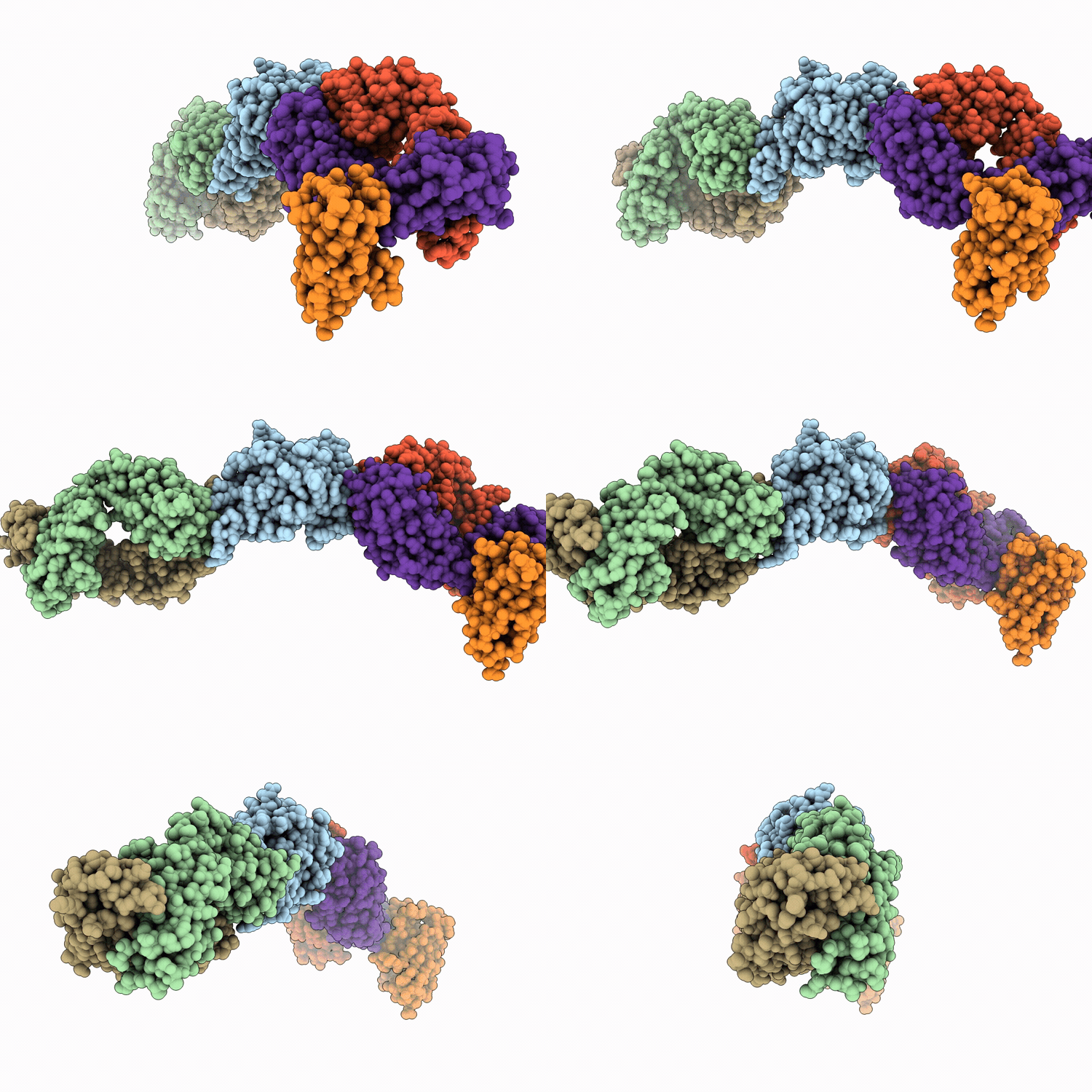
9MNB image
Deposition Date 2024-12-20
Release Date 2026-04-22
Last Version Date 2026-04-22
Entry Detail
PDB ID:
9MNB
Title:
Beta1-tryptase monomer bound to inhibitory Fabs E82.AS and E104.v2
Biological Source:
Source Organism(s):
Homo sapiens (Taxon ID: 9606)
Lama glama (Taxon ID: 9844)
Expression System(s):
Method Details:
Experimental Method:
Resolution:
3.00 Å
Aggregation State:
PARTICLE
Reconstruction Method:
SINGLE PARTICLE
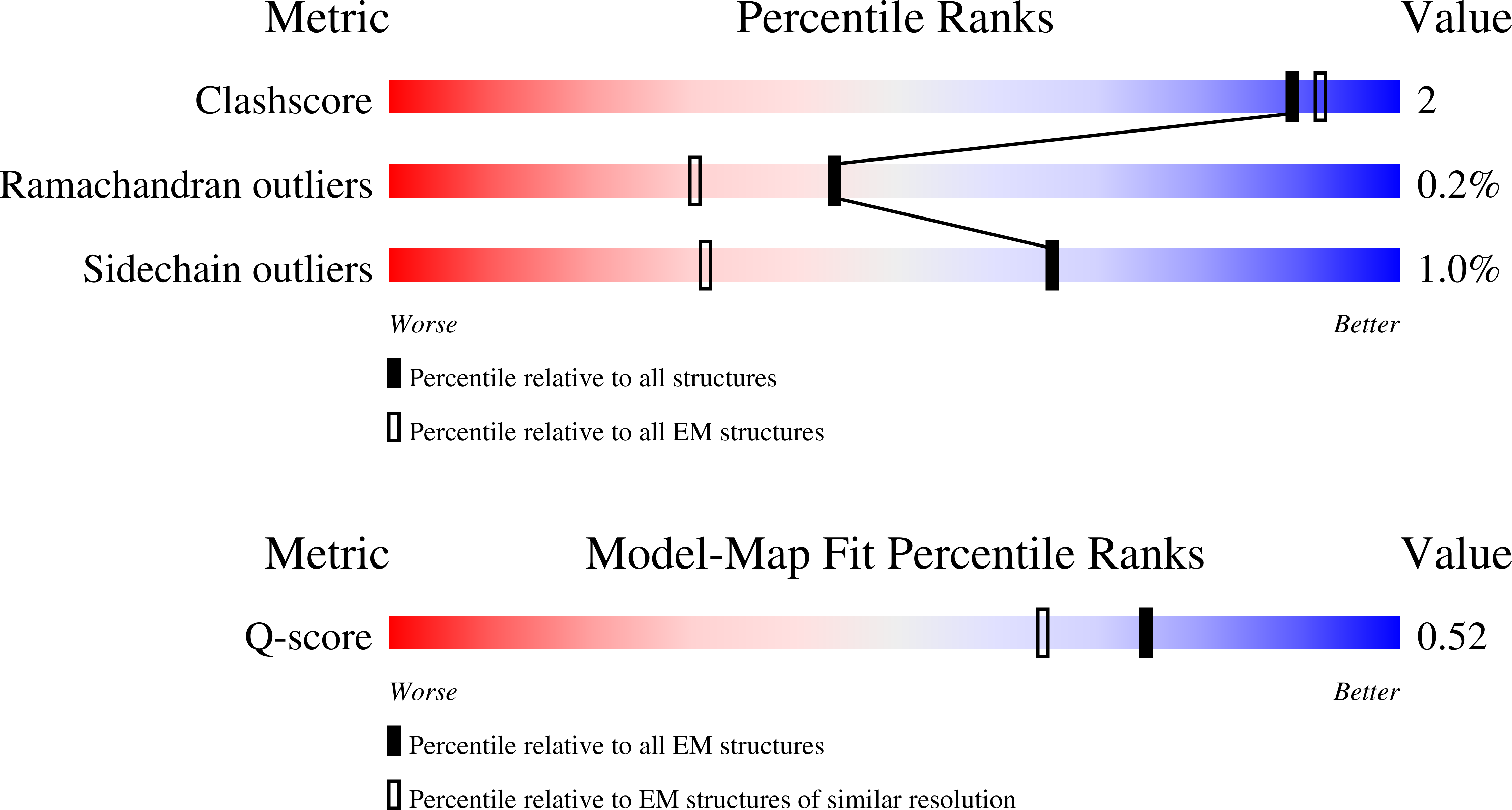
Macromolecular Entities
Structures with similar UniProt ID
Protein Blast
Polymer Type:polypeptide(L)
Molecule:Tryptase alpha/beta-1
Gene (Uniprot):TPSAB1
Chain IDs:B (auth: A)
Chain Length:245
Number of Molecules:1
Biological Source:Homo sapiens
Protein Blast
Polymer Type:polypeptide(L)
Molecule:Heavy chain of E82.AS Fab
Chain IDs:E
Chain Length:216
Number of Molecules:1
Biological Source:Homo sapiens
Protein Blast
Polymer Type:polypeptide(L)
Molecule:Light chain of E82.AS Fab
Chain IDs:D (auth: F)
Chain Length:220
Number of Molecules:1
Biological Source:Homo sapiens
Protein Blast
Polymer Type:polypeptide(L)
Molecule:Heavy chain of E104v2 Fab
Chain IDs:C (auth: H)
Chain Length:221
Number of Molecules:1
Biological Source:Homo sapiens
Protein Blast
Polymer Type:polypeptide(L)
Molecule:Anti-human kappa light chain
Chain IDs:F (auth: K)
Chain Length:120
Number of Molecules:1
Biological Source:Lama glama
Protein Blast
Polymer Type:polypeptide(L)
Molecule:Light chain of E104.v2 Fab
Chain IDs:A (auth: L)
Chain Length:216
Number of Molecules:1
Biological Source:Homo sapiens
Ligand Molecules
Primary Citation
Complete inhibition of beta-tryptase by tetramer dissociation and active site allostery due to a single antibody residue.
Nat Commun 17 ? ? (2026)
PMID: 41957026 DOI: 10.1038/s41467-026-70491-3

Abstact

Human beta-tryptase, a tetrameric trypsin-like serine protease, is an important mediator of inflammatory responses in asthma, allergy and other diseases. Here we report an anti-beta-tryptase antibody with a superior mechanism of action compared to others since it not only inhibits tetrameric beta-tryptase, but also completely inhibits monomeric beta-tryptase activity. The antibody binds to an exosite that causes tetramer dissociation as either an IgG or Fab and, in addition, allosterically alters the substrate binding cleft on monomers, thus preventing substrate binding and proteolysis. We solve the cryoEM structure of the complex, generate biochemical data and engineer point mutations to elucidate the allosteric path of inhibition. This ultimately reveals a single Asp to Gly mutation in CDR-L3 that only slightly impacts binding affinity, but completely eliminates inhibitory activity. Finally, we improve antibody inhibitory potency up to 4.7-fold by structure-based design creating new charge-charge interactions. This antibody may have enhanced efficacy and potential to assess the relevance of beta-tryptase, including monomers, in biological and clinical settings.

Legend

Protein

Chemical

Disease

Primary Citation of related structures
Feedback Form
Name
Email
Institute
Feedback