

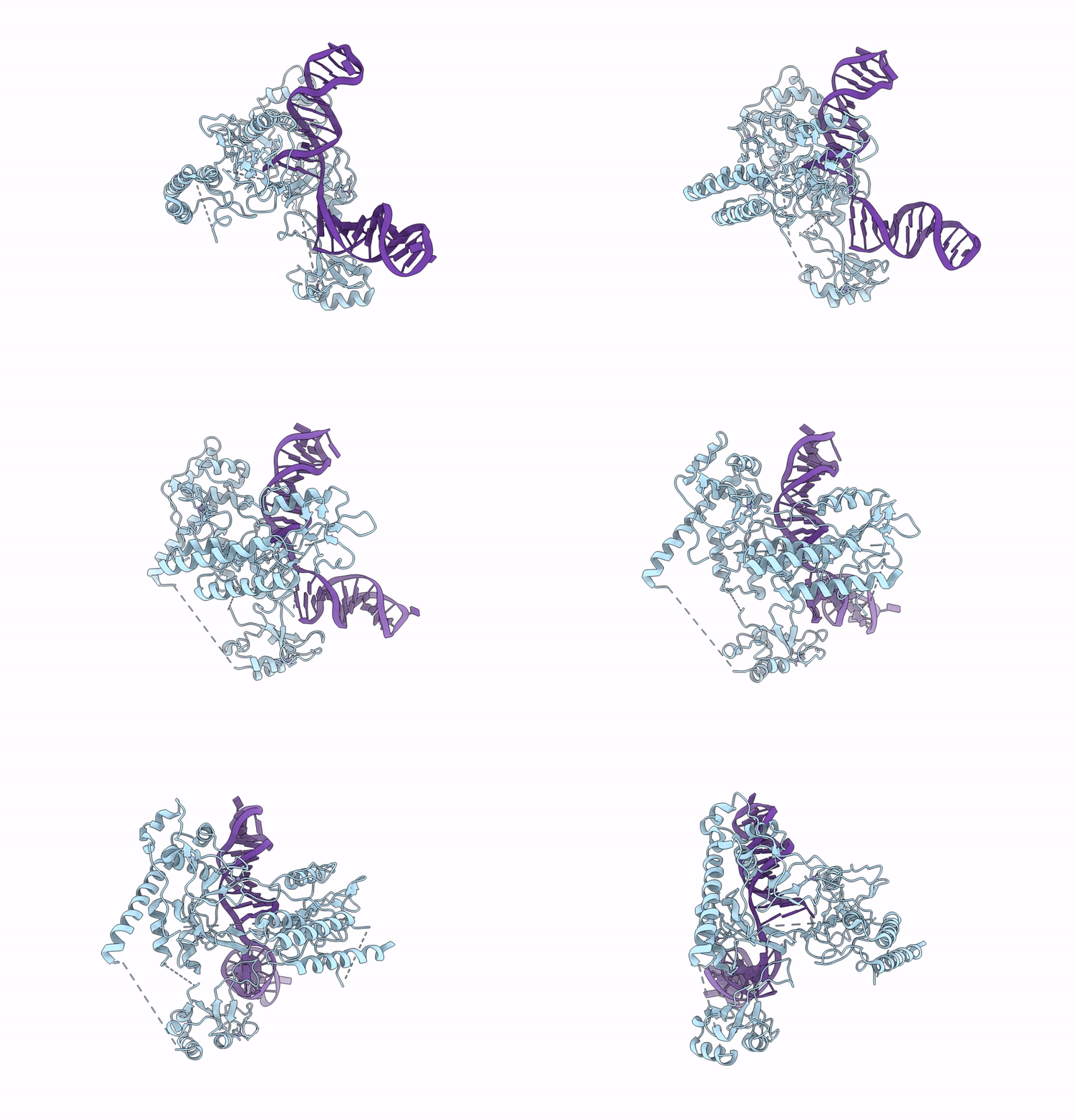
9MI8 image
Deposition Date 2024-12-12
Release Date 2026-03-04
Last Version Date 2026-04-08
Entry Detail
PDB ID:
9MI8
Title:
Human PARP1 N-terminal domains bound to nicked DNA
Biological Source:
Source Organism(s):
Homo sapiens (Taxon ID: 9606)
Expression System(s):
Method Details:
Experimental Method:
Resolution:
3.60 Å
Aggregation State:
PARTICLE
Reconstruction Method:
SINGLE PARTICLE
Macromolecular Entities
Structures with similar UniProt ID
Protein Blast
Polymer Type:polypeptide(L)
Molecule:Poly [ADP-ribose] polymerase
Gene (Uniprot):PARP1
Chain IDs:A
Chain Length:1034
Number of Molecules:1
Biological Source:Homo sapiens
Polymer Type:polydeoxyribonucleotide
Molecule:DNA (48-MER)
Chain IDs:B
Chain Length:48
Number of Molecules:1
Biological Source:Homo sapiens
Ligand Molecules
Primary Citation
PARP1-HPF1 structure and dynamics on nicked DNA suggest a mechanism for acute and localized ADP-ribosylation.
Nat Commun 17 ? ? (2026)
PMID: 41698892 DOI: 10.1038/s41467-026-69375-3

Abstact

PARP1 detection of DNA strand breaks allosterically leads to PARP1 synthesis of poly(ADP-ribose) modifications that signal DNA damage. HPF1 engages activated PARP1 to control modification site selection. Understanding of the mechanism of DNA break detection and catalytic activation is incomplete, due largely to limited structural information for full-length PARP1. Here, single-particle cryo-EM provides views of the full complement of PARP1 domains engaging a DNA single-strand break in the presence of HPF1 and a fragment of binding partner Timeless. Cryo-EM, single-molecule DNA dynamics, and small-angle X-ray scattering analysis indicate that PARP1 remains dynamic even when the multi-domain structure is organized on a DNA break, with the minimal catalytic region displaying high mobility relative to domains engaging damage. We propose that the organization of PARP1 domains on a DNA break releases a tethered, constitutively active catalytic region to modify molecules in a radius surrounding the DNA break site.

Legend

Protein

Chemical

Disease

Primary Citation of related structures
Feedback Form
Name
Email
Institute
Feedback