

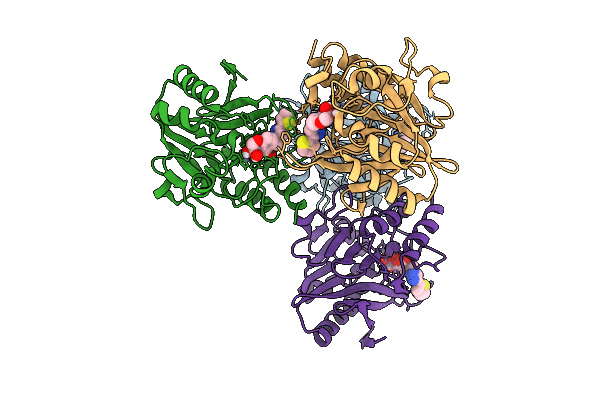
9MB4 image
Deposition Date 2025-03-15
Release Date 2026-03-11
Last Version Date 2026-03-11
Entry Detail
PDB ID:
9MB4
Keywords:
Title:
Metal Beta Lactamase NDM-1 in Complex with Dual MBL/SBL Inhibitor 14
Biological Source:
Source Organism(s):
Expression System(s):
Method Details:
Experimental Method:
Resolution:
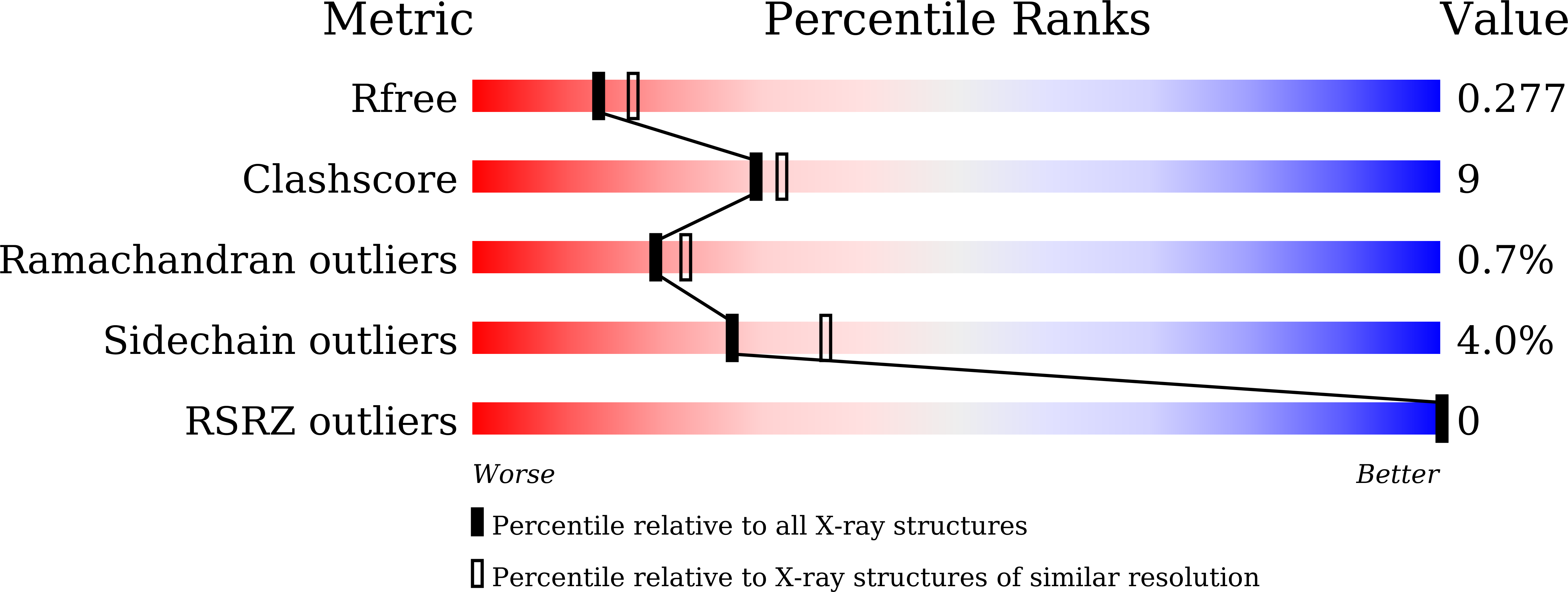
2.44 Å
R-Value Free:
0.27
R-Value Work:
0.17
R-Value Observed:
0.17
Space Group:
P 1 21 1
Macromolecular Entities
Structures with similar UniProt ID
Protein Blast
Polymer Type:polypeptide(L)
Molecule:Metallo-beta-lactamase type 2
Gene (Uniprot):blaNDM-1
Chain IDs:A, B, C, D
Chain Length:241
Number of Molecules:4
Biological Source:Klebsiella pneumoniae
Primary Citation
Structural Optimization of Bicyclic Oxo-Boronates as Dual Metallo- and Serine-beta-Lactamase Inhibitors.
J. Med. Chem. 68 21807 21828 (2025)
PMID: 41082617 DOI: 10.1021/acs.jmedchem.5c02230

Abstact

Gram-negative bacterial resistance to beta-lactam antibiotics is a growing clinical problem, largely driven by the production of metallo-beta-lactamases (MBLs) and serine-beta-lactamases (SBLs). Developing dual inhibitors targeting both MBLs and SBLs has emerged as a focus in the fight against beta-lactam resistance. We previously identified the bicyclic oxo-boronate CB1 as a dual MBL/SBL inhibitor through molecular generation based on the binding mode of carbapenem tetrahedral intermediates. Herein, we report the structural optimization of CB1, yielding new bicyclic oxo-boronates with potent dual MBL/SBL inhibition, some of which could potentiate Meropenem efficacy against carbapenem-resistant Gram-negative superbugs. X-ray crystallography revealed a common binding mode of bicyclic oxo-boronates with VIM-2/NDM-1 MBL and OXA-48 SBL, mimicking the binding of carbapenem intermediates. YL6113 exhibited pharmacokinetic characteristics similar to Meropenem and manifested efficacy when combined with Meropenem in a murine sepsis model. This work provides the basis for developing oxo-boronate-based inhibitors targeting MBLs/SBLs and other relevant targets.

Legend

Protein

Chemical

Disease

Primary Citation of related structures
Feedback Form
Name
Email
Institute
Feedback