

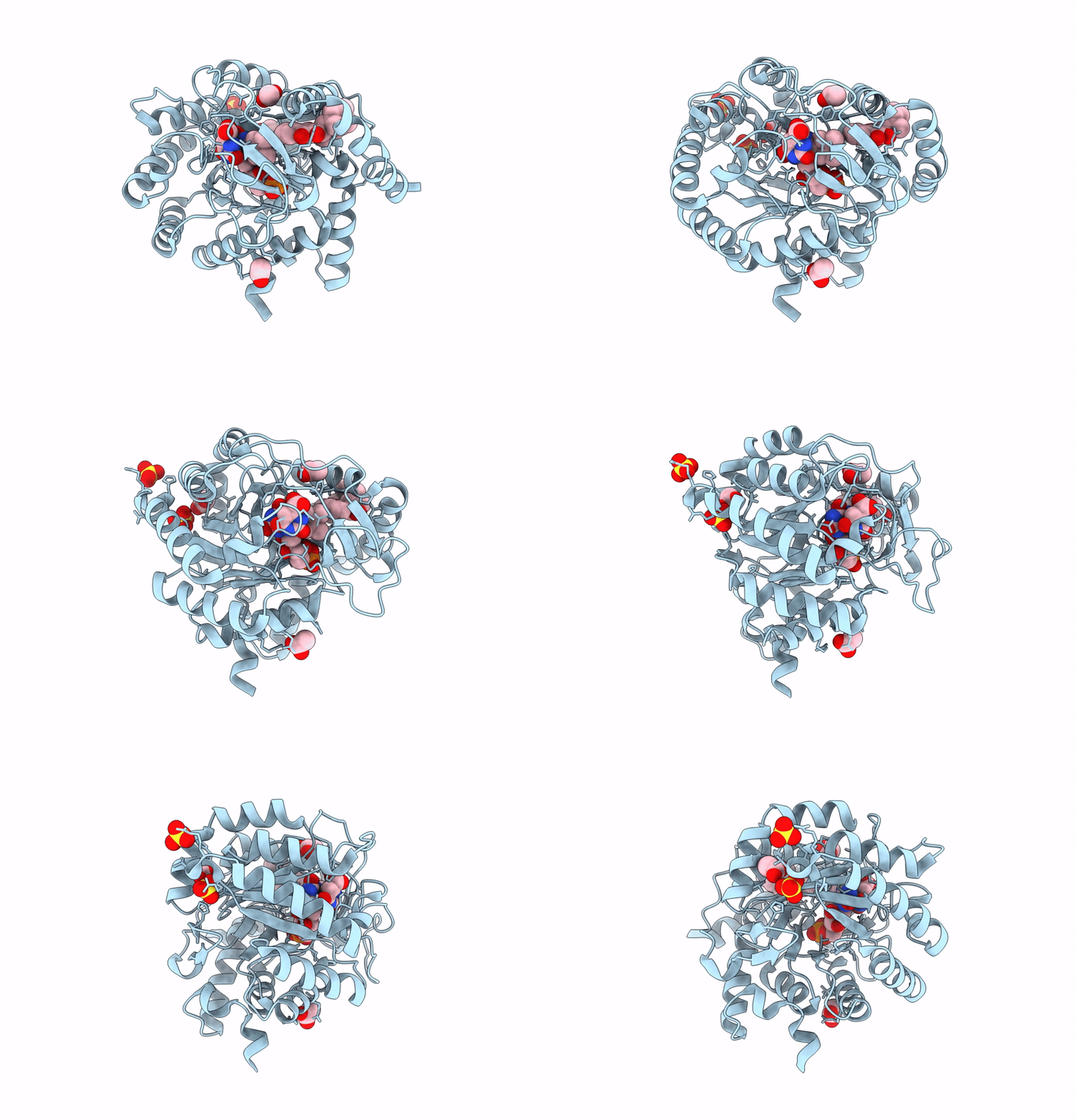
9M4M image
Deposition Date 2025-03-04
Release Date 2026-03-04
Last Version Date 2026-04-29
Entry Detail
PDB ID:
9M4M
Keywords:
Title:
Crystal structure of human DHODH in complex with Lapachol derivatives, 511-12
Biological Source:
Source Organism(s):
Homo sapiens (Taxon ID: 9606)
Expression System(s):
Method Details:
Experimental Method:
Resolution:
1.75 Å
R-Value Free:
0.17
R-Value Work:
0.16
R-Value Observed:
0.16
Space Group:
P 32 2 1

Macromolecular Entities
Structures with similar UniProt ID
Protein Blast
Polymer Type:polypeptide(L)
Molecule:Dihydroorotate dehydrogenase
Gene (Uniprot):DHODH
Chain IDs:A
Chain Length:367
Number of Molecules:1
Biological Source:Homo sapiens
Primary Citation
Antiviral activities of ascofuranone and naphthoquinone derivatives against Ebola virus.
Antiviral Res. 249 106400 106400 (2026)
PMID: 41933619 DOI: 10.1016/j.antiviral.2026.106400

Abstact

Ebola virus (EBOV) has emerged as a cause of a severe and life-threatening disease since its discovery. Currently, only two monoclonal antibody drugs have been approved by the US Food and Drug Administration for EBOV infection treatment. In this study, we screened 87 human dihydroorotate dehydrogenase (HsDHODH) inhibitors using the transcription and replication-competent virus-like particle (trVLP) system. Two compounds, 280-12 and 511-12, ascofuranone and naphthoquinone derivatives, respectively, were identified. Both compounds inhibited the Ebola trVLP infection in a dose-dependent manner in vitro and strongly inhibited the EBOV minigenome expression. Their antiviral effects against authentic infectious EBOV were also confirmed, with half-maximal inhibitory concentrations of 0.5 and 0.1 muM, respectively. Structural analysis of 511-12 and lapachol, a naphthoquinone derivative with a short isoprene chain, in complex with HsDHODH revealed that these compounds bind to the N-terminal hydrophobic cavity related to the ubiquinone-binding site. Supplementation of nucleosides and metabolites involved in the biosynthesis of pyrimidine nucleotides supported that the antiviral activities of the identified compounds were mainly based on the intracellular pyrimidine pool depletion, specifically at the level of mitochondrial DHODH. Overall, these results suggest 280-12 and 511-12 as promising lead compound candidates for the development of novel drugs for the treatment of EBOV infection.

Legend

Protein

Chemical

Disease

Primary Citation of related structures
Feedback Form
Name
Email
Institute
Feedback