

9M4A image
Deposition Date 2025-03-04
Release Date 2025-11-26
Last Version Date 2026-06-10
Entry Detail
PDB ID:
9M4A
Keywords:
Title:
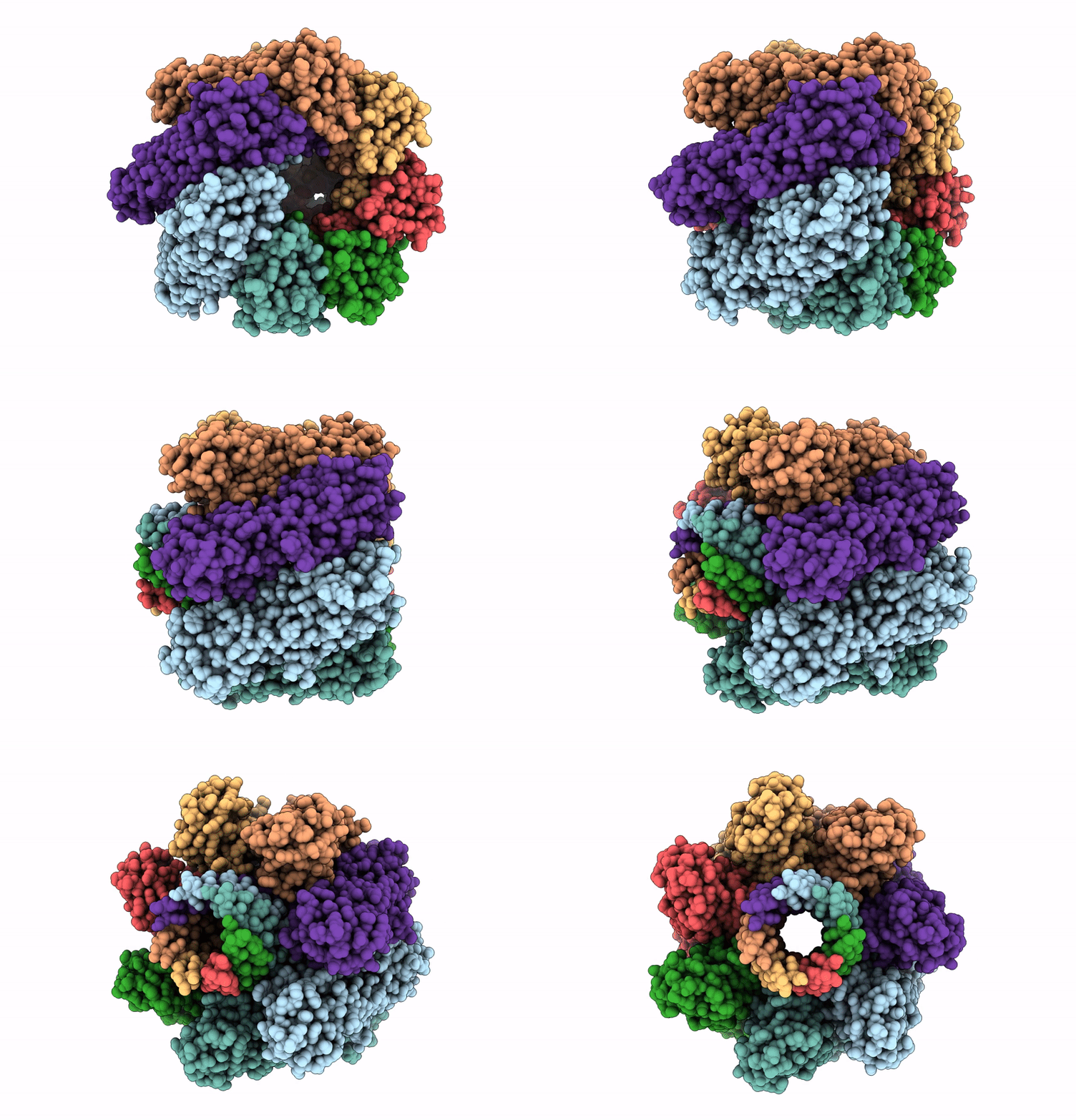
Cryo-EM structure of pre-pore state IV of heptameric alpha-hemolysin in the presence of RBC
Biological Source:
Source Organism(s):
Expression System(s):
Method Details:
Experimental Method:
Resolution:
3.46 Å
Aggregation State:
PARTICLE
Reconstruction Method:
SINGLE PARTICLE
Macromolecular Entities
Polymer Type:polypeptide(L)
Molecule:Alpha-hemolysin
Gene (Uniprot):hly
Chain IDs:A (auth: G), B (auth: A), C (auth: B), D (auth: C), E (auth: D), F (auth: E), G (auth: F)
Chain Length:293
Number of Molecules:7
Biological Source:Staphylococcus aureus
Ligand Molecules
Primary Citation
Stepwise assembly of alpha-hemolysin from intermediates to the mature pore in native erythrocytes.
J.Cell Biol. 225 ? ? (2026)
PMID: 41524690 DOI: 10.1083/jcb.202506129

Abstact

Alpha-hemolysin (alpha-HL) is a small pore-forming toxin secreted by pathogenic Staphylococcus aureus, inducing cell death process by forming pores in membrane. So far, detergents or artificial lipid environments have been utilized to characterize the toxin structure. The toxin-induced changes in the membrane, membrane remodeling after toxin treatment, and the role of the toxin during pore formation process remain ambiguous. Thus, understanding pore formation in the cellular environment, including the roles of the plasma membrane and lipid composition, is crucial for drug development. In this study, we captured step-by-step oligomerization of alpha-HL and membrane rupture of erythrocyte cells using confocal microscopy, cryo-EM imaging, and single-particle analysis. We resolved 3.1-3.8 A resolution structures of pore, prepore, and immature pore conformations in cellular environment. Furthermore, mass spectrometry analysis demonstrated key erythrocyte lipid components interacting with alpha-HL. Our findings indicate that shorter or unsaturated lipid chains facilitate pore formation and the role of phosphatidylcholine with varying physical properties in modulating the toxin's activity.

Legend

Protein

Chemical

Disease

Primary Citation of related structures
Feedback Form
Name
Email
Institute
Feedback