

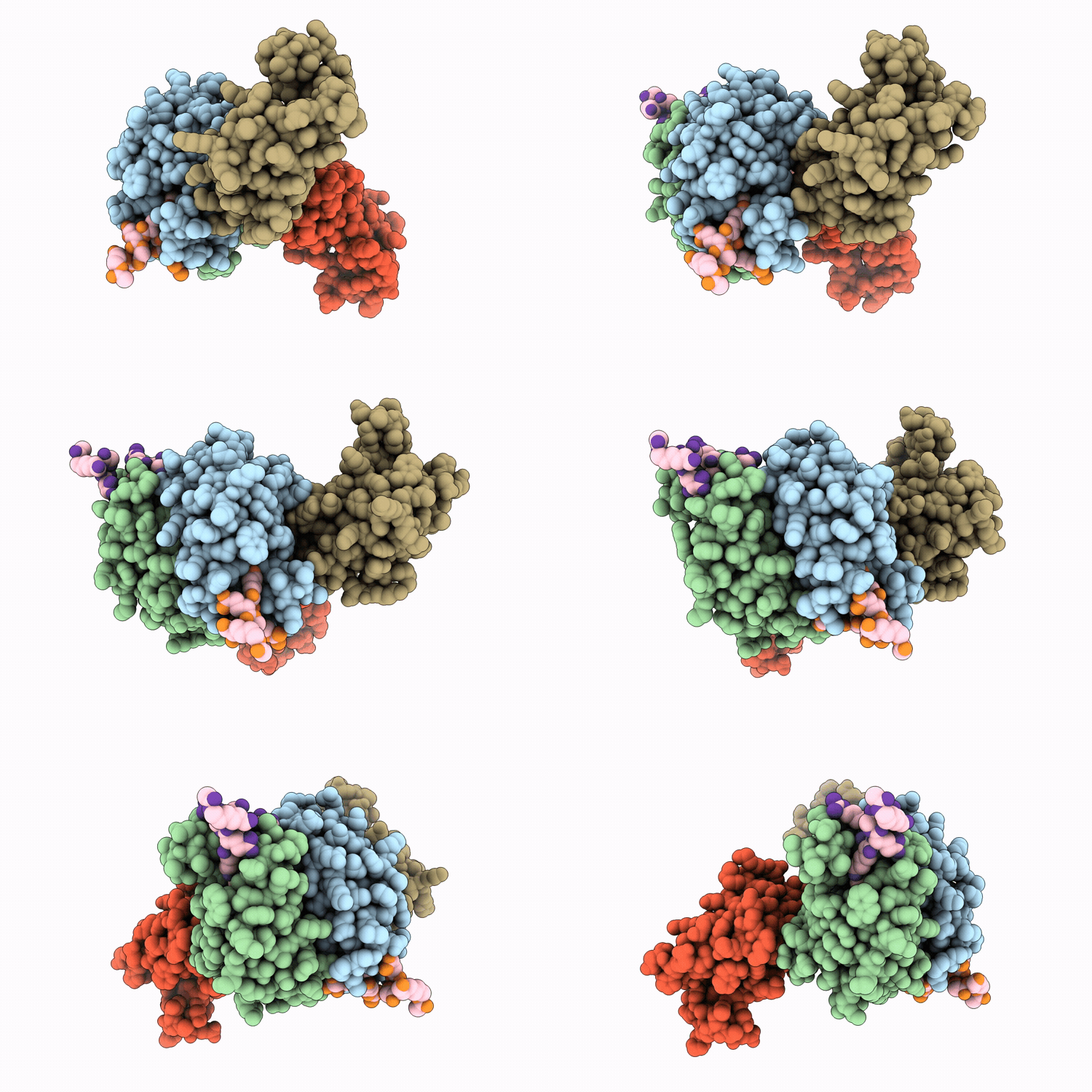
9M0F image
Deposition Date 2025-02-24
Release Date 2026-07-01
Last Version Date 2026-07-01
Entry Detail
PDB ID:
9M0F
Keywords:
Title:
The crystal structure of BRD4-BDs in complex with H2A peptide
Biological Source:
Source Organism(s):
Homo sapiens (Taxon ID: 9606)
Expression System(s):
Method Details:
Experimental Method:
Resolution:
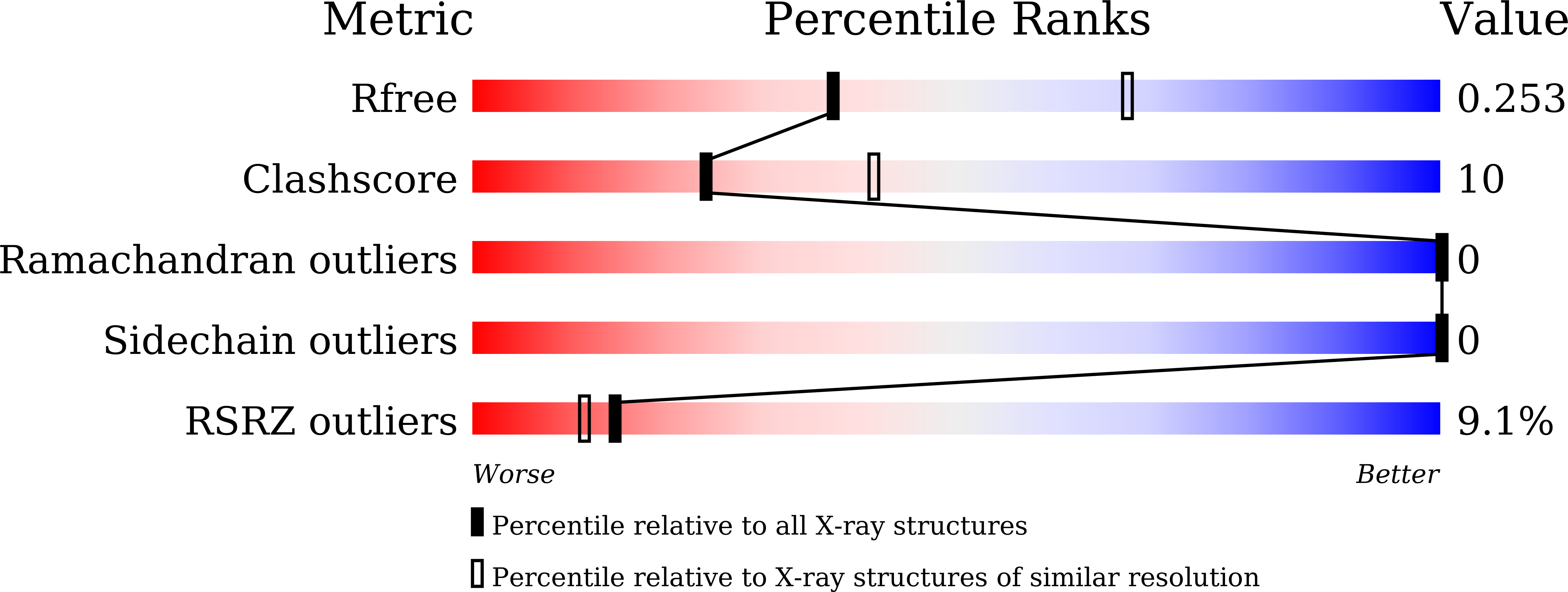
2.61 Å
R-Value Free:
0.25
R-Value Work:
0.20
R-Value Observed:
0.21
Space Group:
C 1 2 1
Macromolecular Entities
Polymer Type:polypeptide(L)
Molecule:Bromodomain-containing protei
Chain IDs:A, B
Chain Length:115
Number of Molecules:2
Biological Source:Homo sapiens
Polymer Type:polypeptide(L)
Molecule:Bromodomain-containing protei
Chain IDs:C, D
Chain Length:107
Number of Molecules:2
Biological Source:Homo sapiens
Polymer Type:polypeptide(L)
Molecule:Histone H2A
Chain IDs:E, F
Chain Length:9
Number of Molecules:2
Biological Source:Homo sapiens
Primary Citation
Structural mechanism of diacetylated histone H2A recognition by Bromodomain-containing protein 4 in Regulation of non-homologous end-joining DNA repair.
Int.J.Biol.Macromol. 368 152638 152638 (2026)
PMID: 42173225 DOI: 10.1016/j.ijbiomac.2026.152638

Abstact

Bromodomain-containing protein 4 (BRD4) is well characterized as a histone acetyllysine reader that plays critical roles in the regulation of oncogene transcription. Additionally, BRD4 has been shown to be involved in DNA repair and telomere maintenance in a transcriptionally independent manner. Our previous study revealed that BRD4 inhibits non-homologous end-joining (NHEJ) DNA repair by recognizing the histone H2AK5acK9ac hyperacetylation at DSB sites through its tandem bromodomains (BD1 and BD2), resulting in the accumulation of the BRD4-KU80 protein that impedes the assembly of the DNA repair machinery in mitotic deacetylase complex (MiDAC)-deficient cells. Here we report the structural basis for the recognition of H2AK5acK9ac by BD1 and BD1-BD2 domains, respectively. In particular, we show that Leu92 in BD1 is a key determinant of the H2AK5acK9ac specificity over other diacetyllysine marks on H4, and it negatively regulates NHEJ repair to promote genomic instability in MiDAC-deficient cells. These results reveal a previously unrecognized mode of BRD4-histone interaction and its functional consequences that make a meaningful contribution to chromatin biology and DNA repair.

Legend

Protein

Chemical

Disease

Primary Citation of related structures
Feedback Form
Name
Email
Institute
Feedback