

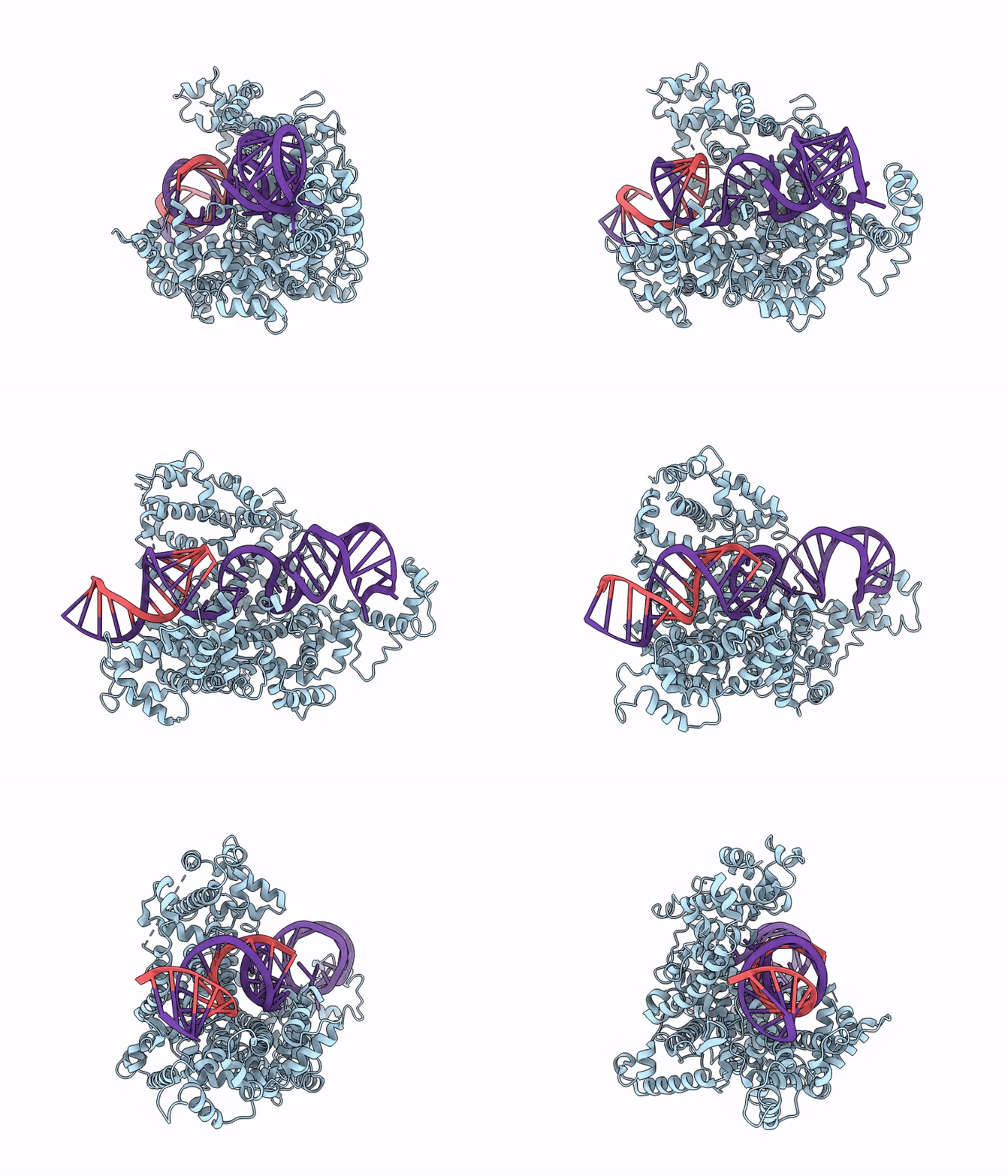
9LZU image
Deposition Date 2025-02-22
Release Date 2025-10-08
Last Version Date 2026-03-11
Entry Detail
PDB ID:
9LZU
Title:
RfxCas13d-crRNA-target RNA ternary complex
Biological Source:
Source Organism(s):
Expression System(s):
Method Details:
Experimental Method:
Resolution:
3.10 Å
Aggregation State:
PARTICLE
Reconstruction Method:
SINGLE PARTICLE
Macromolecular Entities
Protein Blast
Polymer Type:polypeptide(L)
Molecule:RfxCas13d
Chain IDs:A
Chain Length:966
Number of Molecules:1
Biological Source:Ruminococcus sp. XPD3002
Polymer Type:polyribonucleotide
Molecule:RNA (5'-R(P*CP*UP*GP*UP*GP*GP
Chain IDs:C (auth: B)
Chain Length:14
Number of Molecules:1
Biological Source:Cloning vector pgRNA-ccdB-1
Polymer Type:polyribonucleotide
Molecule:RNA (51-MER)
Chain IDs:B (auth: C)
Chain Length:51
Number of Molecules:1
Biological Source:Cloning vector pgRNA-ccdB-1
Ligand Molecules
Primary Citation
Cryo-EM structure of the RfxCas13d-crRNA-off-target-RNA complex.
Structure 34 11 19.e2 (2026)
PMID: 41135510 DOI: 10.1016/j.str.2025.09.010

Abstact

The CRISPR-Cas system is crucial for the adaptive immune response of prokaryotes and has been widely applied for genetic engineering. Cas13d, a type VI-D CRISPR-Cas effector, functions as RNA-guided ribonuclease and has been engineered for programmable RNA editing, which is a commonly used, active, and well-characterized small type VI editor. Here, we determined cryoelectron microscopy (cryo-EM) structures of Ruminococcus flavefaciens Cas13d in a RfxCas13d-crRNA-off-target-RNA ternary complex and RfxCas13d-crRNA binary complex at 3.10 and 3.13 A resolution. The ternary complex consists of RfxCas13d, crRNA, and a captured short off-target ssRNA at a complex state of binding proximal mismatched RNA. RfxCas13d undergoes conformational changes with or without the off-target RNA, but the catalytic sites remain unchanged. Mg(2+) aids in stabilizing the crRNA repeat region structure, which may be crucial for RNA binding. This discovery provides the foundation for developing RfxCas13d as a mature tool and offers a framework for advancing transcriptome engineering.

Legend

Protein

Chemical

Disease

Primary Citation of related structures
Feedback Form
Name
Email
Institute
Feedback