

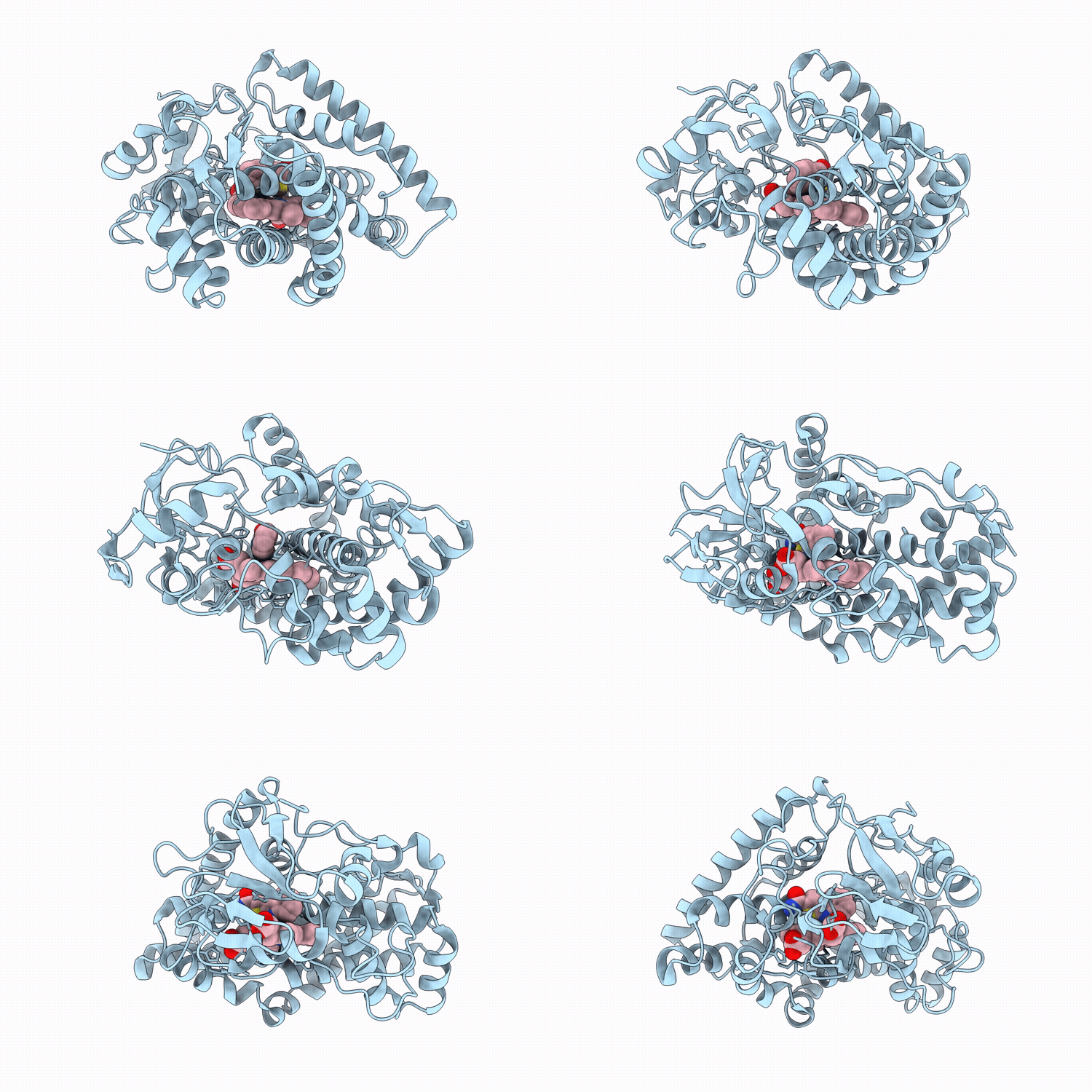
9LWE image
Deposition Date 2025-02-14
Release Date 2026-07-15
Last Version Date 2026-08-26
Entry Detail
PDB ID:
9LWE
Keywords:
Title:
P450 hydroxylase THNC
Biological Source:
Source Organism(s):
Expression System(s):
Method Details:
Experimental Method:
Resolution:
2.90 Å
R-Value Free:
0.23
R-Value Work:
0.21
R-Value Observed:
0.22
Space Group:
P 31 2 1
Macromolecular Entities
Polymer Type:polypeptide(L)
Molecule:P450
Chain IDs:A
Chain Length:396
Number of Molecules:1
Biological Source:Streptomyces sp. FXJ1.172
Primary Citation
Distinct Oxidoreductases Orchestrate Indolethiophene Skeleton Formation and N-Hydroxylation-Mediated Bioactivation in Thienoxidolin Biosynthesis.
Angew.Chem.Int.Ed.Engl. 65 e7072895 e7072895 (2026)
PMID: 42275295 DOI: 10.1002/anie.7072895

Abstact

Microbial sulfur-containing secondary metabolite thienodolin (1) features a unique tricyclic thieno[2,3-b]indole scaffold, yet its biosynthesis has remained enigmatic. Here, we uncover an unexpected enzymatic logic in which a consortium of distinct oxidoreductases cooperatively orchestrates indolethiophene skeleton formation and subsequent bioactivation, ultimately generating the authentic antibacterial metabolite thienoxidolin (10). Following thiotryptophan formation by SDR enzyme TndE, the heme-dependent DUF6875 enzyme TndD initiates C-S bond formation via N-hydroxylation to yield a dearomatized tricyclic species, which is efficiently driven forward and stabilized by aromatization catalyzed by the FAD-dependent oxidoreductase TndG. Notably, TndD functions as a bidirectional redox enzyme, reverting the N-hydroxyl group to the stable N-H form to complete the indolethiophene scaffold construction. After amide formation, late-stage N-hydroxylation by the cytochrome P450 enzyme TndC, previously misassigned as the C-S bond-forming enzyme, produces the bioactive product 10. Intriguingly, TndD may also mediate the deactivation of 10 back to 1, representing an intrinsic self-protection mechanism. Together, these results expand the catalytic repertoire of heme-dependent enzymes and highlight reversible N-hydroxylation as a pivotal strategy for heterocycle formation and bioactivity regulation in microbial secondary metabolism.

Legend

Protein

Chemical

Disease

Primary Citation of related structures
Feedback Form
Name
Email
Institute
Feedback