

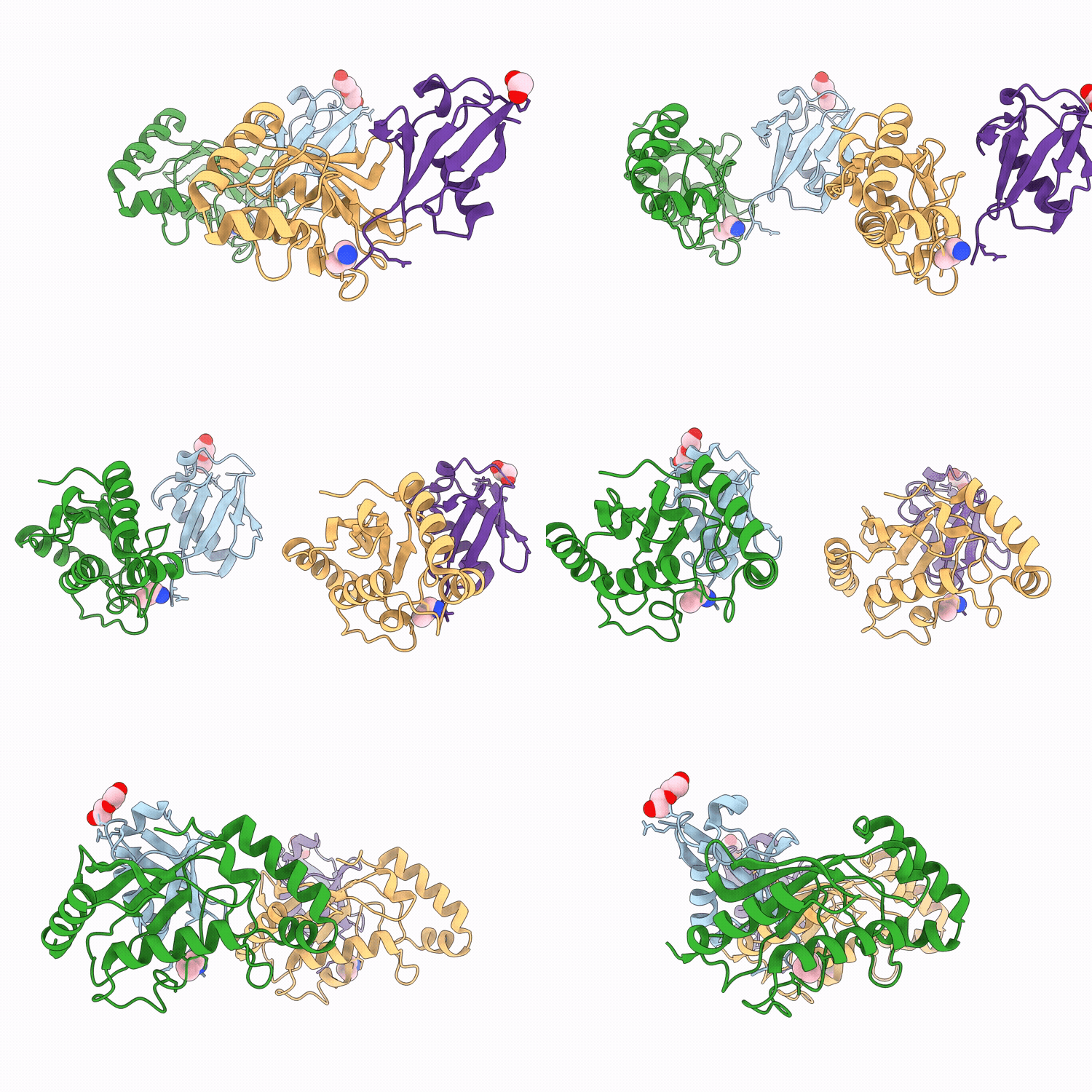
9LW4 image
Deposition Date 2025-02-13
Release Date 2026-07-01
Last Version Date 2026-07-01
Entry Detail
PDB ID:
9LW4
Keywords:
Title:
UbCh8-ISG15 complex
Biological Source:
Source Organism(s):
Homo sapiens (Taxon ID: 9606)
Expression System(s):
Method Details:
Experimental Method:
Resolution:
2.70 Å
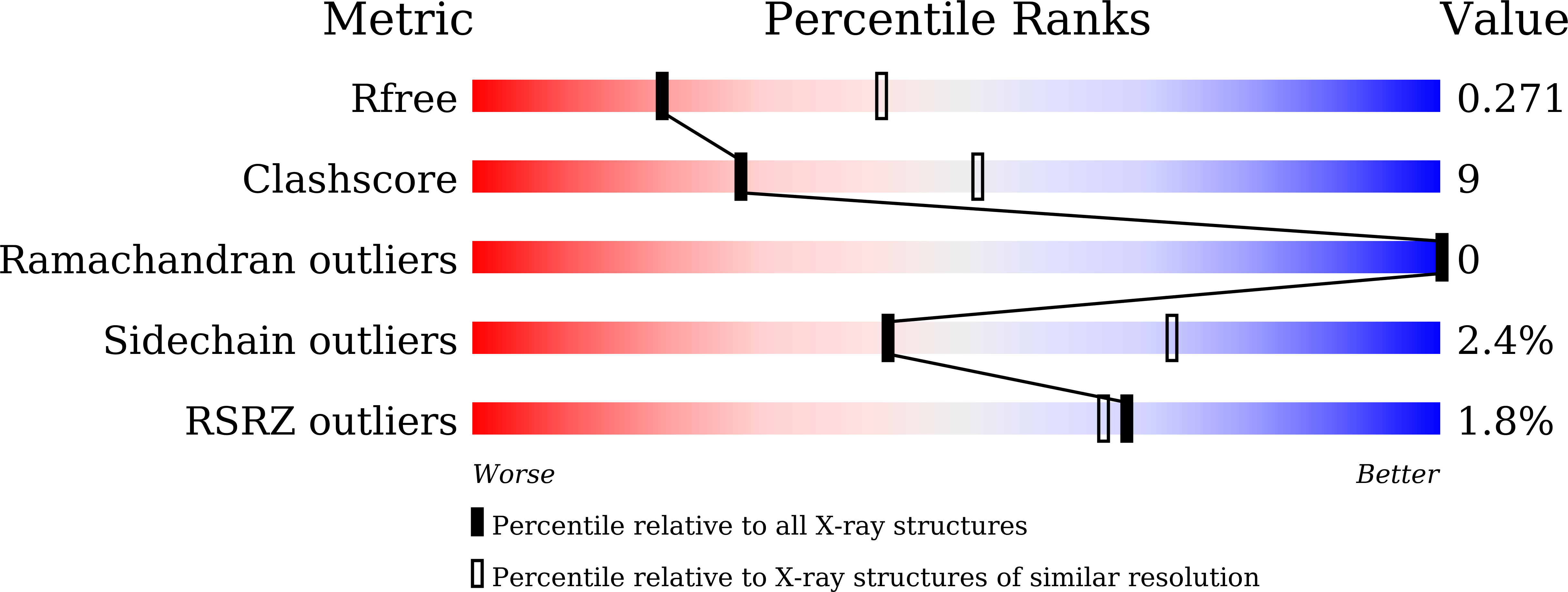
R-Value Free:
0.26
R-Value Work:
0.23
Space Group:
C 1 2 1
Macromolecular Entities
Structures with similar UniProt ID
Protein Blast
Polymer Type:polypeptide(L)
Molecule:Ubiquitin-like protein ISG15
Gene (Uniprot):ISG15
Chain IDs:B (auth: A), D
Chain Length:76
Number of Molecules:2
Biological Source:Homo sapiens
Structures with similar UniProt ID
Protein Blast
Polymer Type:polypeptide(L)
Molecule:Ubiquitin/ISG15-conjugating e
Gene (Uniprot):UBE2L6
Chain IDs:A (auth: B), C
Chain Length:152
Number of Molecules:2
Biological Source:Homo sapiens
Primary Citation
ISGylation mechanism uncovers conformational specificity for HECT-family E3 ligase HERC5.
Cell Rep 45 117565 117565 (2026)
PMID: 42322607 DOI: 10.1016/j.celrep.2026.117565

Abstact

Interferon-stimulated gene 15 (ISG15), composed of two ubiquitin-like domains, plays a critical role in antiviral immunity. Although the ubiquitination mechanism is well established, the mechanisms governing ISG15 transfer, particularly from E2 to E3 and subsequent lysine conjugation, remain unknown. Here, we reveal that UbcH8(E2) approximately ISG15 exhibits striking specificity for HECT-family E3 ligases (particularly HERC5) but is inactive with RING or RBR E3. In contrast, UbcH8 approximately Ub preferentially engages RBR E3, indicating a switched E2-E3 specificity depending on the conjugated ubiquitin-like modifier. Structural and biochemical studies uncover how a closed conformation of UbcH8 approximately ISG15 enables trans-thiolation mediated by selective HECT-family E3 ligases. We further demonstrate that HERC5's C-lobe specifically recognizes donor ISG15 for lysine conjugation, explaining its exclusive ISGylation activity and lack of ubiquitination function. These findings delineate the molecular basis of ISG15 conjugation and reveal how its pathway has evolved distinct mechanisms from ubiquitination, offering new avenues for therapeutic intervention.

Legend

Protein

Chemical

Disease

Primary Citation of related structures
Feedback Form
Name
Email
Institute
Feedback