

9LT3 image
Deposition Date 2025-02-05
Release Date 2026-02-18
Last Version Date 2026-05-20
Entry Detail
PDB ID:
9LT3
Title:
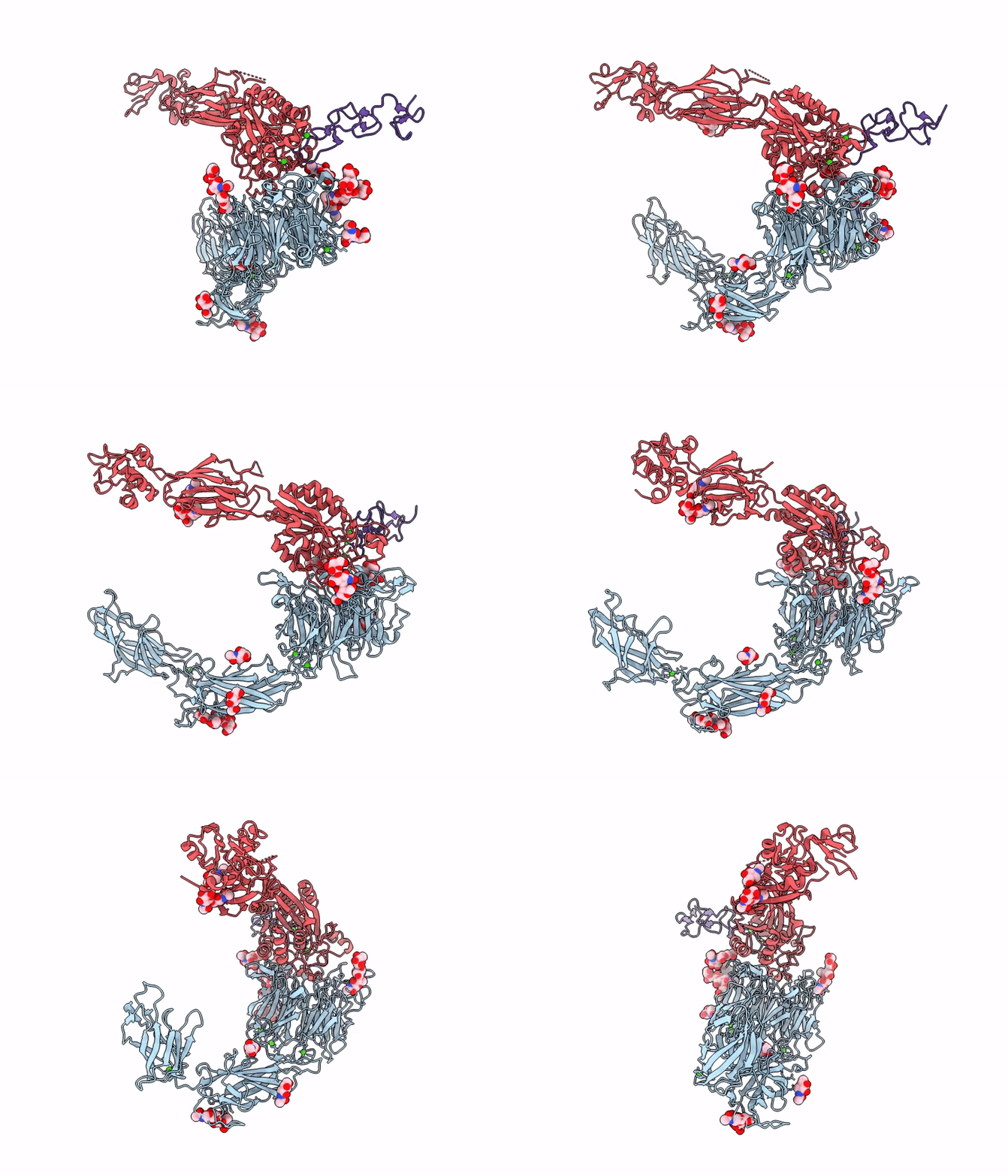
Integrin alpha-v beta-3 in complex with Trimucrin
Biological Source:
Source Organism(s):
Method Details:
Experimental Method:
Resolution:
2.79 Å
Aggregation State:
PARTICLE
Reconstruction Method:
SINGLE PARTICLE
Macromolecular Entities
Protein Blast
Polymer Type:polypeptide(L)
Molecule:Integrin alpha-V,Integrin alp
Gene (Uniprot):ITGAV, DKFZp686C11235
Chain IDs:A
Chain Length:1184
Number of Molecules:1
Biological Source:Homo sapiens
Protein Blast
Polymer Type:polypeptide(L)
Molecule:Integrin beta-3
Gene (Uniprot):ITGB3, DKFZp686C11235
Chain IDs:B
Chain Length:919
Number of Molecules:1
Biological Source:Homo sapiens
Structures with similar UniProt ID
Protein Blast
Polymer Type:polypeptide(L)
Molecule:Zinc metalloproteinase/disint
Chain IDs:C
Chain Length:73
Number of Molecules:1
Biological Source:Protobothrops mucrosquamatus
Primary Citation
Structural basis for the differential recognition of integrin alpha v beta 3 by rhodostomin and trimucrin.
Commun Biol 9 ? ? (2026)
PMID: 42045602 DOI: 10.1038/s42003-026-10139-6

Abstact

Rhodostomin (Rho) and Trimucrin (Tmu) are RGD-containing disintegrins that inhibit integrins more effectively than short RGD peptides. They differ in their linker, RGD loop, and C-terminal sequences. We determined the X-ray structure of Tmu and the cryo-EM structures of integrin alphavbeta3 in complex with both disintegrins. Structural analysis revealed subtle differences in binding, with both adopting a rigid backbone conformation and interacting with integrin through three cooperative binding sites. Besides the conserved RGD interface, Tmu features a cluster of basic residues in its linker, while Rho has distinct C-terminal interactions. Disintegrin binding stabilizes alphavbeta3 in an extended-open conformation, while the beta3-Y110 residue is essential for maintaining the bent state without ligands. These findings enhance our understanding of integrin recognition and inform the development of integrin-targeted therapeutics for anti-angiogenic, anti-tumor, and anti-inflammatory applications.

Legend

Protein

Chemical

Disease

Primary Citation of related structures
Feedback Form
Name
Email
Institute
Feedback