

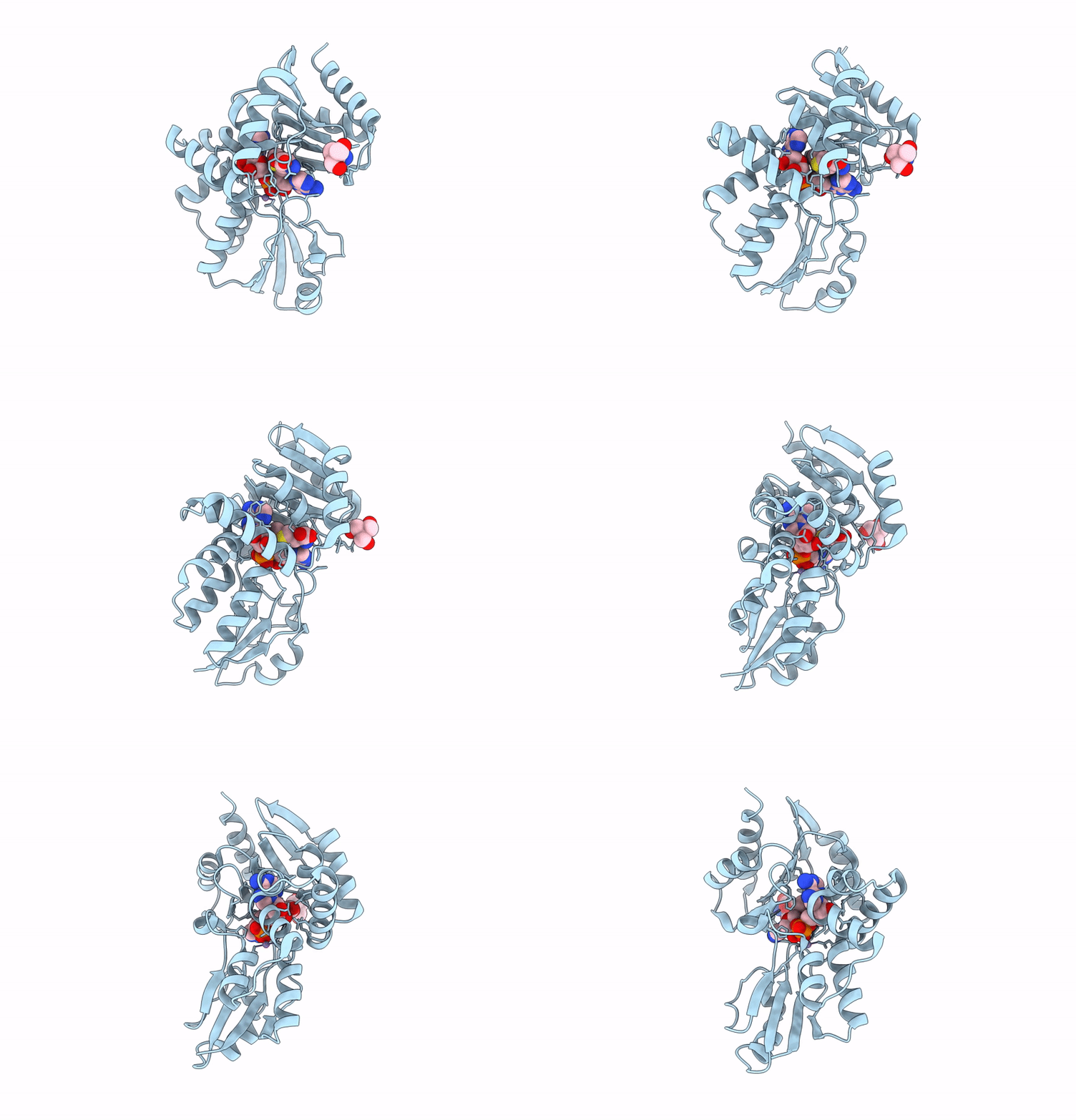
9LQA image
Deposition Date 2025-01-28
Release Date 2025-11-26
Last Version Date 2026-06-10
Entry Detail
PDB ID:
9LQA
Keywords:
Title:
Crystal structure of NrN E21A in complex with SAM-AMP
Biological Source:
Source Organism(s):
Expression System(s):
Method Details:
Experimental Method:
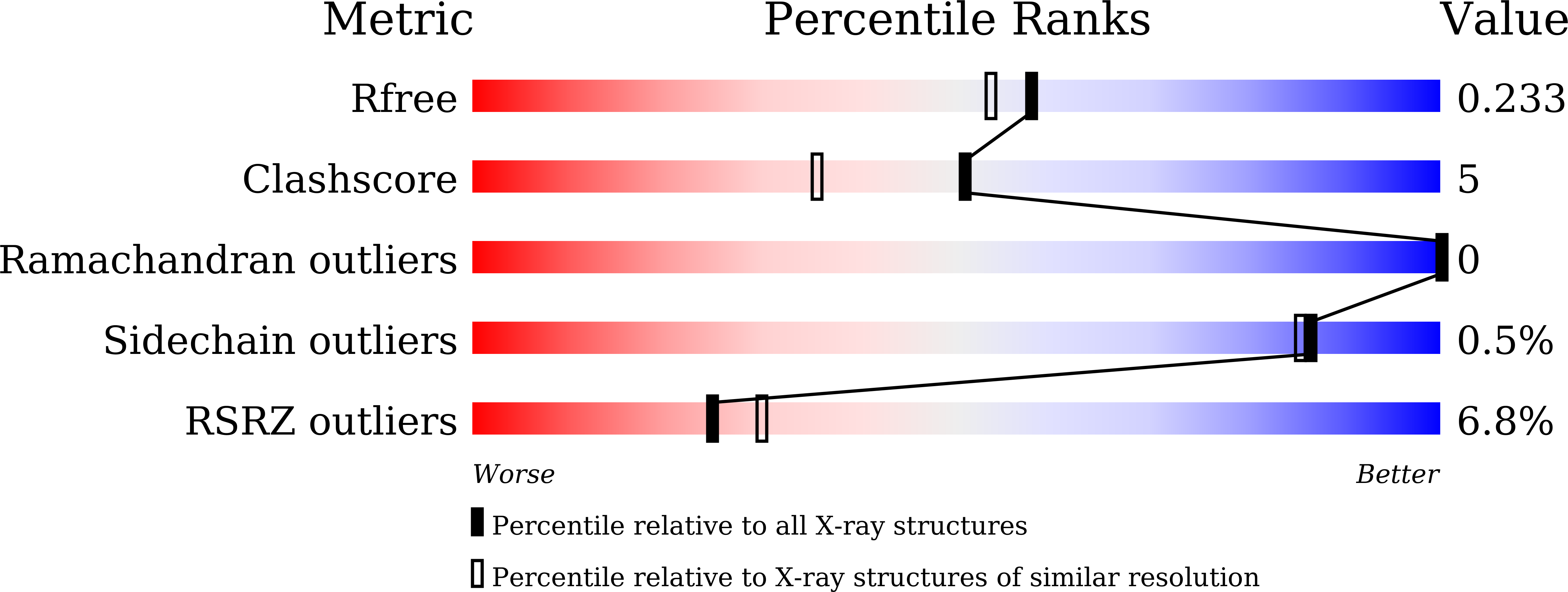
Resolution:
1.91 Å
R-Value Free:
0.23
R-Value Work:
0.19
R-Value Observed:
0.19
Space Group:
P 41 21 2
Macromolecular Entities
Structures with similar UniProt ID
Protein Blast
Polymer Type:polypeptide(L)
Molecule:NrN
Gene (Uniprot):CQW34_02202, F2Z29_06630, F2Z89_11900, F3B44_04915, FSA03_20595, FSA06_24365, NXX45_16660
Mutagens:E21A
Chain IDs:A
Chain Length:260
Number of Molecules:1
Biological Source:Bacteroides fragilis
Primary Citation
Molecular basis of SAM-AMP synthesis and degradation in the type III-B CRISPR-Cas system.
Nat.Chem.Biol. ? ? ? (2025)
PMID: 41272318 DOI: 10.1038/s41589-025-02075-z

Abstact

Upon sensing nonself target RNA, the CorA-associated type III-B CRISPR-Cas system catalyzes S-adenosyl methionine (SAM) and ATP to synthesize SAM-AMP, which activates the effector CorA and triggers immune responses. SAM-AMP can be degraded by NrN and SAM lyase, potentially deactivating the system. Here we find that the type III-B effector complex from Bacteroides fragilis uses a specific mechanism to recognize nonself target RNA and synthesize SAM-AMP. The 3' anti-tag of nonself target RNA induces conformational changes in the Cmr2 subunit, triggering SAM-AMP synthesis independently of the stalk loop of Cmr3 subunit. SAM-AMP binding induces NrN to transit from an open to a closed conformation, enabling hydrolysis of the 3'-5' phosphodiester bond. SAM lyase forms a triangular trimer that specifically degrades SAM-AMP into 5'-methylthioadenosine-AMP and homoserine lactone. These findings unveil unique mechanisms for SAM-AMP synthesis and degradation and provide deeper insights into the molecular basis of type III CRISPR-Cas signaling.

Legend

Protein

Chemical

Disease

Primary Citation of related structures
Feedback Form
Name
Email
Institute
Feedback