

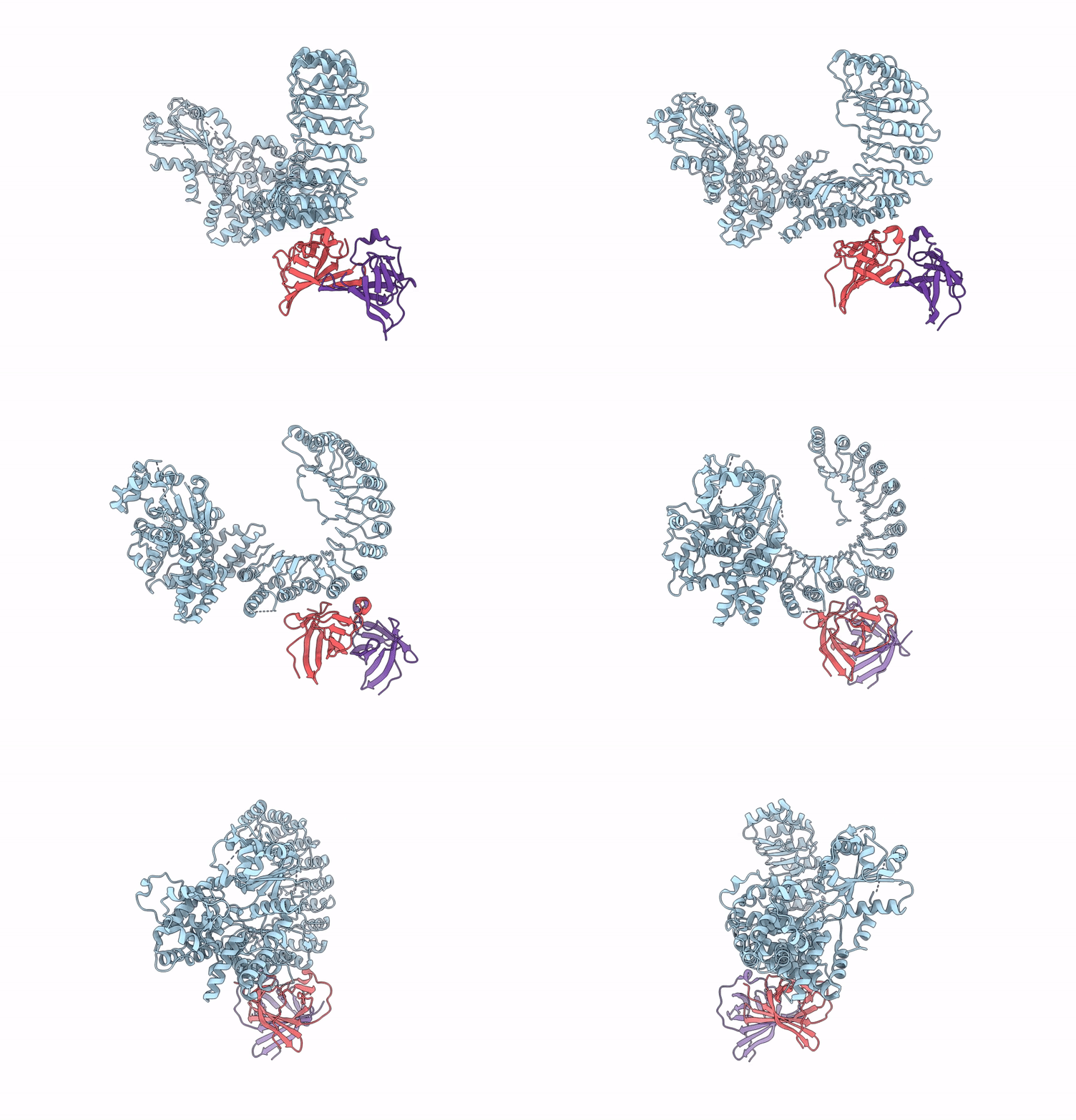
9LQ4 image
Deposition Date 2025-01-27
Release Date 2025-12-10
Last Version Date 2026-04-15
Entry Detail
PDB ID:
9LQ4
Title:
Structure of the human monomeric NLRP7-TCL1A complex
Biological Source:
Source Organism(s):
Homo sapiens (Taxon ID: 9606)
Expression System(s):
Method Details:
Experimental Method:
Resolution:
4.12 Å
Aggregation State:
PARTICLE
Reconstruction Method:
SINGLE PARTICLE
Macromolecular Entities
Structures with similar UniProt ID
Protein Blast
Polymer Type:polypeptide(L)
Molecule:Isoform 3 of NACHT, LRR and P
Gene (Uniprot):NLRP7
Chain IDs:A
Chain Length:1037
Number of Molecules:1
Biological Source:Homo sapiens
Structures with similar UniProt ID
Protein Blast
Polymer Type:polypeptide(L)
Molecule:T-cell leukemia/lymphoma prot
Gene (Uniprot):TCL1A
Chain IDs:B (auth: F), C (auth: G)
Chain Length:106
Number of Molecules:2
Biological Source:Homo sapiens
Ligand Molecules
Primary Citation
TCL1A mediates DNA methylation defects in recurrent hydatidiform mole with NLRP7 pathogenic variants.
Nat Commun 17 ? ? (2026)
PMID: 41786744 DOI: 10.1038/s41467-026-69744-y

Abstact

Pathogenic variants in NLRP7, implicated in 55% of recurrent hydatidiform mole characterized by hypomethylation at maternally methylated imprinted regions, are proposed to disrupt de novo DNA methylation in human oocytes. However, the precise mechanism remains unclear. Here, we identify TCL1A, a DNMT3A inhibitor, as an endogenous NLRP7-interacting partner. The cryo-EM structure of the NLRP7-TCL1A complex reveals its fundamental architecture. Comprehensive analysis demonstrates that the majority of recurrent hydatidiform mole-causing NLRP7 variants impair its interaction with TCL1A. Mechanistically, NLRP7 potentially safeguards oocyte methylome by sequestering TCL1A in the cytoplasm, thereby preventing its nuclear entry and subsequent suppression of DNMT3A-mediated de novo methylation. Combining in silico predictions and interaction analysis, we identify L766R as a pathogenic variant. These findings propose a cytoplasmic regulatory mechanism governing nuclear DNA methylation, explaining the hypomethylation pathogenesis in NLRP7 variant-associated recurrent hydatidiform mole.

Legend

Protein

Chemical

Disease

Primary Citation of related structures
Feedback Form
Name
Email
Institute
Feedback