

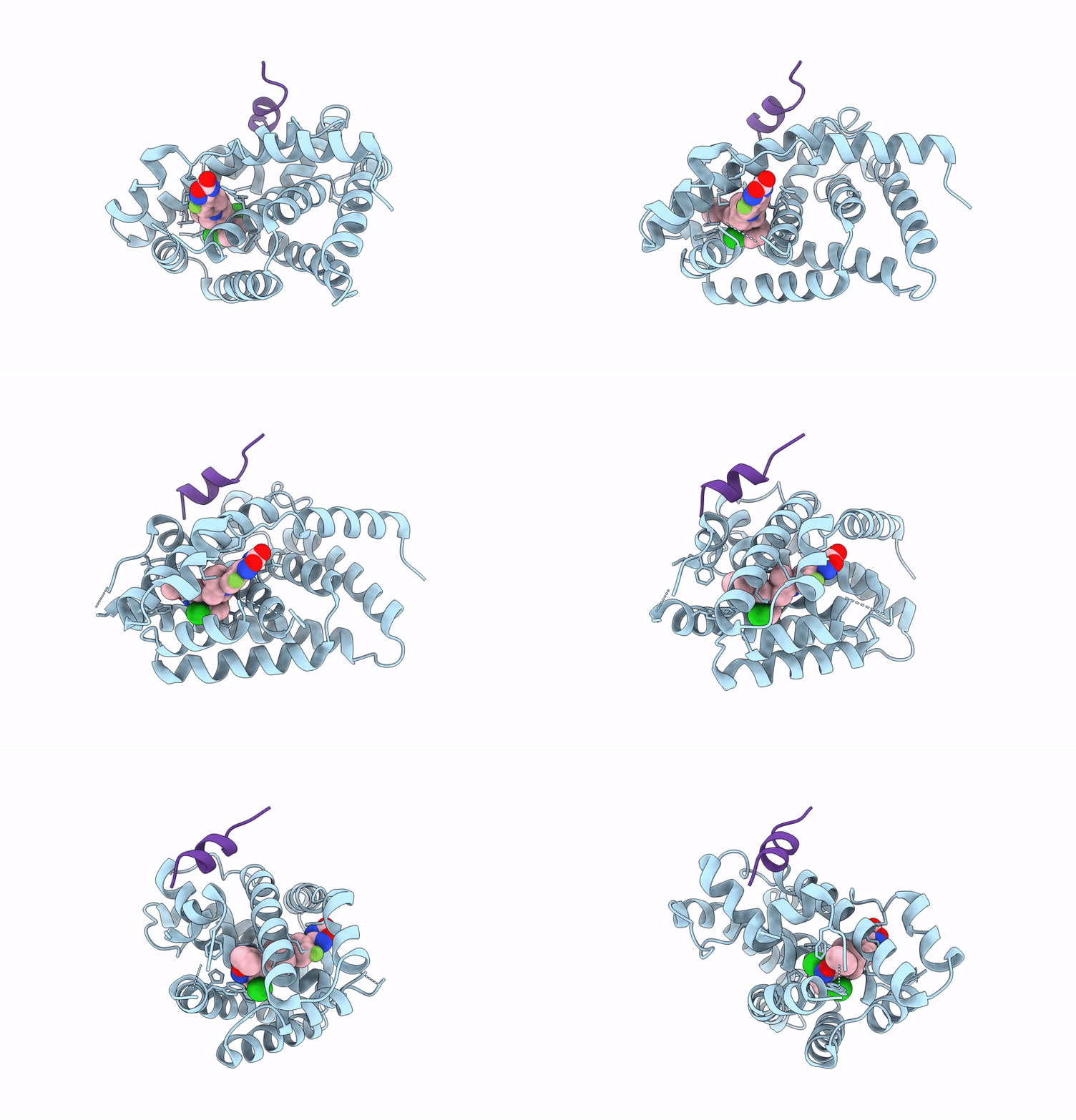
9LQ3 image
Deposition Date 2025-01-27
Release Date 2025-08-06
Last Version Date 2026-06-24
Entry Detail
PDB ID:
9LQ3
Keywords:
Title:
Crystal structure of Linafexor-FXR complex
Biological Source:
Source Organism(s):
Homo sapiens (Taxon ID: 9606)
Expression System(s):
Method Details:
Experimental Method:
Resolution:
2.80 Å
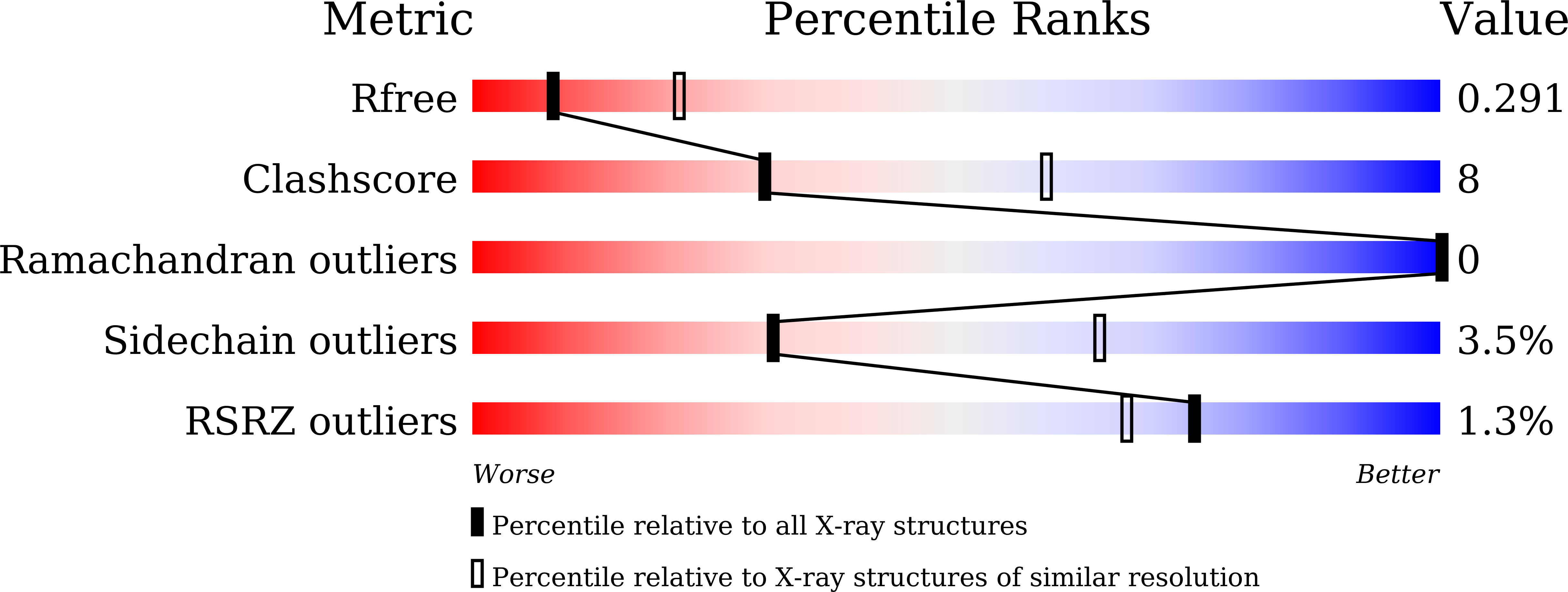
R-Value Free:
0.29
R-Value Work:
0.26
R-Value Observed:
0.26
Space Group:
P 21 21 2
Macromolecular Entities
Structures with similar UniProt ID
Protein Blast
Polymer Type:polypeptide(L)
Molecule:Bile acid receptor
Gene (Uniprot):NR1H4
Chain IDs:A
Chain Length:228
Number of Molecules:1
Biological Source:Homo sapiens
Structures with similar UniProt ID
Protein Blast
Polymer Type:polypeptide(L)
Molecule:Nuclear receptor coactivator
Gene (Uniprot):NCOA2
Chain IDs:B (auth: C)
Chain Length:11
Number of Molecules:1
Biological Source:Homo sapiens
Ligand Molecules
Primary Citation
A first-in-class pulsatile FXR agonist for bile-acid-related liver diseases.
Nature ? ? ? (2026)
PMID: 42271063 DOI: 10.1038/s41586-026-10633-1

Abstact

Nuclear receptors are central regulators of metabolism(1), yet therapeutic strategies that enforce continuous receptor activation frequently lead to reduced efficacy and unacceptable toxicity. Here we report a first-principles drug design strategy that aligns pharmacokinetics with physiological signalling cycles. We developed linafexor, a potent non-bile-acid agonist of the farnesoid X receptor (FXR)(2); it is engineered for rapid systemic clearance, which enables pulsatile receptor activation that mirrors endogenous bile acid dynamics(3-5). Linafexor has robust efficacy across multiple preclinical models of metabolic dysfunction-associated steatohepatitis(6), liver fibrosis(7), primary biliary cholangitis and primary sclerosing cholangitis(8,9). Transcriptomic analyses reveal that, unlike long-acting FXR agonists(10,11), linafexor preserves cyclic FXR signalling, avoids receptor downregulation and prevents broad transcriptional dysregulation. Direct manipulation of delivery patterns demonstrates that sustained FXR activation-independent of compound identity-induces severe toxicity, establishing activation duration as a determinant of therapeutic index. In phase 1 clinical studies (ClinicalTrials.gov; NCT05082779), linafexor administered once daily produces transient FXR pathway engagement, marked by (1) induction of FGF19(12-14), a key endocrine mediator of bile acid feedback regulation; and (2) suppression of C4(15), an intermediate reflecting hepatic bile acid synthesis, with no treatment-related adverse events. Together, these findings identify pulsatile FXR activation as a mechanistically grounded and clinically translatable strategy, and establish linafexor as a first-in-class therapeutic for bile acid-related liver diseases.

Legend

Protein

Chemical

Disease

Primary Citation of related structures
Feedback Form
Name
Email
Institute
Feedback