

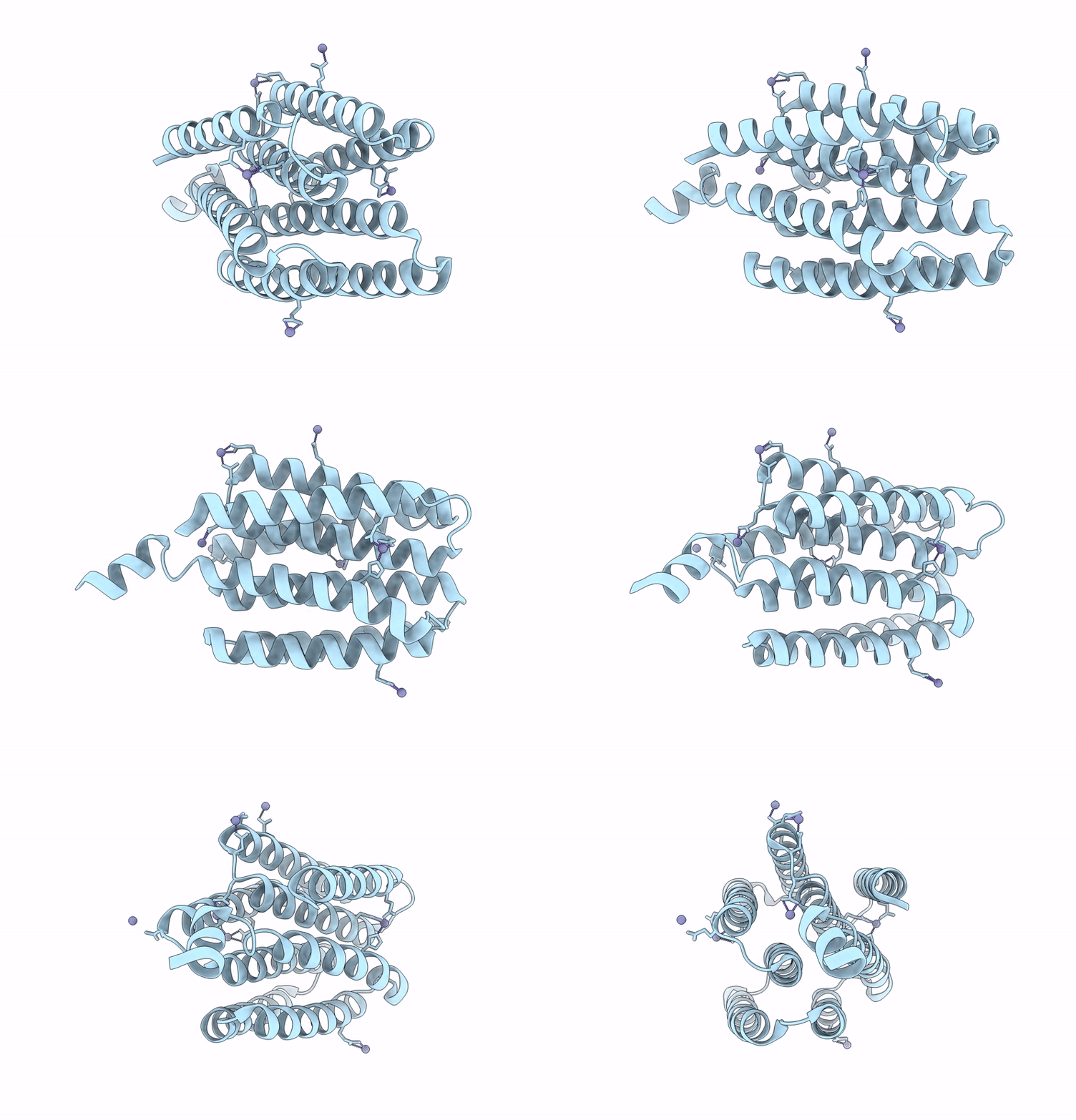
9LNI image
Deposition Date 2025-01-21
Release Date 2025-06-04
Last Version Date 2026-07-01
Entry Detail
PDB ID:
9LNI
Keywords:
Title:
Crystal structure of the de novo designed protein ZZ1
Biological Source:
Source Organism(s):
Escherichia coli (Taxon ID: 562)
Expression System(s):
Method Details:
Experimental Method:
Resolution:
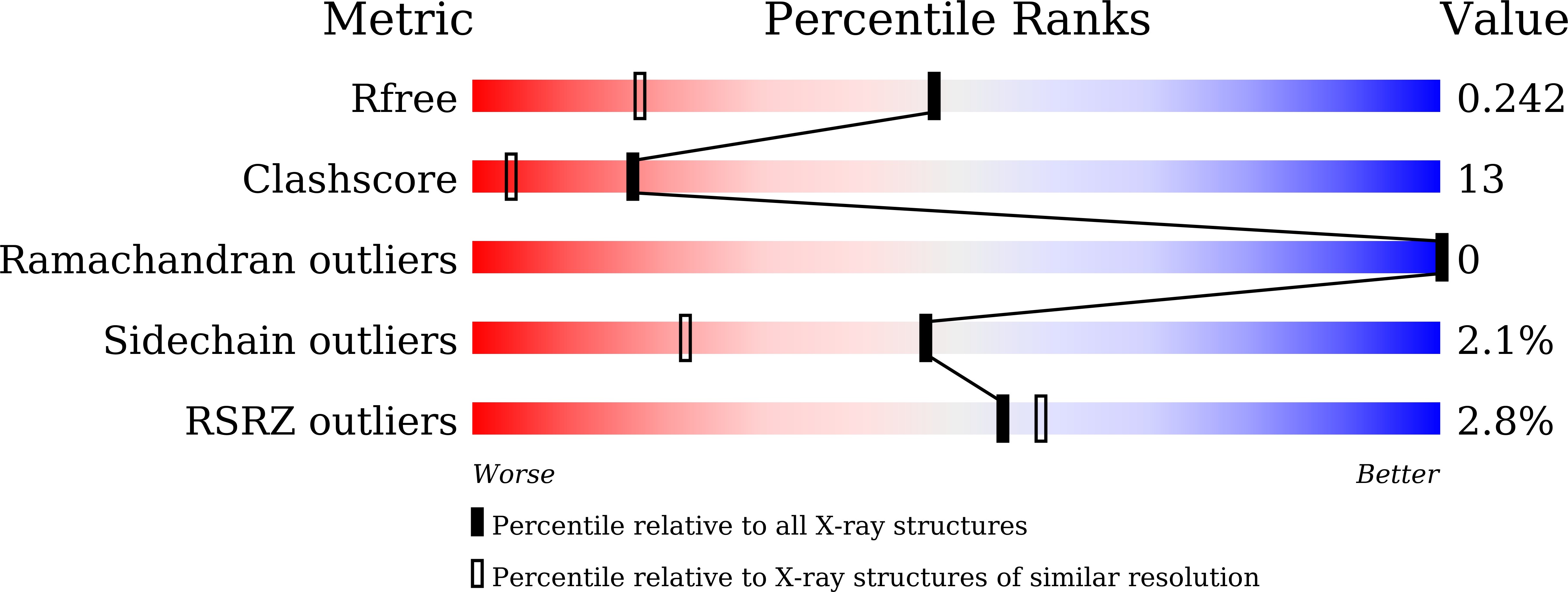
1.61 Å
R-Value Free:
0.24
R-Value Work:
0.20
R-Value Observed:
0.21
Space Group:
P 1 21 1
Macromolecular Entities
Structural Superimposition Protein Blast
Polymer Type:polypeptide(L)
Molecule:ZZ1
Chain IDs:A
Chain Length:212
Number of Molecules:1
Biological Source:Escherichia coli
Ligand Molecules
Primary Citation
Bioinformatics classification of the MgtE Mg 2 + channel and de novo protein design for the stabilization of its novel subclass.
Acta Biochim.Biophys.Sin. 58 1402 1412 (2026)
PMID: 42305050 DOI: 10.3724/abbs.2025224

Abstact

MgtE channels play crucial roles in Mg (2) (+) homeostasis and are implicated in bacterial survival under antibiotic exposure. Previous structural and biophysical studies have focused predominantly on Thermus thermophilus MgtE, leaving the structural and mechanistic diversity of MgtE family proteins largely unexplored. In this study, via a genome mining approach, we identify diverse MgtE homologs, including a novel subclass termed the "mini-N type", which lacks the canonical cytoplasmic N and CBS domains but possesses a unique small N-like domain. Despite extensive expression screening, mini-N-type homologs cannot be stably purified. To address this issue, we design a series of de novo proteins and determine their crystal structures. A selected de novo protein is fused to a mini-N-type MgtE, enabling successful purification and preliminary cryo-EM imaging. Our findings demonstrate that de novo-designed protein fusions serve as powerful tools for stabilizing and purifying otherwise unstable membrane proteins, opening new avenues for structural and functional studies of otherwise inaccessible membrane proteins.

Legend

Protein

Chemical

Disease

Primary Citation of related structures
Feedback Form
Name
Email
Institute
Feedback