

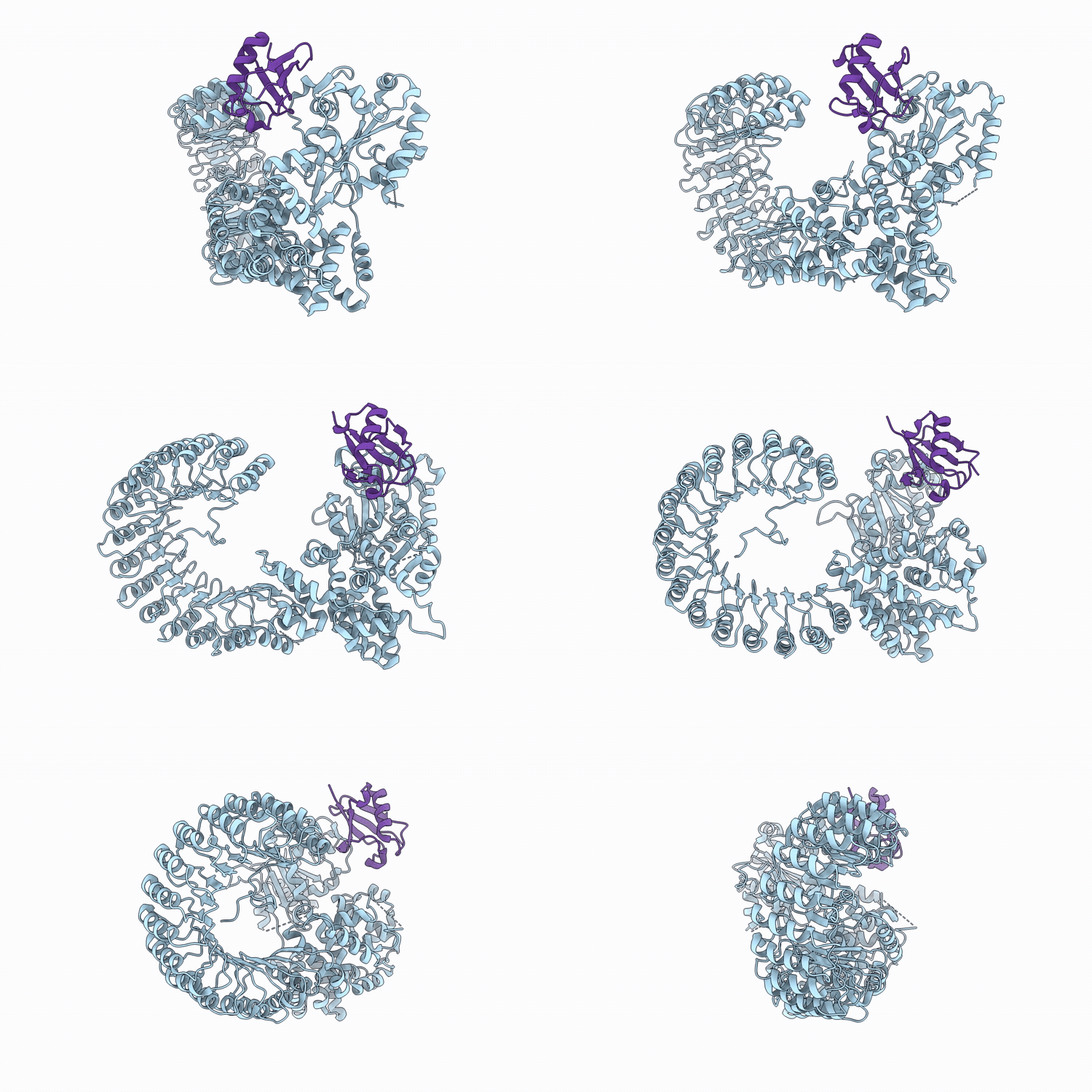
9LN6 image
Deposition Date 2025-01-20
Release Date 2026-03-18
Last Version Date 2026-04-22
Entry Detail
PDB ID:
9LN6
Title:
Structure of human NLRP14-UHRF1 complex
Biological Source:
Source Organism(s):
Expression System(s):
Method Details:
Experimental Method:
Resolution:
3.49 Å
Aggregation State:
PARTICLE
Reconstruction Method:
SINGLE PARTICLE
Macromolecular Entities
Protein Blast
Polymer Type:polypeptide(L)
Molecule:Maltose/maltodextrin-binding
Gene (Uniprot):malE, NLRP14
Chain IDs:A
Chain Length:1506
Number of Molecules:1
Biological Source:Escherichia coli K-12, Homo sapiens
Protein Blast
Polymer Type:polypeptide(L)
Molecule:Maltose/maltodextrin-binding
Gene (Uniprot):malE, UHRF1
Chain IDs:B
Chain Length:495
Number of Molecules:1
Biological Source:Escherichia coli K-12, Homo sapiens
Ligand Molecules
Primary Citation
NLRP14 modulates the activity of E3 ubiquitin ligases during the oocyte-to-embryo transition.
Nat Commun ? ? ? (2026)
PMID: 41951593 DOI: 10.1038/s41467-026-71519-4

Abstact

NLRP14 is an essential maternal factor for mammalian embryonic development. Maternal ablation of NLRP14 in mice impairs DNA demethylation and calcium homeostasis in zygotes, causing early embryonic arrest. However, the underlying biochemical events remain largely unknown. Here, we identified two binding partners (KDM2A and UHRF1) of NLRP14 and further solved structures of NLRP14-KDM2A-SKP1 and NLRP14-UHRF1. Structural analysis revealed that NLRP14 modulates the SKP1-CUL1-F-box (SCF) E3 ubiquitin ligase and the RING-type E3 ubiquitin ligase UHRF1 through two distinct mechanisms. Mechanistically, NLRP14 competitively inhibits KDM2A-mediated SCF assembly or allosterically inhibits the activity of UHRF1 by occupying the E2 ubiquitin-conjugating enzyme (UBE2D) binding site of the ubiquitin-like (UBL) domain. Deletion of NLRP14 in mice increases ubiquitination levels in oocytes during maturation and after fertilization. Collectively, our findings identify NLRP14 as a dual regulator that restrains E3 ubiquitin ligase-driven ubiquitination by limiting SCF complex assembly and attenuating UHRF1 activity. This regulatory role is required to prevent excessive protein ubiquitination and maintain proteostasis during the oocyte-to-embryo transition, thereby supporting early embryonic development. Our study uncovers maternal regulation of proteostasis in oocytes and suggests that dysregulating proteostasis is an important factor in the pathogenesis of reproductive disorders.

Legend

Protein

Chemical

Disease

Primary Citation of related structures
Feedback Form
Name
Email
Institute
Feedback