

9LJH image
Deposition Date 2025-01-15
Release Date 2025-12-03
Last Version Date 2026-03-18
Entry Detail
PDB ID:
9LJH
Title:
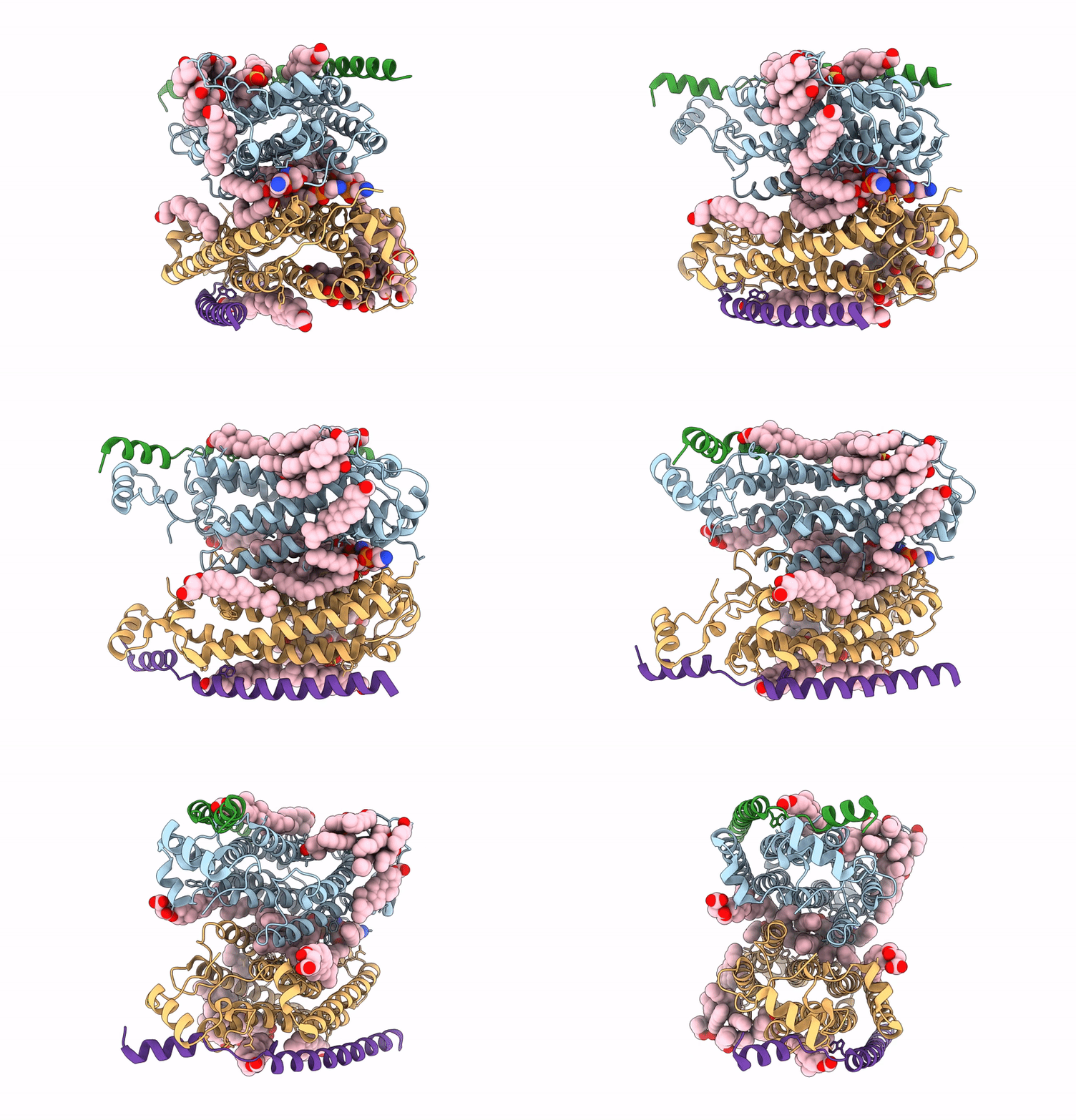
Cryo-EM structure of human organic solute transporter OSTalpha/beta in complex with DHEAS
Biological Source:
Source Organism(s):
Homo sapiens (Taxon ID: 9606)
Expression System(s):
Method Details:
Experimental Method:
Resolution:
2.73 Å
Aggregation State:
PARTICLE
Reconstruction Method:
SINGLE PARTICLE
Macromolecular Entities
Structures with similar UniProt ID
Protein Blast
Polymer Type:polypeptide(L)
Molecule:Organic solute transporter su
Gene (Uniprot):SLC51A
Chain IDs:A, C
Chain Length:340
Number of Molecules:2
Biological Source:Homo sapiens
Structures with similar UniProt ID
Protein Blast
Polymer Type:polypeptide(L)
Molecule:Organic solute transporter su
Gene (Uniprot):SLC51B
Chain IDs:B, D
Chain Length:128
Number of Molecules:2
Biological Source:Homo sapiens
Primary Citation
Structure and mechanism of the human bile acid transporter OST alpha-OST beta.
Nature 651 251 259 (2026)
PMID: 41606314 DOI: 10.1038/s41586-025-09934-8

Abstact

Bile acids (BAs) are crucial amphipathic surfactants that function as multifaceted regulators in various physiological processes, including nutrient absorption and distribution, lipid metabolism and inflammation(1,2). The human organic solute transporter alphabeta (OSTalpha-OSTbeta; hereafter referred to as OSTalpha/beta) is a BA transporter that has a key role in the secretion and distribution of BAs(3-6). Pathogenic mutations in OSTalpha/beta have been associated with cholestasis(7,8). Despite the functional importance of OSTalpha/beta in BA homeostasis, the stoichiometry and assembly of the complex and the molecular mechanism that underlies BA transport by OSTalpha/beta remain unknown. Here we present cryo-electron microscopy structures of human OSTalpha/beta in complex with cholesterols and an endogenous substrate, elucidating the structural basis for the function of OSTalpha/beta. OSTalpha/beta is assembled in a novel dimer-of-heterodimers manner: two OSTalpha units form the homodimeric core, with two OSTbeta units bound to the periphery. OSTalpha adopts the G-protein-coupled-receptor (GPCR) fold and contains a unique cysteine-rich loop with seven palmitoylation sites; these cooperate with transmembrane helices 5 and 6, constituting a BA recognition site. A positive cavity in OSTalpha connects the BA site and facilitates the transmembrane translocation of BAs through OSTalpha/beta. Together, this study reveals the architecture and transport mechanism of OSTalpha/beta and provides insights into the structure-function relationships of this crucial transporter in BA homeostasis.

Legend

Protein

Chemical

Disease

Primary Citation of related structures
Feedback Form
Name
Email
Institute
Feedback