

9LEO image
Deposition Date 2025-01-07
Release Date 2025-10-01
Last Version Date 2026-04-15
Entry Detail
PDB ID:
9LEO
Title:
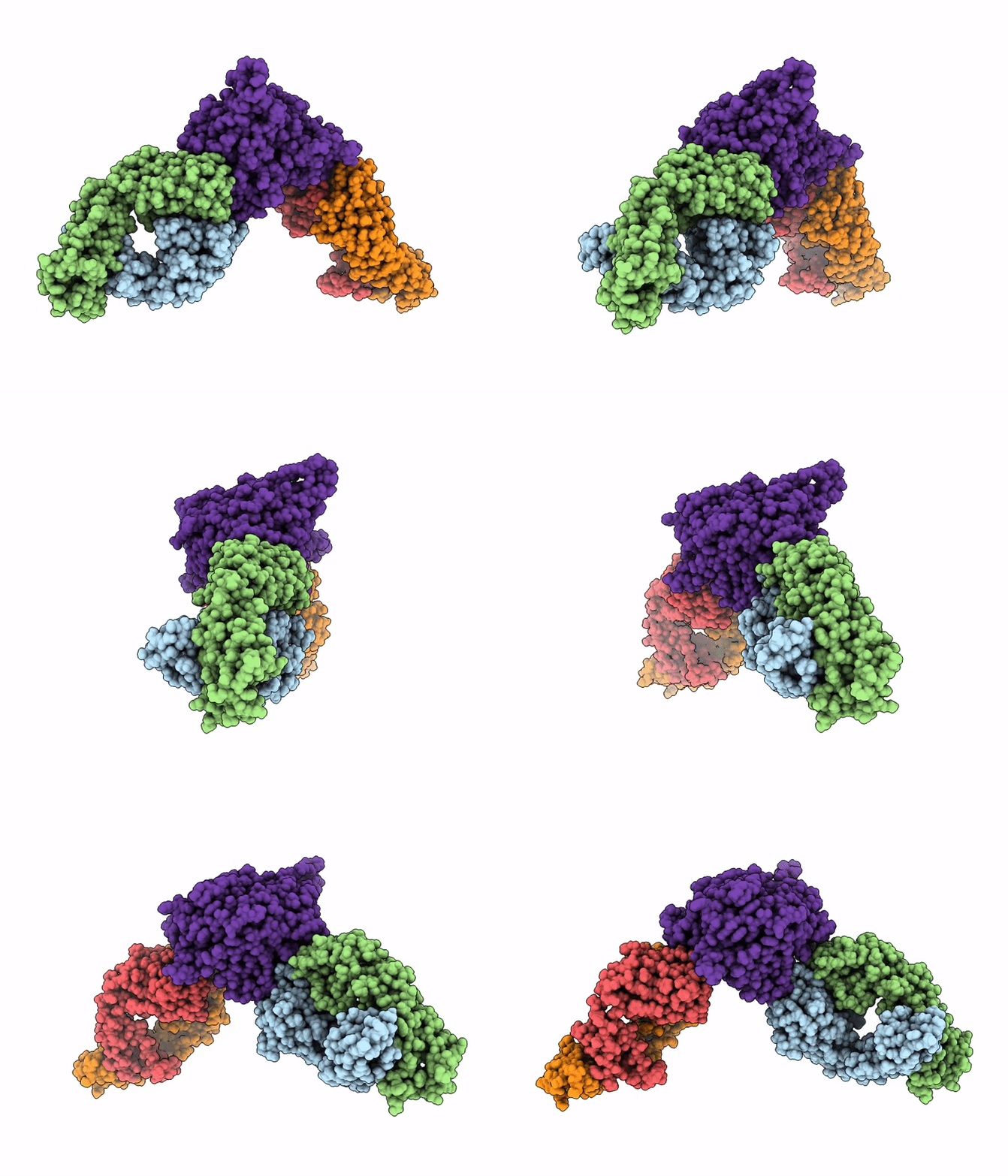
LayV-G Head in complex of LayG-1069 and LayG-1133
Biological Source:
Source Organism(s):
Mus musculus (Taxon ID: 10090)
Langya virus (Taxon ID: 2971765)
Expression System(s):
Method Details:
Experimental Method:
Resolution:
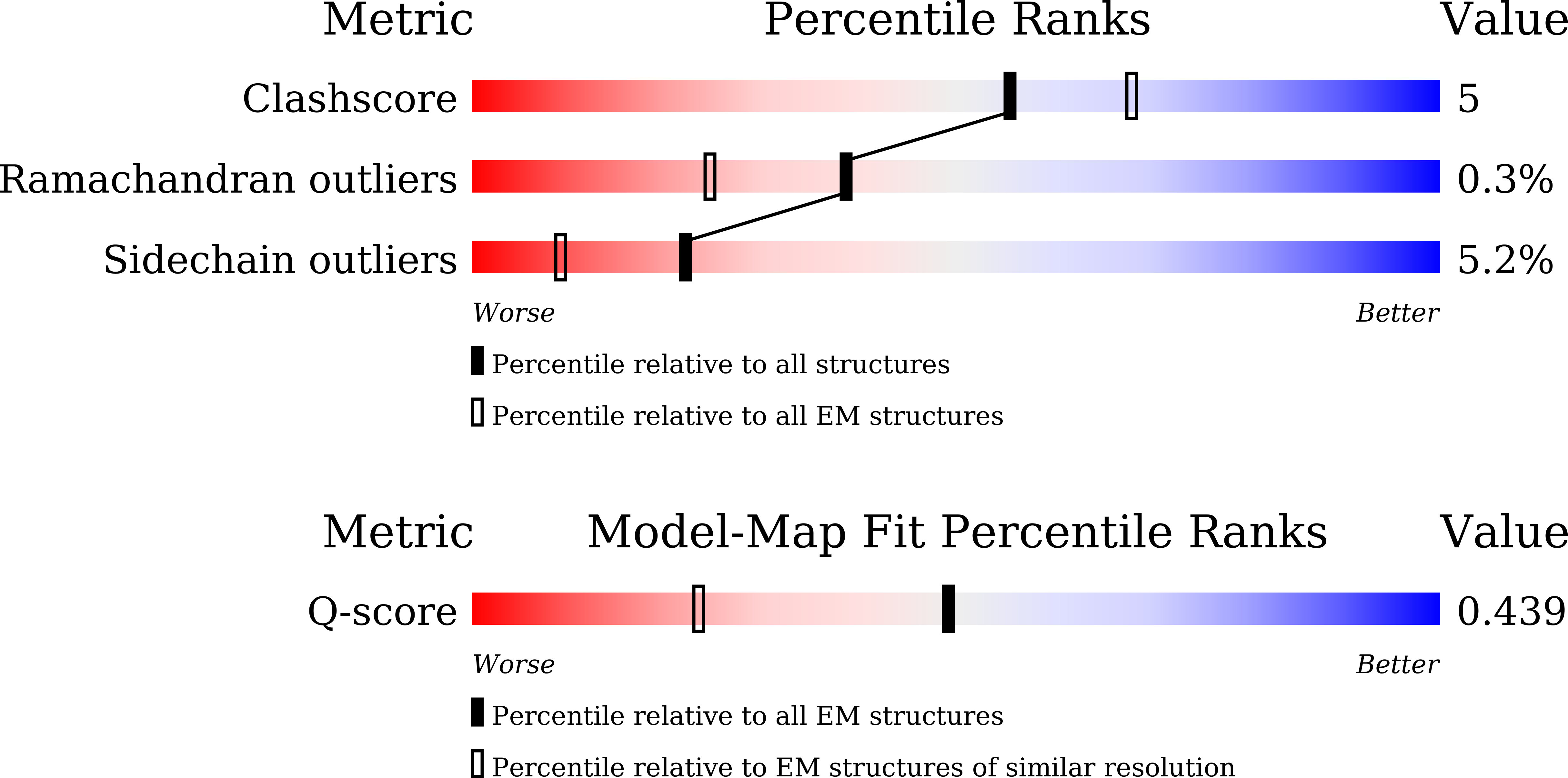
2.92 Å
Aggregation State:
PARTICLE
Reconstruction Method:
SINGLE PARTICLE
Macromolecular Entities
Protein Blast
Polymer Type:polypeptide(L)
Molecule:LayG-1069 heavy chain
Chain IDs:A
Chain Length:223
Number of Molecules:1
Biological Source:Mus musculus
Protein Blast
Polymer Type:polypeptide(L)
Molecule:LayG-1069 light chain
Chain IDs:B
Chain Length:214
Number of Molecules:1
Biological Source:Mus musculus
Protein Blast
Polymer Type:polypeptide(L)
Molecule:LayG-1133 heavy chain
Chain IDs:C
Chain Length:222
Number of Molecules:1
Biological Source:Mus musculus
Protein Blast
Polymer Type:polypeptide(L)
Molecule:LayG-1133 light chain
Chain IDs:D
Chain Length:214
Number of Molecules:1
Biological Source:Mus musculus
Structures with similar UniProt ID
Protein Blast
Polymer Type:polypeptide(L)
Molecule:Attachment glycoprotein
Gene (Uniprot):G
Chain IDs:E (auth: H)
Chain Length:447
Number of Molecules:1
Biological Source:Langya virus
Ligand Molecules
Primary Citation
Structure and function of a pair of non-competing monoclonal antibodies against Langya henipavirus attachment glycoprotein.
Cell Rep 44 116407 116407 (2025)
PMID: 41071677 DOI: 10.1016/j.celrep.2025.116407

Abstact

Langya henipavirus (LayV) is a zoonotic Parahenipavirus (Para-HNV) identified in recent years, discovered via surveillance of febrile patients with recent animal exposure in eastern China. The attachment glycoprotein (G) of HNV is critical for host cell entry and a key immune target. However, LayV-G exhibits notable antigenic differences from G of highly pathogenic bat-borne Hendra virus (HEV) and Nipah virus (NiV), implying vaccines or antibody therapies developed against HeV/NiV-G might be ineffective against LayV. Here, we immunize mice with LayV-G ectodomain and isolate a panel of LayV-G-targeting monoclonal antibodies (mAbs). We characterize two potent mAbs with pronounced crystallizable fragment (Fc)-mediated antiviral function and determine their cryo-electron microscopy (cryo-EM) structure binding to distinct epitopes of LayV-G head domain at a resolution of 2.92 A, revealing antibody recognition mechanisms and potential conformational dynamics of LayV-G. Overall, our study defines two function-related epitopes of LayV-G, laying the foundation for therapeutic antibody development and vaccine design.

Legend

Protein

Chemical

Disease

Primary Citation of related structures
Feedback Form
Name
Email
Institute
Feedback