

9LDU image
Deposition Date 2025-01-06
Release Date 2026-05-20
Last Version Date 2026-05-20
Entry Detail
PDB ID:
9LDU
Keywords:
Title:
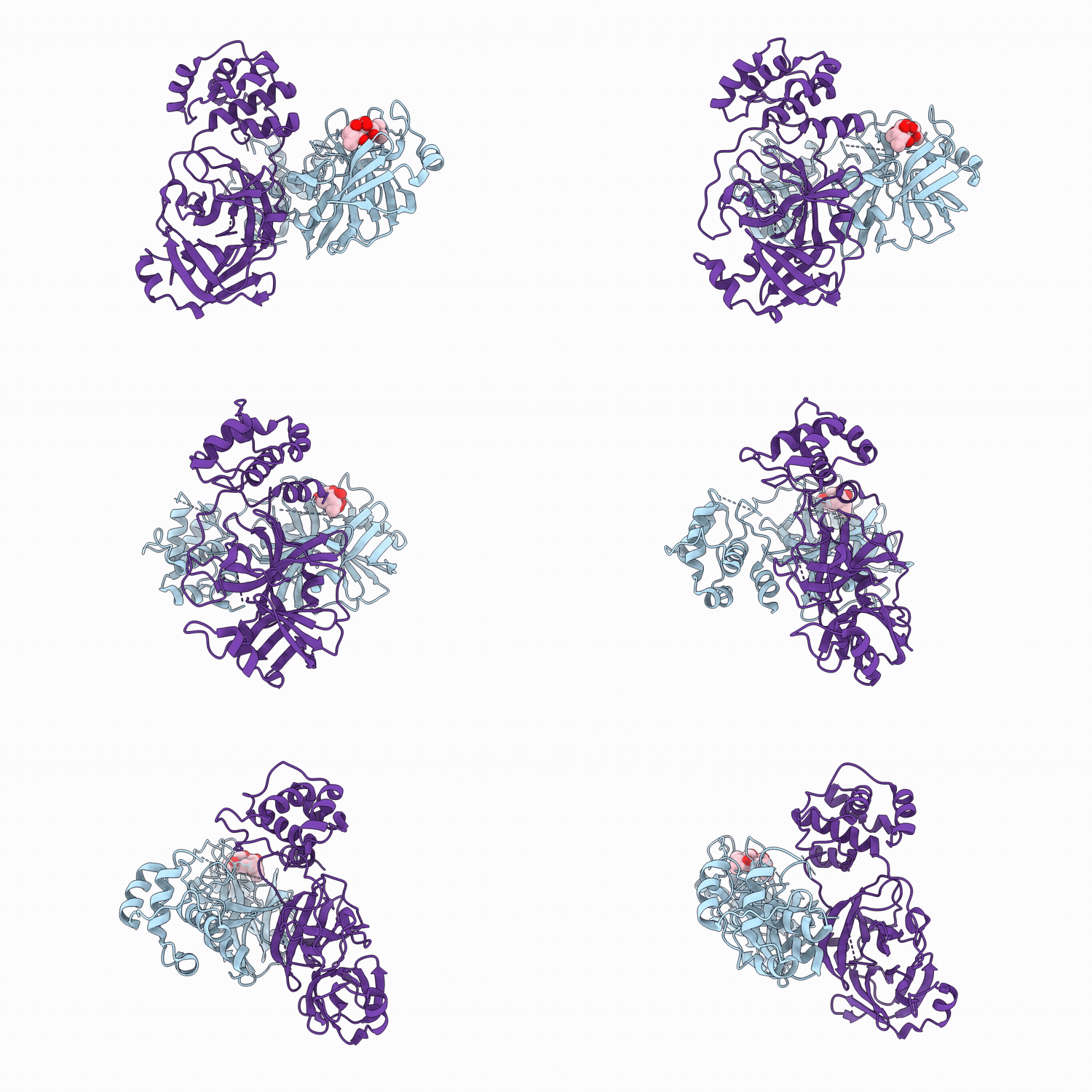
Crystal structure of HCoV 229E main protease in complex with Oridonin
Biological Source:
Source Organism(s):
Expression System(s):
Method Details:
Experimental Method:
Resolution:
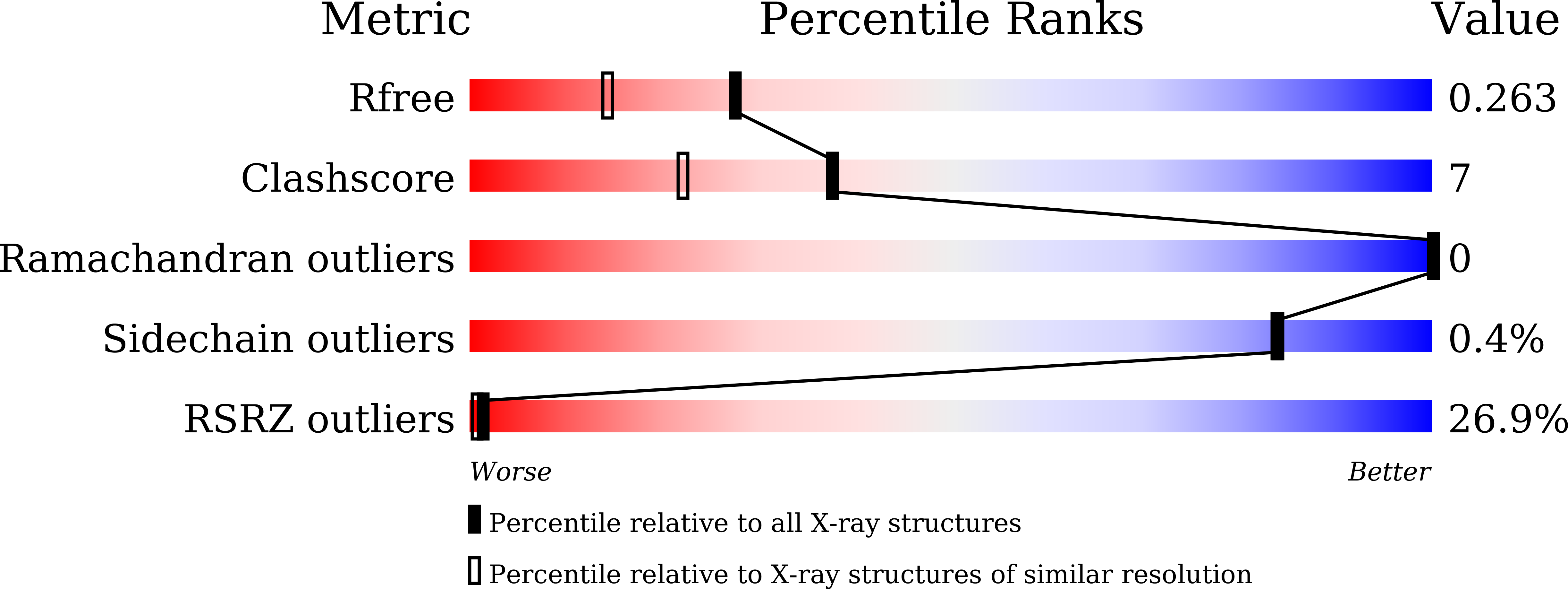
1.94 Å
R-Value Free:
0.26
R-Value Work:
0.21
R-Value Observed:
0.21
Space Group:
P 1 21 1
Macromolecular Entities
Structures with similar UniProt ID
Protein Blast
Polymer Type:polypeptide(L)
Molecule:3C-like proteinase
Gene (Uniprot):rep
Chain IDs:A, B
Chain Length:299
Number of Molecules:2
Biological Source:Human coronavirus 229E
Ligand Molecules
Primary Citation
Structural basis for the inhibition of the coronavirus main protease by oridonin.
Biophys.J. 125 1247 1256 (2026)
PMID: 41578642 DOI: 10.1016/j.bpj.2026.01.029

Abstact

Currently, there are seven coronaviruses that can infect humans: severe acute respiratory syndrome coronavirus 2 (SARS-CoV-2), SARS-CoV, Middle East respiratory syndrome coronavirus, human coronavirus 229E (HCoV-229E), HCoV-NL63, HCoV-HKUl, and HCoV-OC43. The coronavirus pandemic, especially highly pathogenic coronaviruses such as SARS-CoV-2, has caused severe damage to human health and the social economy. Therefore, the development of broad-spectrum drugs is critical to address the current unmet urgent clinical need and to contain potential future coronaviruses. The conserved main protease (M(pro)) of coronavirus is critical for virus replication and has been considered an ideal drug target. Here, we identified a natural compound, oridonin, that shows broad-spectrum inhibition of the M(pro)s of SARS-CoV-2, SARS-CoV, HCoV-NL63, and HCoV-229E and can also inhibit the mutant of SARS-CoV-2's M(pro) (G15S: Lambda variant). The inhibitory effect of oridonin highly depends on the covalent modification of the electrophilic enone structure to the cysteine residue (Cys144/Cys145) in the active site of the M(pro). The crystal structure of the HCoV-229E complex with oridonin was first determined by X-ray crystallography, and we compared it with the previously reported structure of SARS-CoV-2 M(pro) complexes with oridonin. Molecular dynamics simulations further demonstrated that oridonin stably binds to both SARS-CoV-2 Mᵖrᵒ and HCoV-229E M(pro). Through detailed structural biological analysis, we revealed that oridonin blocks substrate binding through a unique nonpeptidomimetic covalent binding mode. Overall, our data provide evidence that oridonin can serve as a lead compound for the design of a covalent inhibitor against the coronavirus.

Legend

Protein

Chemical

Disease

Primary Citation of related structures
Feedback Form
Name
Email
Institute
Feedback