

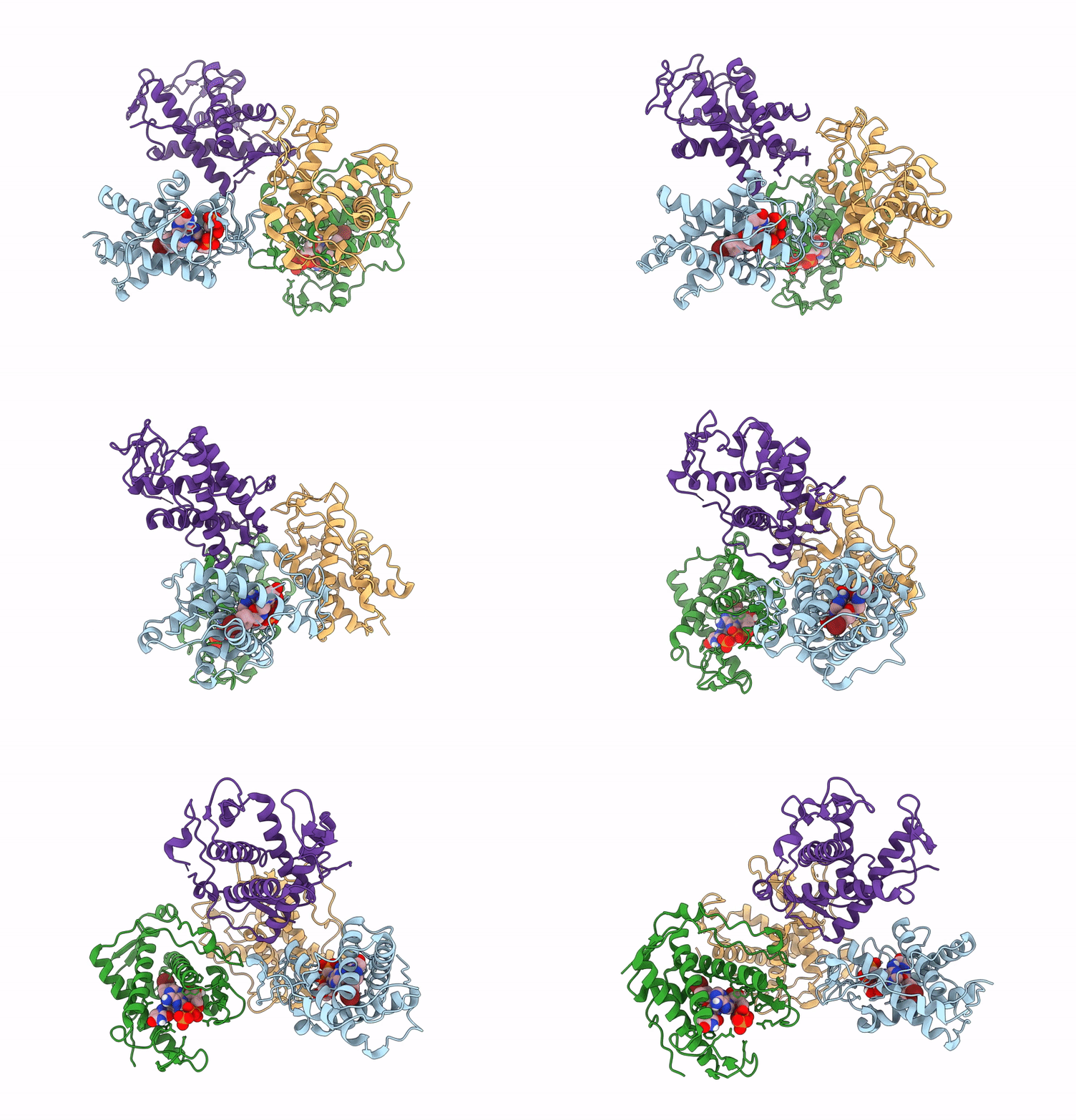
9L91 image
Deposition Date 2024-12-29
Release Date 2025-10-22
Last Version Date 2026-05-06
Entry Detail
PDB ID:
9L91
Title:
The crystal structure of human RyR3 Repeat12 domain in complex with Azumolene and AMP-PCP
Biological Source:
Source Organism(s):
Homo sapiens (Taxon ID: 9606)
Method Details:
Experimental Method:
Resolution:
3.00 Å
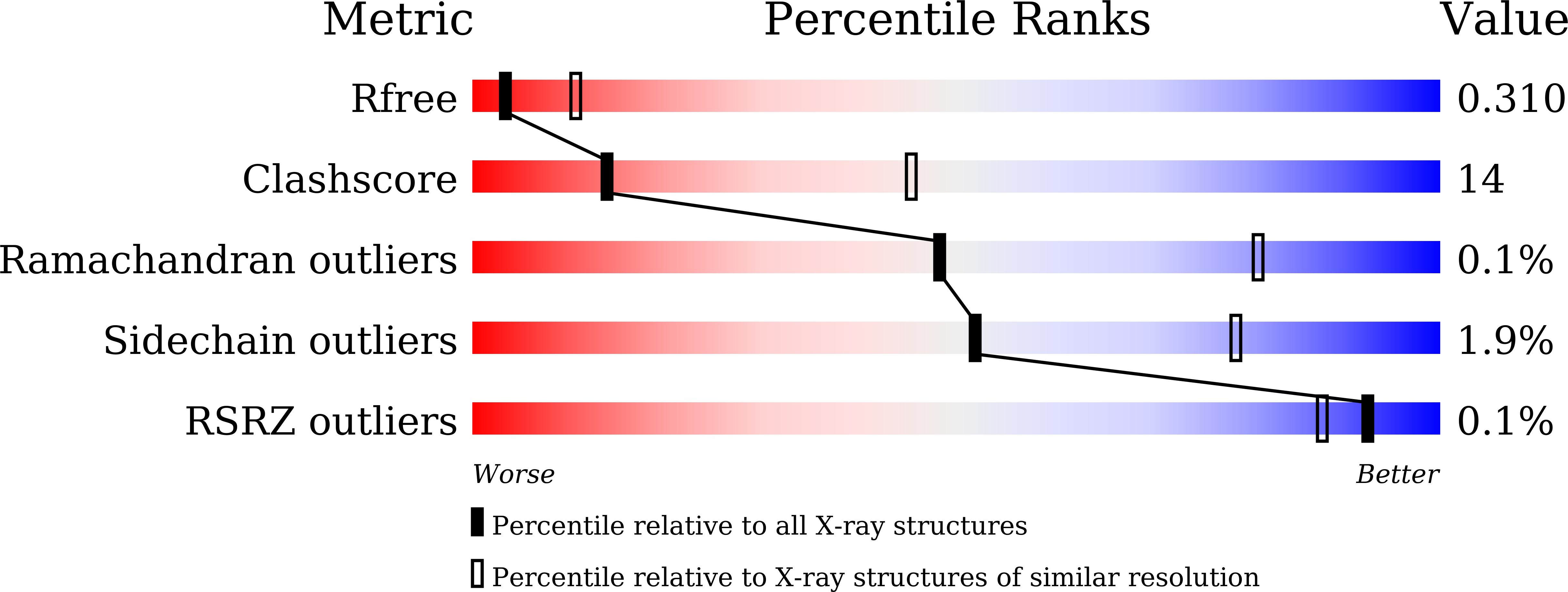
R-Value Free:
0.31
R-Value Work:
0.26
R-Value Observed:
0.28
Space Group:
P 21 21 21
Macromolecular Entities
Structures with similar UniProt ID
Protein Blast
Polymer Type:polypeptide(L)
Molecule:Ryanodine receptor 3
Gene (Uniprot):RYR3
Chain IDs:A (auth: B), B (auth: A), C, D
Chain Length:218
Number of Molecules:4
Biological Source:Homo sapiens
Primary Citation
Crystal structures of Ryanodine Receptor reveal dantrolene and azumolene interactions guiding inhibitor development.
Nat Commun 16 10110 10110 (2025)
PMID: 41253812 DOI: 10.1038/s41467-025-65096-1

Abstact

The ryanodine receptor (RyR) is a critical drug target, yet dantrolene (DAN) remains the only FDA-approved inhibitor, limited by hepatotoxicity and unsuitable for chronic use. To guide improved inhibitor development, we determine high-resolution crystal structures of the RyR Repeat12 (R12) domain bound to DAN, its analog azumolene (AZU), and adenine nucleotides (AMP-PCP or ADP). DAN/AZU and nucleotides bind cooperatively to a pseudosymmetric cleft, with key interactions involving Trp880 and Trp994. Binding induces a clamshell-like closure of the R12 domain. Isothermal titration calorimetry (ITC) reveals higher affinity in the presence of nucleotides and lower affinity for RyR2 due to nearby substitutions. Structural comparison with cryo-EM data suggests that DAN/AZU binding allosterically influences RyR gating and functional regulation. Structure-based screening identifies a potent compound targeting the same site but with a distinct binding mode. Our findings highlight the power of domain-focused crystallography in guiding RyR inhibitor discovery and overcoming cryo-EM resolution limitations.

Legend

Protein

Chemical

Disease

Primary Citation of related structures
Feedback Form
Name
Email
Institute
Feedback