

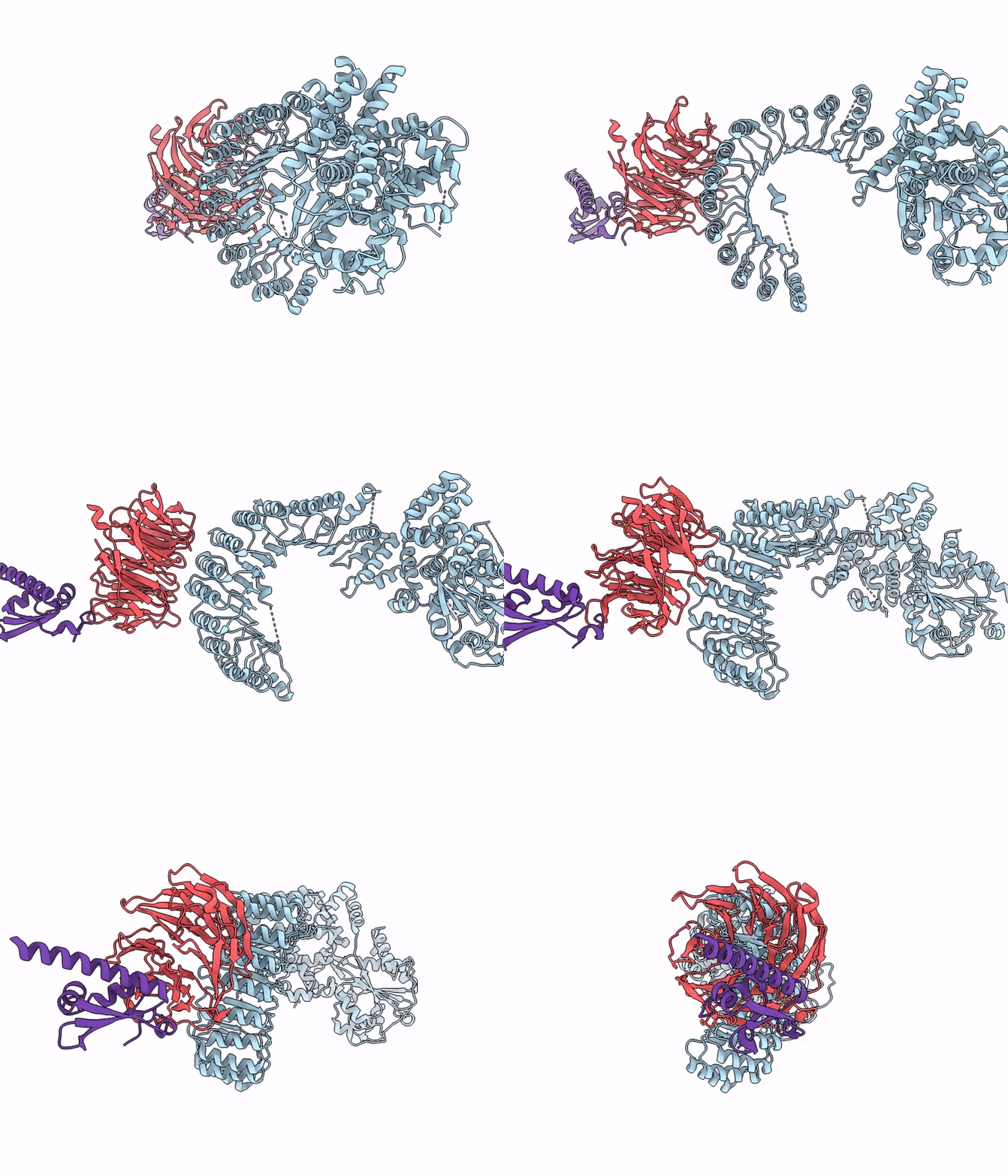
9L4K image
Deposition Date 2024-12-20
Release Date 2025-10-01
Last Version Date 2026-04-15
Entry Detail
PDB ID:
9L4K
Title:
Structure of human NLRP2-TLE6-OOEP complex
Biological Source:
Source Organism(s):
Homo sapiens (Taxon ID: 9606)
Expression System(s):
Method Details:
Experimental Method:
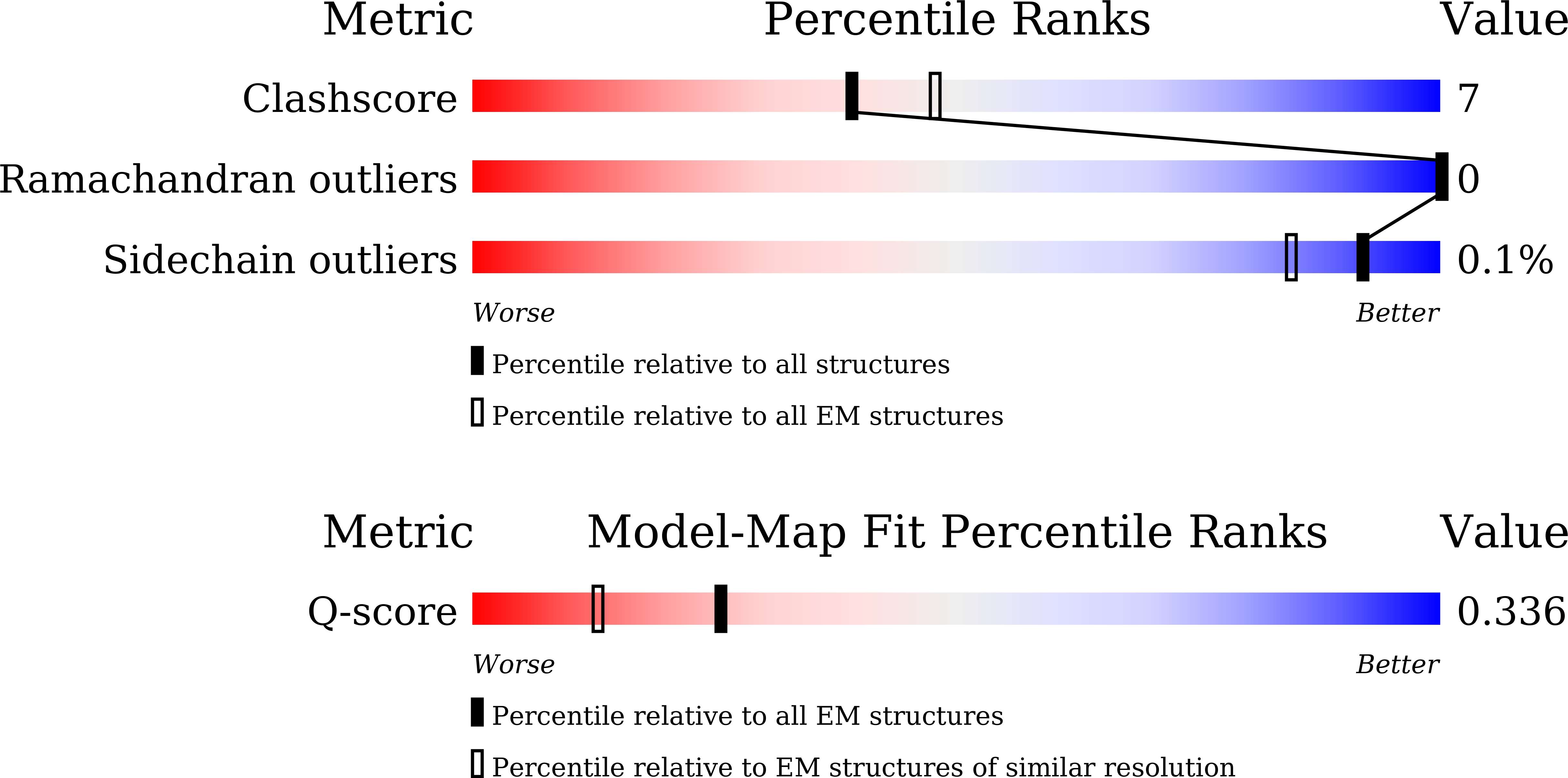
Resolution:
3.41 Å
Aggregation State:
PARTICLE
Reconstruction Method:
SINGLE PARTICLE
Macromolecular Entities
Structures with similar UniProt ID
Protein Blast
Polymer Type:polypeptide(L)
Molecule:NACHT, LRR and PYD domains-co
Gene (Uniprot):NLRP2
Chain IDs:A
Chain Length:1062
Number of Molecules:1
Biological Source:Homo sapiens
Structures with similar UniProt ID
Protein Blast
Polymer Type:polypeptide(L)
Molecule:Transducin-like enhancer prot
Gene (Uniprot):TLE6
Chain IDs:B
Chain Length:572
Number of Molecules:1
Biological Source:Homo sapiens
Structures with similar UniProt ID
Protein Blast
Polymer Type:polypeptide(L)
Molecule:Oocyte-expressed protein homo
Gene (Uniprot):OOEP
Chain IDs:C
Chain Length:149
Number of Molecules:1
Biological Source:Homo sapiens
Ligand Molecules
Primary Citation
Structural assembly of the subcortical maternal complex SCMC.
Structure 34 20 31.e7 (2026)
PMID: 41118754 DOI: 10.1016/j.str.2025.09.009

Abstact

The subcortical maternal complex (SCMC) is essential for mammalian preimplantation development, yet how SCMC(core) (MATER/NLRP5, TLE6, FLOPED/OOEP) engages regulatory partners remains unclear. We determined cryo-EM structures of mouse SCMC bound to ZBED3 and human SCMC bound to NLRP2. Our structure reveals that ZBED3 interacts with all three SCMC(core) subunits via its zinc finger domain, with conserved residue Phe73 mediating specific contacts. In contrast, human NLRP2 only binds to the WD40 domain of TLE6 through its leucine-rich repeat (LRR) domain. Similar interactions were also confirmed for NLRP7 with TLE6. These findings were cross-validated by in vivo proximity ligation and in vitro pull-down assays. Our work proposes a paradigmatic "Lego-like" assembly model, where the SCMC(core) sequentially recruits different partners through diverse molecular interfaces. These findings provide critical structural insights into the SCMC's architecture and its multifaceted regulatory roles in early mammalian embryogenesis.

Legend

Protein

Chemical

Disease

Primary Citation of related structures
Feedback Form
Name
Email
Institute
Feedback