

9KZR image
Deposition Date 2024-12-11
Release Date 2026-05-20
Last Version Date 2026-05-20
Entry Detail
PDB ID:
9KZR
Keywords:
Title:
Anti-CRISPR protein AcrIIA7
Biological Source:
Source Organism(s):
Expression System(s):
Method Details:
Experimental Method:
Resolution:
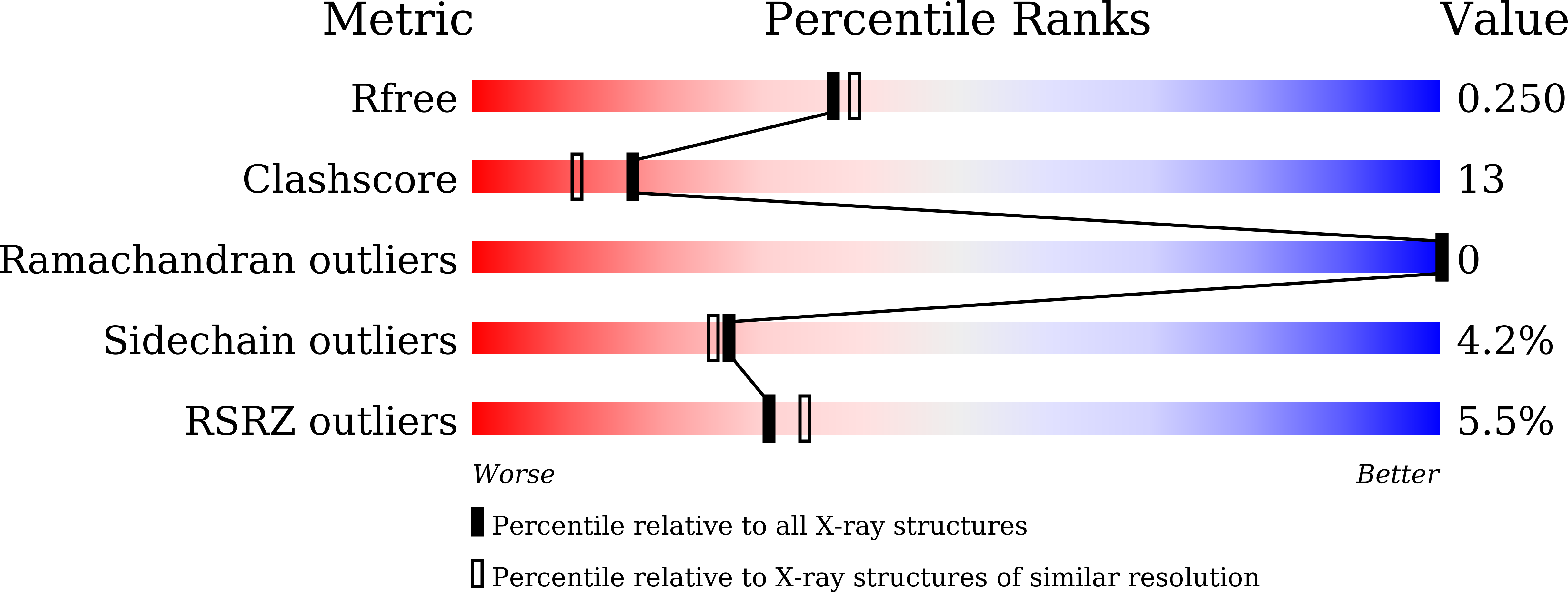
2.16 Å
R-Value Free:
0.25
R-Value Work:
0.20
R-Value Observed:
0.20
Space Group:
P 21 21 21
Macromolecular Entities
Protein Blast
Polymer Type:polypeptide(L)
Molecule:AcrIIA7
Chain IDs:A, B, C, D
Chain Length:158
Number of Molecules:4
Biological Source:Phocaeicola dorei
Primary Citation
AcrIIA7 hijacks tracrRNA to block CRISPR-Cas system.
Nat Commun 17 ? ? (2026)
PMID: 41832226 DOI: 10.1038/s41467-026-70749-w

Abstact

The CRISPR-Cas9 system provides adaptive immunity against invading genetic elements through a dual-RNA-guided DNA cleavage mechanism. This system relies on the precise assembly of a ribonucleoprotein (RNP) complex composed of the Cas9 endonuclease, a CRISPR-derived RNA (crRNA), and a trans-activating CRISPR RNA (tracrRNA). Around 100 anti-CRISPR proteins that inhibit CRISPR-Cas systems have been identified, and the mechanisms by which they act are increasingly being elucidated. However, the inhibitory mechanisms of many Acrs, including AcrIIA7, remain poorly understood. Here, we present the structure of AcrIIA7 and uncover a previously unrecognized mechanism by which it inhibits Cas9 function. Structural and biochemical analyses reveal that AcrIIA7 specifically binds to tracrRNA, preventing its association with crRNA and thereby blocking formation of the active Cas9 RNP complex. This tracrRNA hijacking mechanism represents a unique strategy for CRISPR inhibition, in which an anti-CRISPR protein targets an RNA scaffold essential for Cas9 activation rather than interacting directly with the Cas9 protein. Our findings provide the first structural insight into tracrRNA-targeted anti-CRISPR activity and highlight RNA-RNA interaction interfaces as vulnerable nodes in CRISPR-Cas immunity.

Legend

Protein

Chemical

Disease

Primary Citation of related structures
Feedback Form
Name
Email
Institute
Feedback