

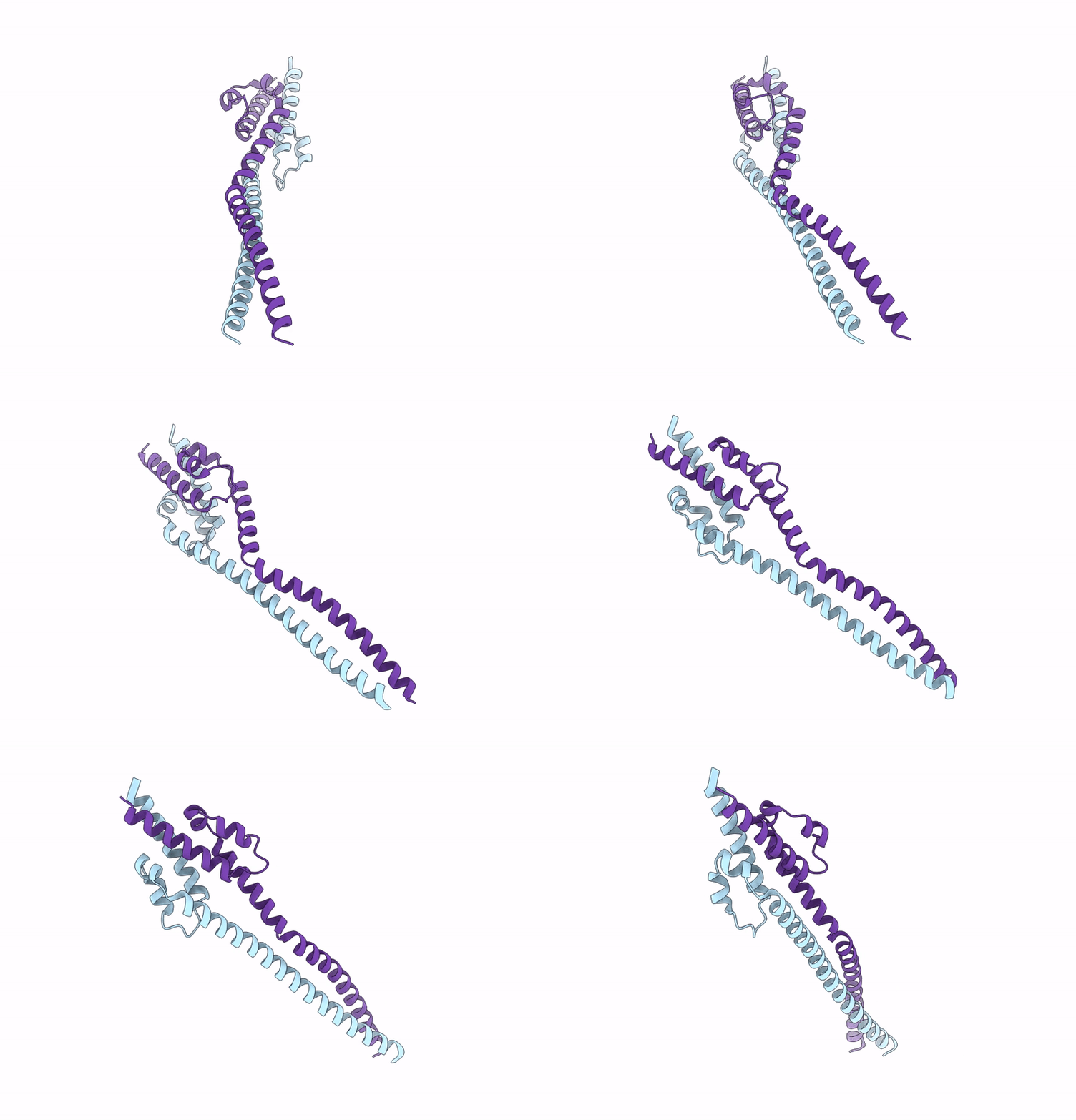
9KQL image
Deposition Date 2024-11-26
Release Date 2025-12-03
Last Version Date 2026-06-17
Entry Detail
PDB ID:
9KQL
Title:
The crystal structure of MORC2_CC3 domain at 3.1 Angstroms resolution
Biological Source:
Source Organism(s):
Homo sapiens (Taxon ID: 9606)
Method Details:
Experimental Method:
Resolution:
3.10 Å
R-Value Free:
0.24
R-Value Work:
0.19
R-Value Observed:
0.20
Space Group:
I 41

Macromolecular Entities
Polymer Type:polypeptide(L)
Molecule:ATPase MORC2
Gene (Uniprot):MORC2
Chain IDs:A, B
Chain Length:107
Number of Molecules:2
Biological Source:Homo sapiens
Modified Residue
Compound ID Chain ID Parent Comp ID Details 2D Image
MSE A MET modified residue
Primary Citation
MORC2 mediates transcriptional regulation through liquid-liquid phase separation.
Elife 14 ? ? (2026)
PMID: 42160388 DOI: 10.7554/eLife.108479

Abstact

MORC2 is a chromatin-associated ATPase essential for transcriptional silencing and genome stability, yet the biophysical principles governing its regulatory activity remain elusive. Here, we demonstrate that full-length MORC2 undergoes biomolecular condensation to form dynamic nuclear assemblies, a process fundamentally required for its repressor function. Endogenous MORC2 forms discrete, dynamic condensates in neurons from Morc2a(EGFP) chimeric mice, supporting the physiological relevance of these assemblies in vivo. Mechanistically, a 3.1 A crystal structure of coiled-coil 3 (CC3) identifies a dimeric scaffold that serves as a structural hub, while multivalent 'sticker' interactions between an intrinsically disordered region (IDR) and a newly defined IDR-binding domain (IBD) drive condensation. We show that DNA acts as a molecular scaffold that triggers MORC2 condensation, which in turn allosterically stimulates its ATPase activity. Critically, by employing a 'killswitch' strategy to decouple assembly from internal fluidity, we reveal that only dynamic MORC2 condensates, not static aggregates or condensation-deficient mutants, can restore transcriptional regulation in MORC2-knockout cells. Furthermore, pathogenic variants linked to CMT2Z and SMA differentially perturb these material properties and enzymatic turnover, providing a mechanistic link between condensate dysregulation and human neuropathies. Together, our findings establish a DNA-templated condensation mechanism for MORC2 and provide a molecular framework for understanding how the material state of chromatin-associated machinery dictates gene regulation and disease pathogenesis.

Legend

Protein

Chemical

Disease

Primary Citation of related structures
Feedback Form
Name
Email
Institute
Feedback