

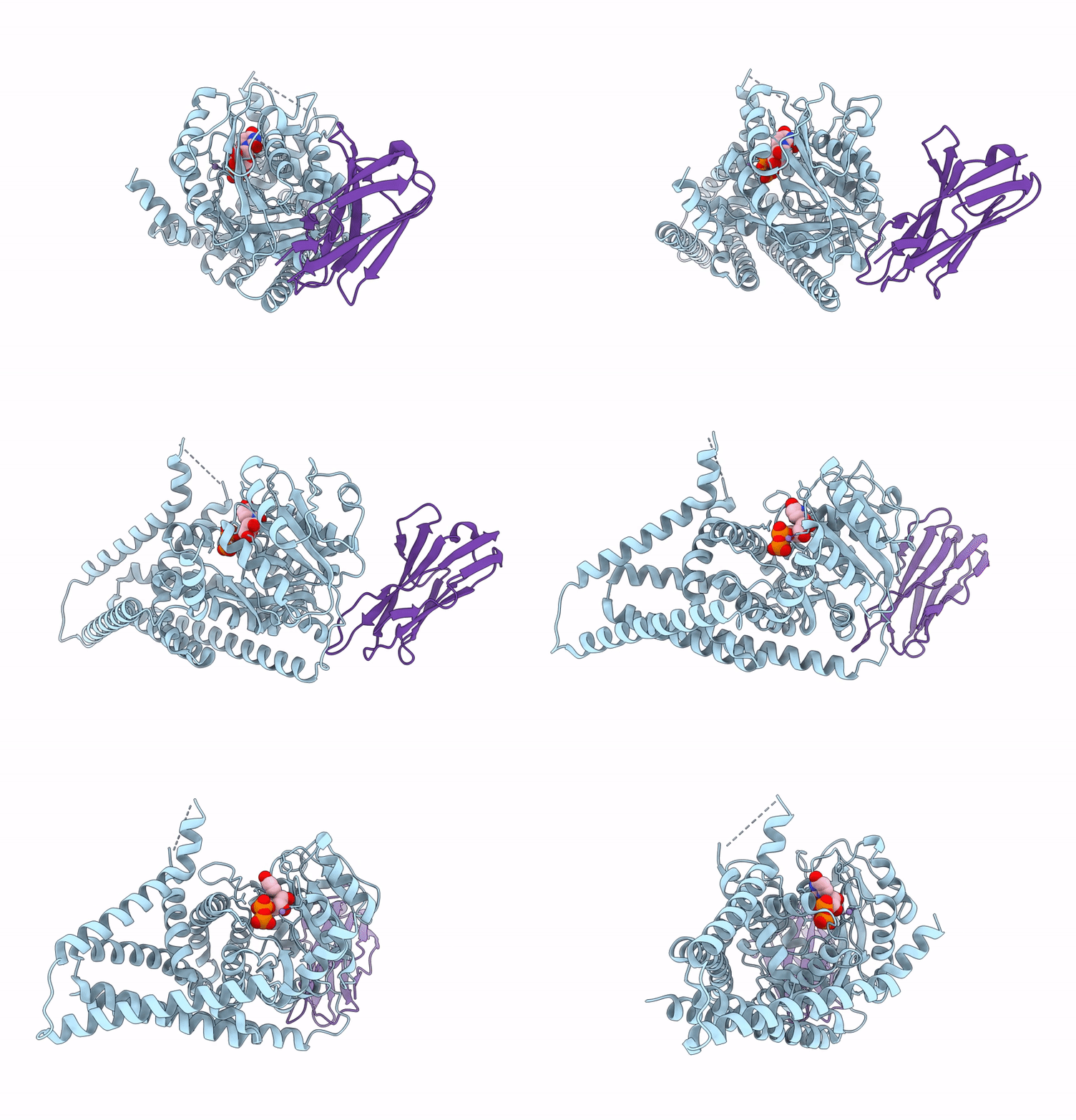
9KQC image
Deposition Date 2024-11-25
Release Date 2025-05-14
Last Version Date 2025-05-14
Entry Detail
PDB ID:
9KQC
Keywords:
Title:
Chlorella virus Hyaluronan Synthase bound to VNAR
Biological Source:
Source Organism(s):
Expression System(s):
Method Details:
Experimental Method:
Resolution:
3.36 Å
Aggregation State:
PARTICLE
Reconstruction Method:
SINGLE PARTICLE

Macromolecular Entities
Protein Blast
Polymer Type:polypeptide(L)
Molecule:Hyaluronan synthase
Gene (Uniprot):CZ-2_118R
Chain IDs:A
Chain Length:570
Number of Molecules:1
Biological Source:Chlorella virus
Protein Blast
Polymer Type:polypeptide(L)
Molecule:VNAR
Chain IDs:B
Chain Length:132
Number of Molecules:1
Biological Source:Chiloscyllium plagiosum
Primary Citation
Generation of shark single-domain antibodies as an aid for Cryo-EM structure determination of membrane proteins: Use hyaluronan synthase as an example.
J Struct Biol X 11 100126 100126 (2025)
PMID: 40475323 DOI: 10.1016/j.yjsbx.2025.100126

Abstact

In cartilaginous fish, the immunoglobulin new antigen receptor (IgNAR) is naturally devoid of light chains. The variable regions of IgNAR (VNARs) are solely responsible for antigen recognition, similar to VHHs (variable domain of the heavy chain of heavy-chain antibodies) in camelids. Although VNARs have attracted growing interest, generating VNARs against membrane proteins remains challenging. Furthermore, the structure of a VNAR in complex with a membrane protein has not yet been reported. This study features a membrane protein, Chlorella virus hyaluronan synthase (CvHAS), and provides a comprehensive methodological approach to generate its specific shark VNARs, addressing several major concerns and important optimizations. We showed that shark physiological urea pressure was tolerable for CvHAS, and indirect immobilization was strongly preferred over passive adsorption for membrane proteins. Together with optimizations to improve mononuclear cell (MC) viability and VNAR expression efficiency, we successfully generated S2F6, a CvHAS-specific VNAR with nM-level high affinity. The structure of the CvHAS-S2F6 complex was then determined by cryogenic electron microscopy (cryo-EM), reporting the first membrane protein and VNAR complex structure. It shows that S2F6 binds to the cytoplasmic domain of CvHAS, with a different epitope than the reported CvHAS-specific VHHs. This study provides valuable insights into developing VNARs for membrane proteins and their applications in structural biology.

Legend

Protein

Chemical

Disease

Primary Citation of related structures
Feedback Form
Name
Email
Institute
Feedback