

9KPG image
Deposition Date 2024-11-22
Release Date 2026-03-25
Last Version Date 2026-03-25
Entry Detail
PDB ID:
9KPG
Title:
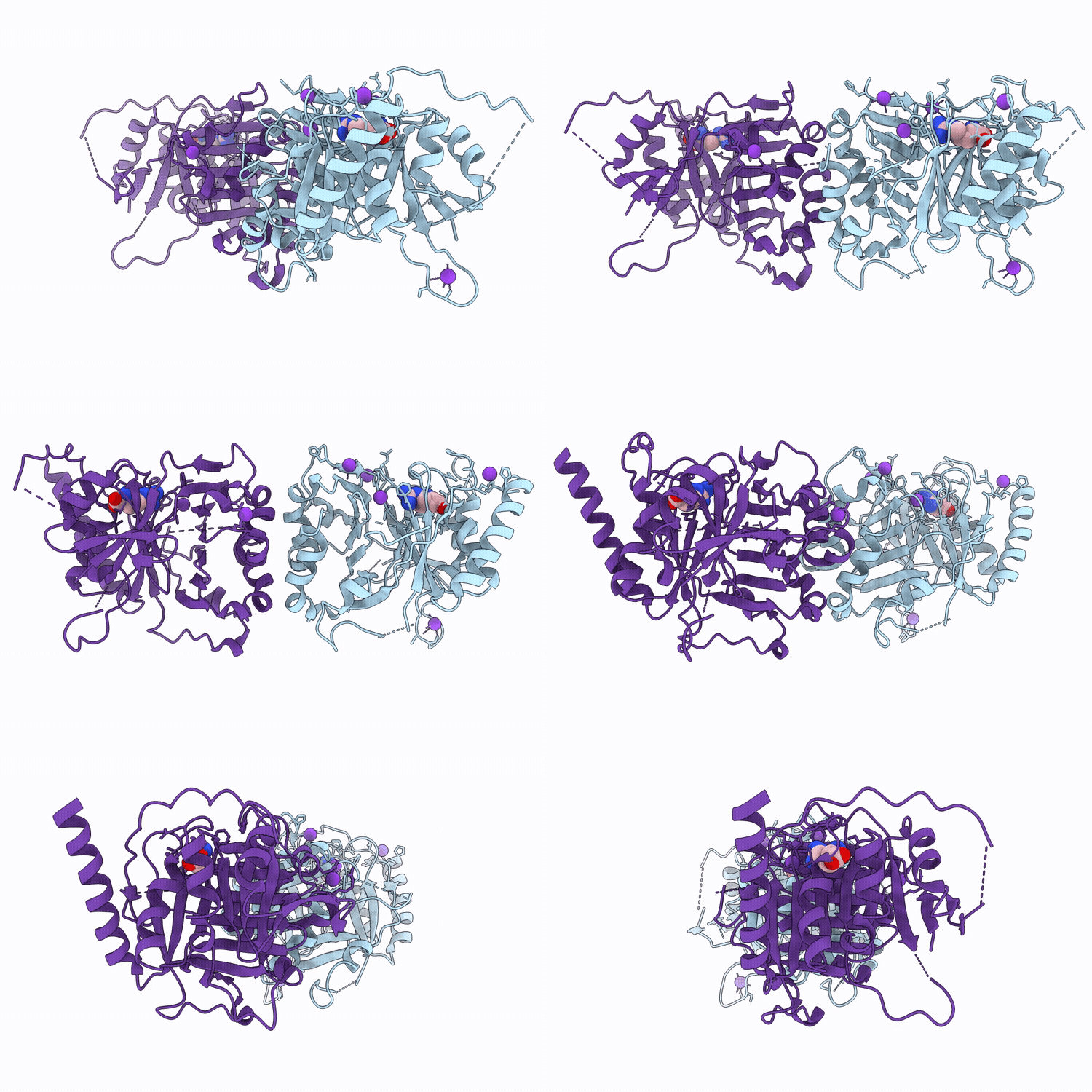
Crystal structure of human CASTOR2-arginine
Biological Source:
Source Organism(s):
Homo sapiens (Taxon ID: 9606)
Expression System(s):
Method Details:
Experimental Method:
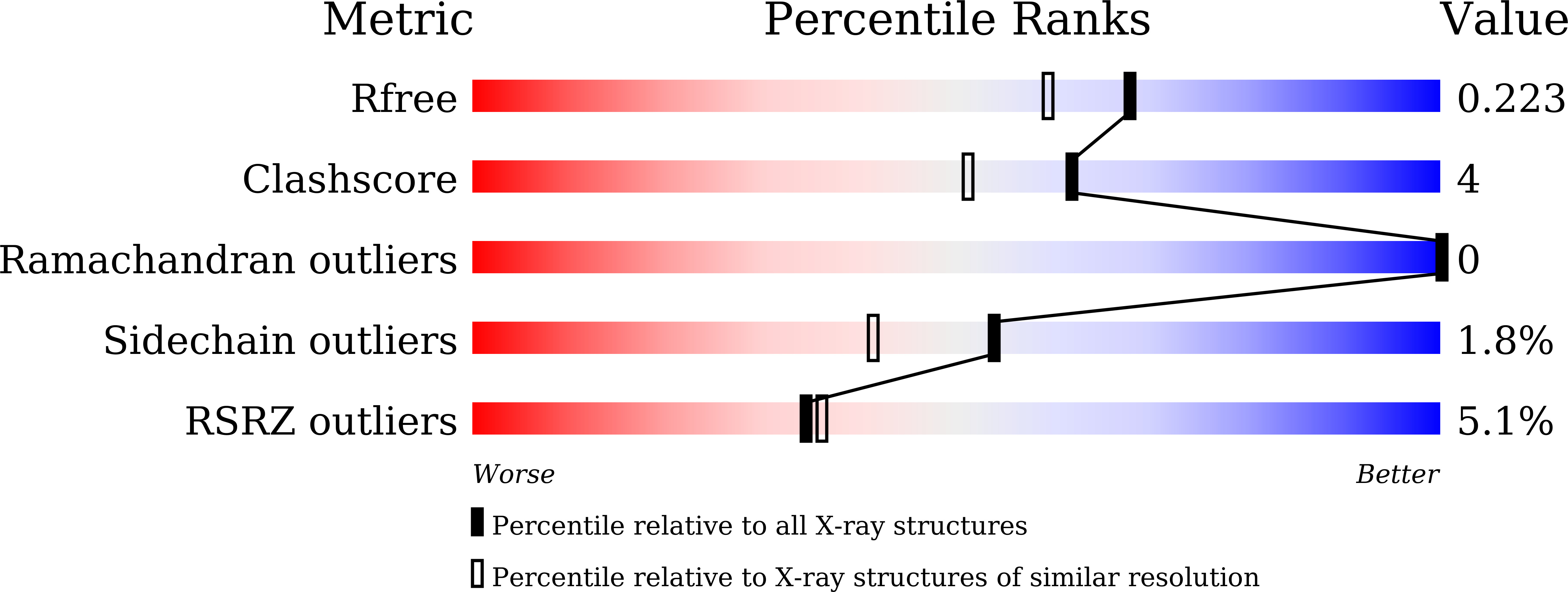
Resolution:
1.85 Å
R-Value Free:
0.23
R-Value Work:
0.18
R-Value Observed:
0.18
Space Group:
P 1 21 1
Macromolecular Entities
Structures with similar UniProt ID
Protein Blast
Polymer Type:polypeptide(L)
Molecule:Cytosolic arginine sensor for
Gene (Uniprot):CASTOR2
Chain IDs:A, B (auth: C)
Chain Length:337
Number of Molecules:2
Biological Source:Homo sapiens
Primary Citation
CASTOR1 and CASTOR2 respond to different arginine levels to regulate mTORC1 activity.
Mol. Cell 86 362 375.e4 (2026)
PMID: 41506264 DOI: 10.1016/j.molcel.2025.12.016

Abstact

Mechanistic target of rapamycin complex 1 (mTORC1) is a central regulator of cell growth, responding to amino acid availability. While mTORC1 is modulated by amino acid sensors like CASTOR1, the mechanisms driving its dynamic response to fluctuating amino acid levels remain unclear. Here, we investigate the role of CASTOR2, an understudied CASTOR1 homolog, in regulating mTORC1 activity. We show that CASTOR1 and CASTOR2 bind to arginine similarly but differ in their sensitivity: CASTOR1 responds to low arginine levels, whereas CASTOR2 responds to high arginine concentrations. Both proteins interact with the GATOR2 component Mios, inhibiting its binding to GATOR1. Arginine binding to CASTOR1/2 induces conformational changes at the aspartate kinase, chorismate mutase, and TyrA (ACT) domain (ACT2-ACT4) interface, leading to its dissociation from Mios. Functionally, we demonstrate that CASTOR proteins are highly expressed in muscle tissue and, in C2C12 cells, they regulate mTORC1 and myogenesis in response to different arginine availability. These findings highlight how CASTOR proteins function as dual arginine sensors to fine-tune mTORC1 activity.

Legend

Protein

Chemical

Disease

Primary Citation of related structures
Feedback Form
Name
Email
Institute
Feedback