

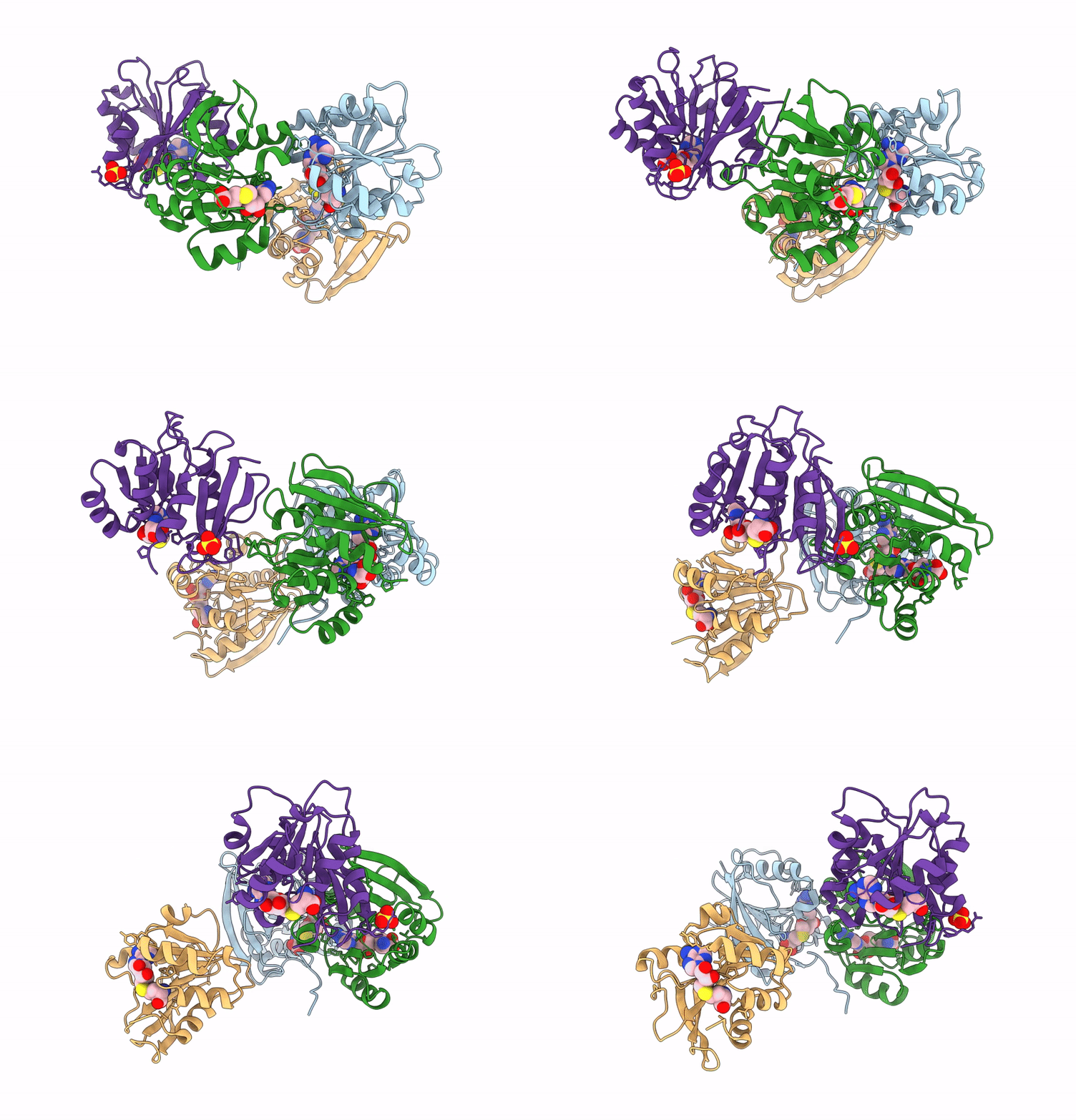
9KO3 image
Deposition Date 2024-11-19
Release Date 2025-04-23
Last Version Date 2026-05-06
Entry Detail
PDB ID:
9KO3
Keywords:
Title:
Crystal structure of Agrobacterium tumefaciens PmtA with SAH
Biological Source:
Source Organism(s):
Expression System(s):
Method Details:
Experimental Method:
Resolution:
1.95 Å
R-Value Free:
0.22
R-Value Work:
0.18
R-Value Observed:
0.18
Space Group:
P 1 21 1

Macromolecular Entities
Structures with similar UniProt ID
Protein Blast
Polymer Type:polypeptide(L)
Molecule:Methyltransferase
Gene (Uniprot):Atu0300
Chain IDs:A, B, C, D
Chain Length:174
Number of Molecules:4
Biological Source:Agrobacterium tumefaciens (strain C58)
Primary Citation
Structural basis for phosphatidylcholine synthesis by bacterial phospholipid N-methyltransferases.
J.Biol.Chem. 301 108507 108507 (2025)
PMID: 40222548 DOI: 10.1016/j.jbc.2025.108507

Abstact

In phosphatidylcholine (PC)-containing bacteria, PC is synthesized by phospholipid N-methyltransferases (Pmts) and plays an important role in the interactions between symbiotic and pathogenic bacteria and their eukaryotic host cells. Pmts catalyze the SAM-dependent three methylation reactions of the head group of phosphatidylethanolamine (PE) to form PC through monomethyl PE and dimethyl PE. However, the precise molecular mechanisms underlying PC biosynthesis by PmtA remain largely unclear, owing to the lack of structural information. Here, we determined the crystal structures of Agrobacterium tumefaciens Pmt (AtPmtA) in complex with SAH or 5'-methylthioadenosine. Crystal structures and NMR analysis revealed the binding mode of AtPmtA to SAH in solution. Structure-based mutational analyses showed that a conserved tyrosine residue in the substrate-binding groove is involved in methylation. Furthermore, we showed that differences in substrate specificity among Pmt homologs were determined by whether the amino acid residues comprising the substrate-binding groove were isoleucine or phenylalanine. These findings provide a structural basis for understanding the mechanisms underlying Pmts-mediated PC biosynthesis.

Legend

Protein

Chemical

Disease

Primary Citation of related structures
Feedback Form
Name
Email
Institute
Feedback