

9KNI image
Deposition Date 2024-11-19
Release Date 2025-03-12
Last Version Date 2025-03-12
Entry Detail
PDB ID:
9KNI
Keywords:
Title:
Structural complex of FTO bound with 12j
Biological Source:
Source Organism(s):
Homo sapiens (Taxon ID: 9606)
Expression System(s):
Method Details:
Experimental Method:
Resolution:
2.63 Å
R-Value Free:
0.22
R-Value Work:
0.19
R-Value Observed:
0.20
Space Group:
H 3
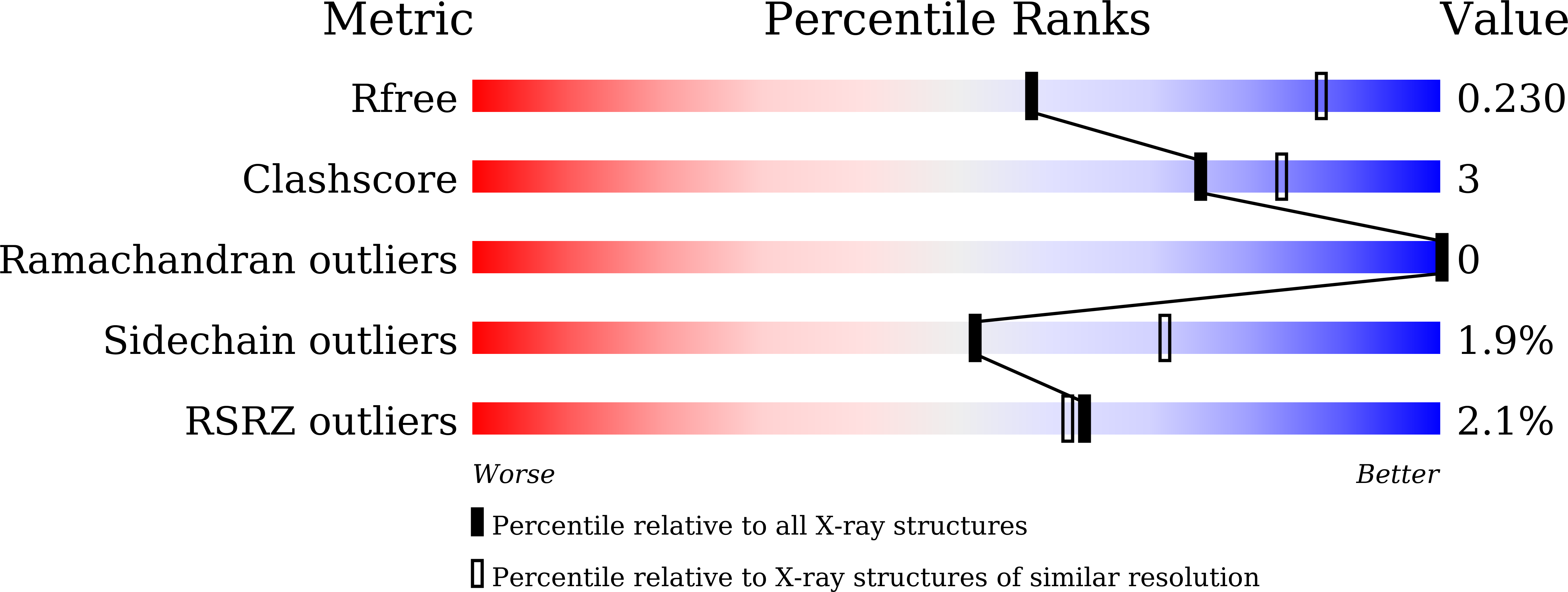
Macromolecular Entities
Structures with similar UniProt ID
Protein Blast
Polymer Type:polypeptide(L)
Molecule:Alpha-ketoglutarate-dependent
Gene (Uniprot):FTO
Chain IDs:A
Chain Length:478
Number of Molecules:1
Biological Source:Homo sapiens
Primary Citation
Development of 3-arylaminothiophenic-2-carboxylic acid derivatives as new FTO inhibitors showing potent antileukemia activities.
Eur.J.Med.Chem. 289 117444 117444 (2025)
PMID: 40022879 DOI: 10.1016/j.ejmech.2025.117444

Abstact

Fat mass and obesity-associated protein (FTO) is the first discovered RNA N6-methyladenosine (m6A) demethylase. The highly expressed FTO protein is required to trigger oncogenic pathways in acute myeloid leukemia (AML), which makes FTO a promising antileukemia drug target. In this study, we identify 3-arylaminothiophenic-2-carboxylic acid derivatives as new FTO inhibitors with good antileukemia activity. We replaced the phenyl A-ring in FB23, the first-generation of FTO inhibitor, with five-membered heterocycles and synthesized a new class of FTO inhibitors. Compound 12o/F97 shows strong enzymatic inhibitory activity and potent antiproliferative activity. 12o/F97 selectively inhibits m6A demethylation by FTO rather than ALKBH5, and has minimal effect on m1A demethylation by ALKBH3. Additionally, 12o/F97 increases the protein levels of RARA and ASB2, while decreasing that of MYC in AML cell lines. Lastly, 12o/F97 exhibits antileukemia activity in a xenograft mice model without significant side-effects. The identification of 3-arylaminothiophenic-2-carboxylic acid derivatives as new FTO inhibitors not only expands the chemical space but also holds potential for antileukemia drug development.

Legend

Protein

Chemical

Disease

Primary Citation of related structures
Feedback Form
Name
Email
Institute
Feedback